
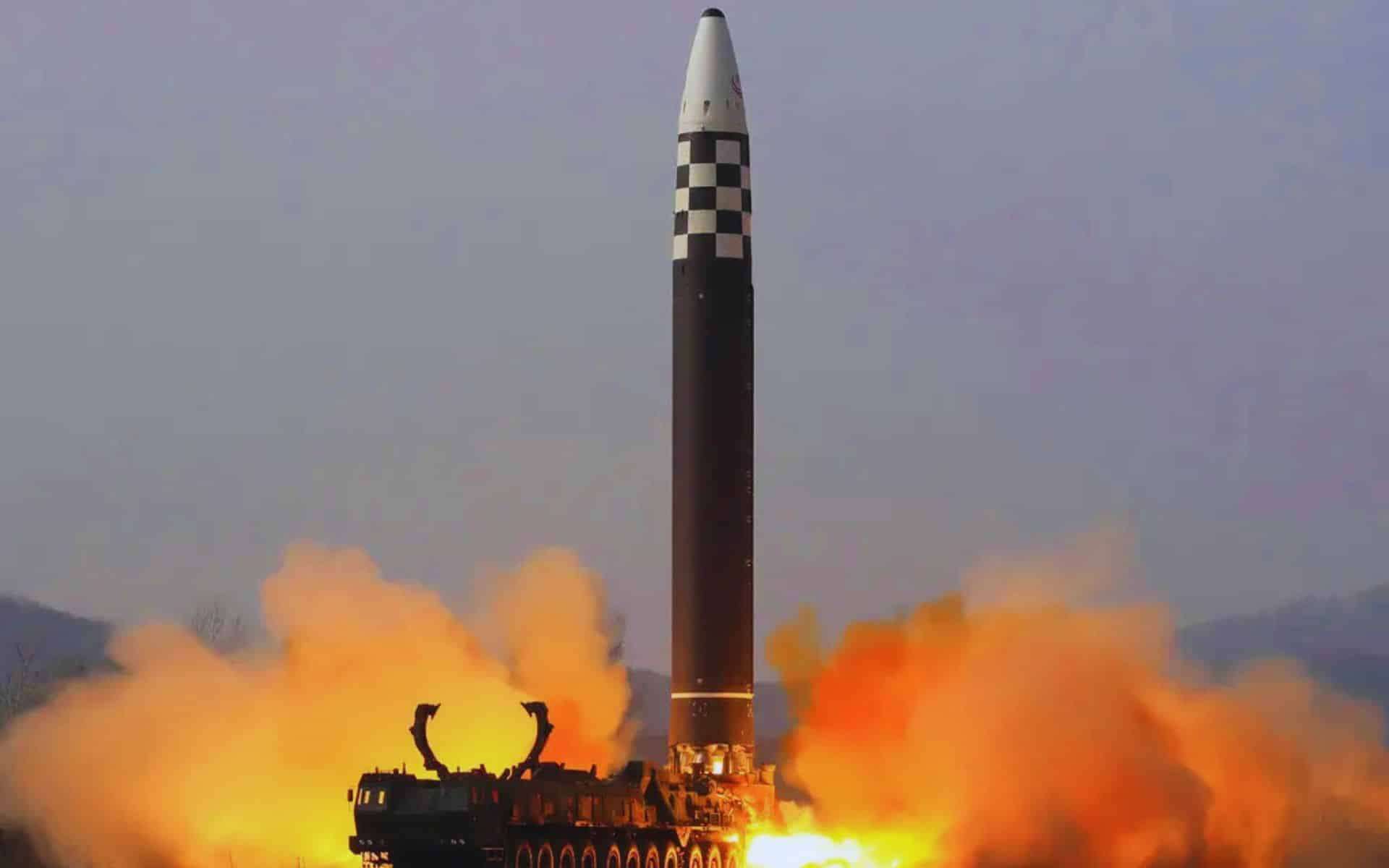
On October 30, North Korea reportedly launched an intercontinental ballistic missile (ICBM) into space, marking a significant achievement after nearly a year of silence. This development intensifies existing Pacific tensions and has important ramifications for global security and the landscape of space exploration partnerships.
Breaking New Ground in North Korea’s Missile Capabilities
Confirmed by authorities in both the United States and Japan, the missile covered an unprecedented distance of 4,350 miles (7,000.65 km) and remained airborne for 86 minutes, setting a new benchmark for Pyongyang's missile program.
This feat exceeds the country’s previous record by approximately 1,000 miles (1,609.34 km). The timing—just days ahead of the U.S. federal elections on November 5—has raised questions about potential political motives behind the launch.

Experts suggest that North Korea aims to showcase its expanding military prowess to influence regional power dynamics amid shifting alliances. The missile test has heightened alertness especially among regional security stakeholders.
Growing Influence of the Russia-North Korea Partnership
The geopolitical situation is further complicated by North Korea’s deepening ties with Russia, especially amid the ongoing conflict in Ukraine, which the isolated nation supports openly.
Reports indicate North Korea has pledged around 10,000 troops to bolster Russian military efforts, a move that has unsettled Western powers including the U.S. and NATO member states.
These developments have prompted joint military drills among U.S., Japanese, and South Korean forces in the Pacific, activities Pyongyang perceives as aggressive encirclement.
This perception fuels wider global tensions that now extend into both terrestrial and outer space arenas.
Implications for Space Treaties and the Artemis Framework
The latest missile activities underscore challenges facing the Artemis Accords, a U.S.-led initiative promoting peaceful and cooperative space exploration, endorsed by key U.S. allies Japan and South Korea.
North Korea’s recent actions, coupled with its expanding rapport with Russia, threaten to destabilize existing frameworks for space diplomacy.
Despite international isolation, Russia remains indispensable to the International Space Station (ISS), relying heavily on its technology and expertise. Nevertheless, Russia plans to withdraw from the ISS by 2028 to pursue new ventures with China, potentially fracturing global space partnerships further.
Future Prospects for ISS and International Space Cooperation
The ISS, emblematic of international collaboration, now faces unprecedented challenges from geopolitical shifts. While operational through at least 2030, the station’s future hinges on evolving alliances amid escalating tensions.
Russia’s new alignment with China, which is barred from direct NASA cooperation due to U.S. legislation, introduces additional complexity to global space strategy.
As outer space emerges as a contested domain, global leaders must consider the influence of Earth-bound conflicts on ambitions beyond our atmosphere. The interplay between defense technologies, political alliances, and space exploration marks a new chapter in space diplomacy.
The space community is monitoring these developments intently as North Korea extends the reach of its ICBM capabilities and geopolitical partnerships shift, with potentially far-reaching consequences beyond our planet.










0 comments
Sign in to Comment