

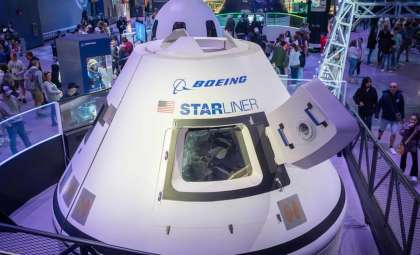
Boeing is gearing up for the third attempt to launch its inaugural crewed Starliner test flight this Wednesday, a vital step following over ten years of development.
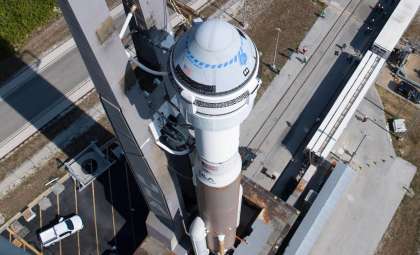
Built as part of NASA’s Commercial Crew Program, the new spacecraft is designed to enhance U.S. astronaut transportation capabilities to the International Space Station (ISS). The scheduled lift-off will occur at 10:52 a.m. ET from Cape Canaveral Space Force Station in Florida, atop an Atlas V rocket. NASA will stream the launch live starting at 6:45 a.m. ET, allowing space fans globally to witness this landmark event.
The Crew and Launch Outlook
NASA astronauts Butch Wilmore and Suni Williams will pilot the mission, bringing extensive spaceflight expertise. Wilmore reflected on the journey’s emotional ups and downs, saying, “I’m not going to say it’s been easy. It’s a little bit of [an] emotional roller coaster.” Williams chimed in, “We knew we would get here eventually. It’s a solid spacecraft. I don’t think I would really want to be in any other place right now.”


Current weather forecasts indicate a 90% probability of favorable conditions for the launch, with cumulus clouds being the main concern, as reported by the US Space Force’s 45th Weather Squadron. Should Wednesday’s launch be postponed, a secondary launch opportunity is slated for Thursday at 10:29 a.m. ET to keep the mission on track.
Boeing’s Goals and Historical Context
Known as the Crew Flight Test, this mission epitomizes Boeing’s ongoing efforts to compete with SpaceX’s Crew Dragon by delivering a reliable crew transport vehicle. This operation will mark only the sixth new crewed spacecraft in U.S. history, following NASA’s Mercury, Gemini, Apollo, Space Shuttle programs, and SpaceX’s Dragon capsule.
Beyond demonstrating Starliner’s capabilities, the mission is crucial for rebuilding Boeing’s spaceflight reputation after years of delays, challenges, and setbacks. Williams’ role on the flight is also historic—she is set to become the first woman aboard this type of crewed mission, highlighting expanding female representation in astronautics.
This flight also serves as a pivotal milestone for NASA’s Commercial Crew Program, which encourages private sector competition to secure resilient and flexible access to low Earth orbit. Bringing Starliner online ensures NASA maintains backup options for transporting crew to the ISS, critical for sustained operations and future exploration initiatives.
Mission Itinerary and Objectives
After orbit insertion, Wilmore and Williams will take about 24 hours to reach and dock with the ISS, targeting 12:15 p.m. ET on Thursday. During their week-long stay, they will collaborate with the station’s current seven-member crew on mission-critical activities.
Key tasks include validating the Starliner’s thrusters, testing spacesuit functions within the cabin, and verifying manual control capabilities should autopilot require override. They will also assess the spacecraft’s “safe haven” feature, intended to provide emergency refuge for the ISS crew.
The capsule carries an essential pump to repair the ISS’s urine processor assembly, which malfunctioned on May 29. This component is vital for the ISS’s closed-loop water recycling, converting urine into drinkable water. Successful delivery and installation of this pump are central to sustaining the station’s life-support systems.
Technical Hurdles and Previous Setbacks
This mission’s path has been marked by technical obstacles. Earlier launches planned for May 6 and June 1 were aborted due to a faulty valve on the Atlas V rocket’s second stage, manufactured by United Launch Alliance (a Boeing and Lockheed Martin joint venture). Additional issues included a minor helium leak in the spacecraft’s service module and concerns over parachute deployment. The latest launch attempt was halted moments before liftoff by an automatic hold initiated by the ground launch sequencer, necessitating further inspection and replacement of the launch countdown computer system.
Looking Forward
The upcoming Starliner launch stands as a crucial milestone not only for Boeing but also for NASA’s collaborative approach with private space firms under the Commercial Crew Program. A successful mission would validate the spacecraft for regular operation, delivering astronauts and supplies to the ISS and providing NASA with an indispensable alternative to SpaceX.
This endeavor reflects the complexity and high stakes of crewed space missions, yet it highlights the commitment and determination of all involved. As Wilmore and Williams prepare for their historic journey, global audiences eagerly anticipate a triumphant launch that will establish the Starliner’s role in advancing human spaceflight.
- Categories:
- Astronomy ,
- News ,
- Space ,
- Nasa ,
- Aircraft






0 comments
Sign in to Comment