
One of the biggest hurdles in developing advanced aircraft engines has been managing extreme heat. Jet turbines and gas engines operate at scorching temperatures that challenge the durability of traditional metals. While engineering efforts have raced ahead, protective materials capable of enduring such conditions have been scarce—until this recent development.
Scientists have crafted an innovative metal alloy, primarily consisting of chromium, molybdenum, and a small proportion of silicon, sparking interest in aerospace and energy sectors. A study published this month in Nature introduces this alloy, which can endure temperatures surpassing 1,100°C, resist oxidation, and maintain flexibility at room temperature — a rare and valuable trait for metals used in extreme environments.
The combination of high-temperature strength and ductility has been a difficult goal for materials experts. Conventional nickel-based superalloys, widely employed in turbine blades and engine parts, weaken around the same 1,100°C mark. Surpassing this often demands complex cooling solutions, surface coatings, or sacrifices in performance. The new alloy however, demonstrates these capabilities without the usual compromises.

An Alloy Engineered for Severe Conditions
The secret to its remarkable qualities lies in the straightforward composition paired with careful microstructural design. Mainly composed of chromium and molybdenum, both metals known for toughness and heat endurance, the addition of a precise 3 atomic percent silicon acts as a game-changer.
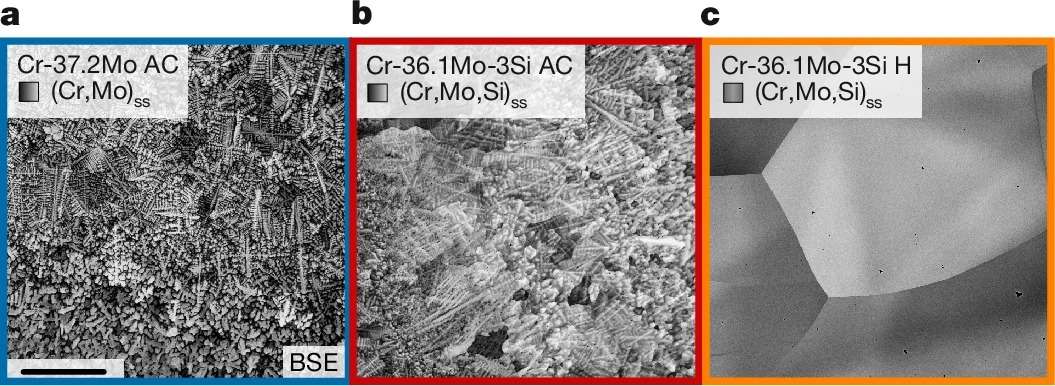
Silicon promotes the growth of a dense chromium oxide protective layer on the surface—an invisible shield that guards the metal from oxidation and nitrogen attack at elevated temperatures. Unlike earlier compositions, this occurs without creating fragile silicides that typically impair ductility and cause cracking.
“This is not just another iteration of refractory metals,” said Martin Heilmaier, a co-author of the Nature study and professor at the Karlsruhe Institute of Technology. “We were able to thread the needle between strength, ductility, and oxidation resistance—a very narrow design space.”
According to Earth.com, rigorous testing revealed the alloy retained structural soundness after 100 hours exposed to 1,100°C air, withstanding repeated heating cycles without clear wear. Its melting temperature approaches 2,000°C, granting an unusually broad range of functional operation.
Potential Advancements for Aviation and Energy Sectors
In turbine engines, boosting the inlet temperature by even 100°C can enhance thermal efficiency by approximately 5%, leading to substantial fuel savings for airlines, notes the U.S. Department of Energy. However, current material limitations restrict how much hotter these engines can safely operate.
This new Cr–Mo–Si alloy offers the possibility to increase that temperature limit, allowing engineers to decrease cooling demands and streamline manufacturing processes. Fewer coatings or intricate cooling designs could yield parts that are more reliable and cost-effective in the long run.
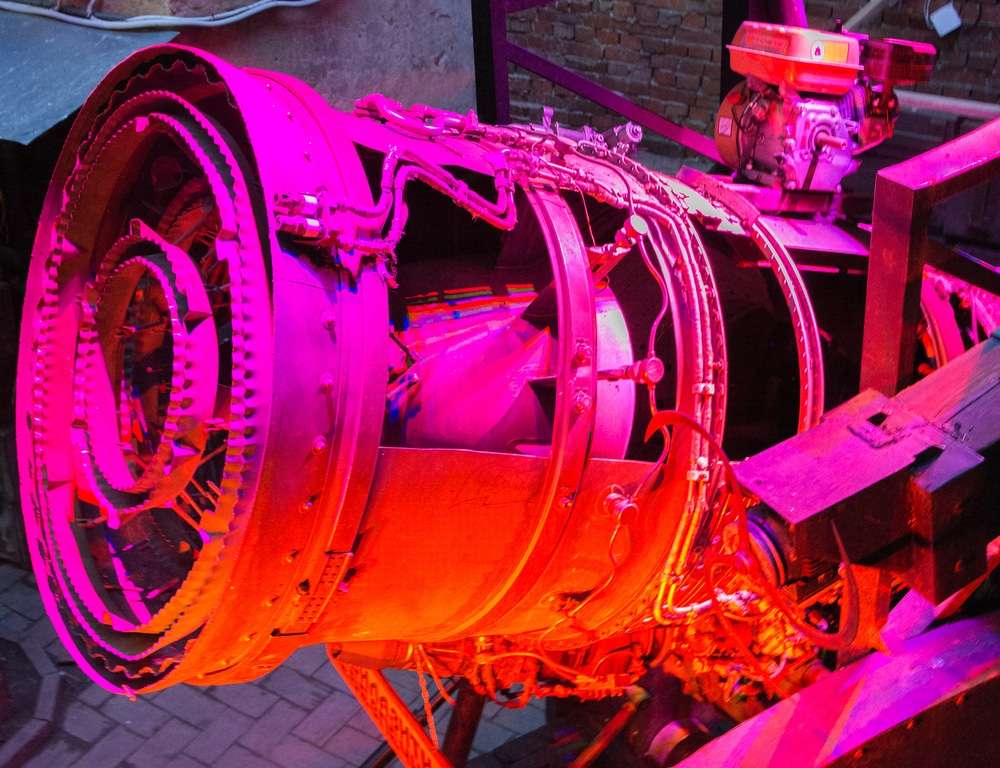
The benefits extend beyond aerospace. Gas turbines in power plants, especially those integrating renewables, contend with similar heat challenges. Stronger alloys could lengthen equipment life and minimize outages—a vital advantage as power grids evolve toward sustainability.
Moreover, this alloy combats pesting, a degradation process that weakens molybdenum-based metals at moderate heat, which had previously hampered many promising compositions. A TMS technical report once highlighted the strengths and shortcomings of Mo–Si–B alloys, praising oxidation resistance but lamenting poor toughness at room temperatures. With this new formulation, those issues seem mitigated under controlled conditions.
Challenges for Industrial Application
While laboratory results are promising, transitioning this alloy into commercial use will test its true potential. Researchers note that critical questions regarding long-term creep resistance, fabrication methods, welding, and compatibility with turbine coatings remain to be addressed.
“Metals don’t live in a lab vacuum,” said Heilmaier in the Nature paper. “Real-world engines involve combustion byproducts, thermal gradients, and stress cycles that evolve over years.”
The alloy’s single-phase body-centered cubic crystal structure facilitates manufacturing and could be adapted to existing powder metallurgy processes used for current superalloys, easing its move toward practical testing.
Produced through arc melting, a relatively simple technique, the alloy exhibited stability after heat treatment at 1,600°C. This straightforward fabrication approach might prove invaluable if scaling up is successful.
- Categories:
- News













0 comments
Sign in to Comment