
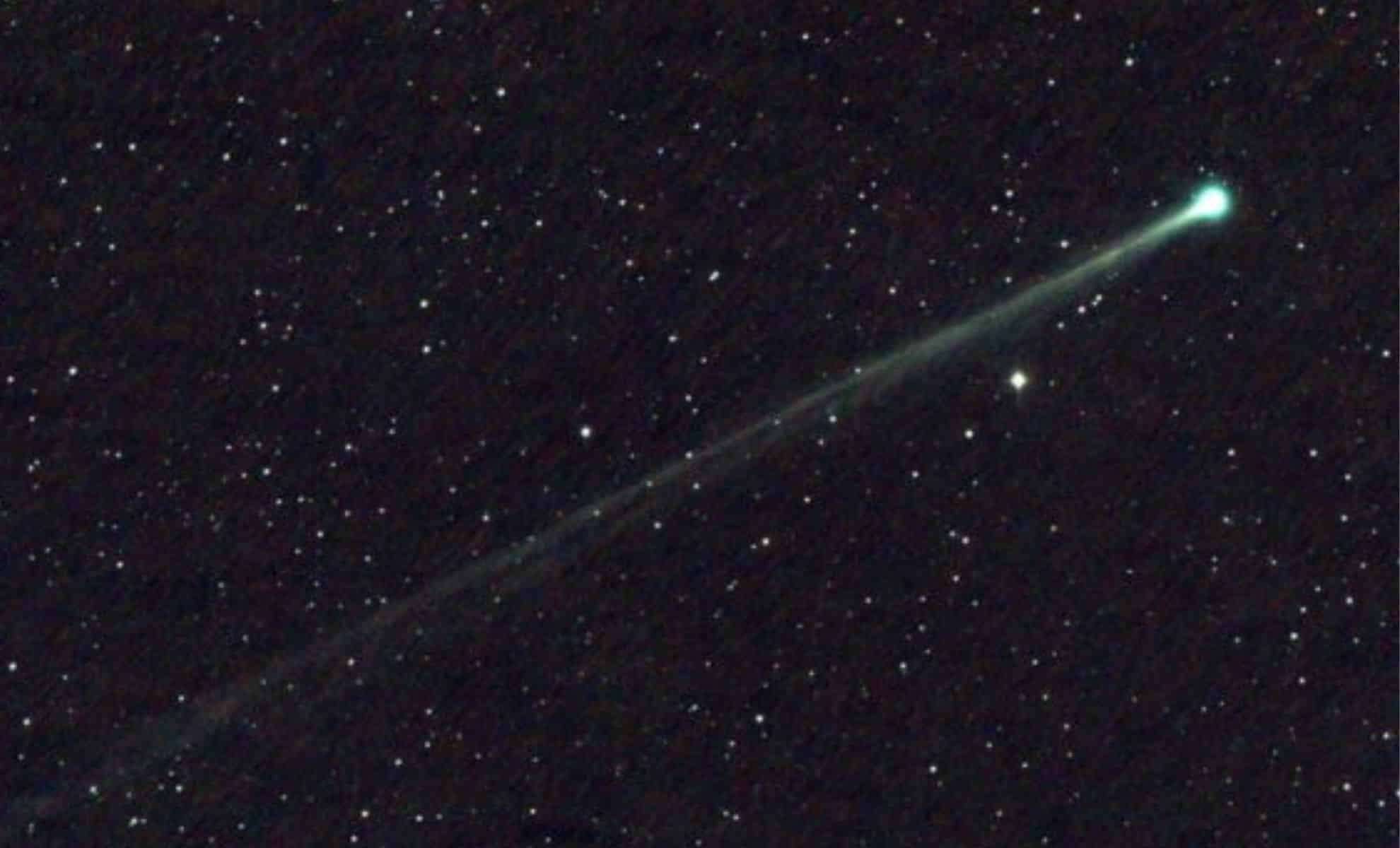
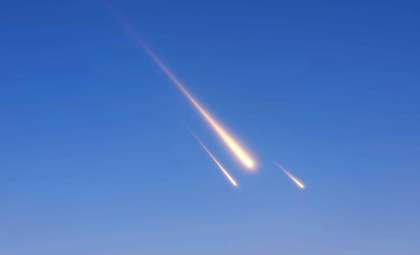
A recent announcement on EarthSky revealed an exciting celestial discovery captivating astronomers worldwide. The comet designated SWAN25B (C/2025 B1) was first observed in early September 2025. While it awaits formal confirmation, its intense brightness and striking tail are already drawing significant attention.
Spotted by SWAN, Emerging Near the Sun
The detection of this comet came from the SWAN (Solar Wind Anisotropies) instrument aboard NASA’s SOHO spacecraft, which primarily tracks solar wind activity. Although SWAN25B is yet to be listed officially by the Minor Planet Center, its brightness immediately set it apart. Currently, it shines at approximately magnitude 7.4—not visible without aid but observable through high-powered binoculars or cameras outfitted with 200mm lenses.
Located in the Virgo constellation, the comet is emerging just after passing its perihelion, the closest approach to the Sun. Its proximity to the Sun earlier obscured visibility due to solar glare. Coordinates recorded at discovery stood at RA 13 08.5 and DEC -09 10.

Observations Confirmed from Australia to Chile
Within a day of the initial sighting, multiple astronomers verified the comet’s presence. Vladimir Bezugly was among the first to identify the object via SWAN data. On the morning of September 12, noted Australian comet observer Michael Mattiazzo reported successfully spotting it visually using 15 x 70 binoculars, equipment accessible to many amateur stargazers.
Further confirmation originated from northern Chile, where physicist Martin Mašek of the Czech Academy of Sciences captured detailed images at the Cherenkov Telescope Array. Posting on the ICQ Comet Observations Facebook group, he expressed surprise at the comet’s brightness and extensive tail, having anticipated a faint object.
His photographs unveiled a nucleus brighter than expected with a prominent tail, demonstrating active emission of gas and dust caused by solar heating—a classic comet trait with an unusually quick appearance.
How and When to Spot SWAN25B
For enthusiasts aiming to observe SWAN25B on September 13, the viewing opportunity is brief but rewarding. The comet is best seen just above the western horizon shortly after sunset, approximately 30° away from the Sun, remaining visible for about an hour.
Look for it slightly below Mars soon after sunset. Using a small telescope or powerful binoculars in areas away from city lights will improve chances. Some observers have already noted a distinctive tail spanning several degrees, potentially more vivid in dry or elevated locations.
- Categories:
- News








0 comments
Sign in to Comment