
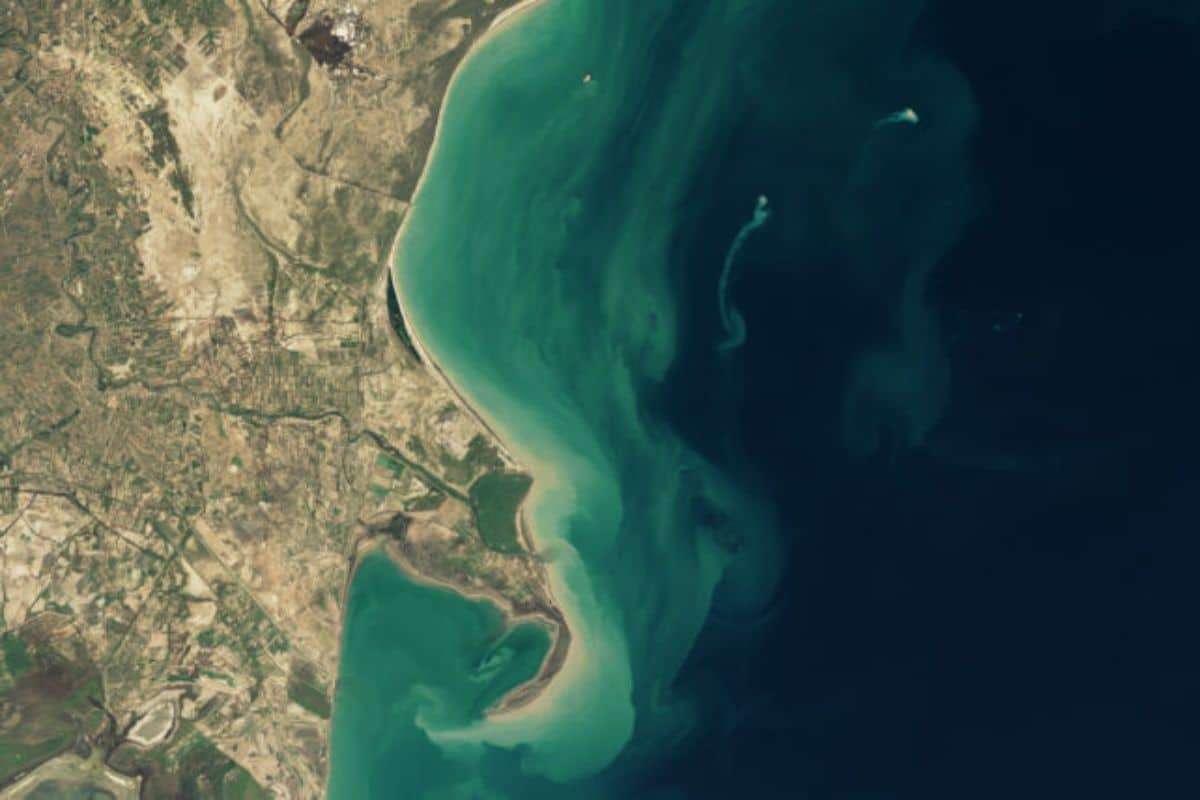
A strange and fleeting “phantom” island has once again made its presence known in the Caspian Sea, following a long tradition of popping up and then quickly disappearing. This landform, emerging from the mud volcano at Kumani bank, surfaced anew in early 2023 and began to vanish by the close of 2024. The island’s brief existence continues to puzzle geologists, especially due to its ephemeral nature and the surprising lack of widespread attention it has received.
Tracing the History of the Phantom Island
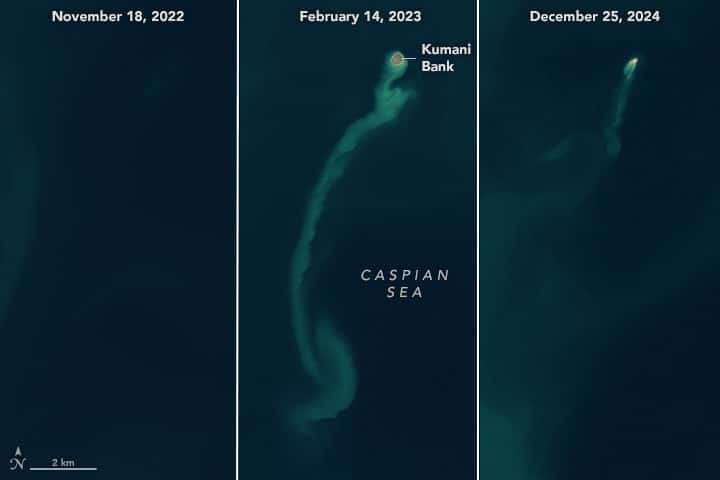
The Kumani bank island first gained scientific notice in May 1861 when it breached the Caspian Sea’s surface. Within a year, it vanished, establishing a pattern of impermanence. Throughout the 1900s, the island appeared and disappeared at least six times, with each occurrence lasting less than two years.
These cycles are linked to eruptions of the underwater mud volcano beneath it. During volcanic activity, mud is forcefully pushed upward, briefly forming a temporary island.
Such eruptions often include spectacular bursts of flame, resembling oil platform explosions, yet the 2023 emergence occurred quietly with no dramatic fire displays, deepening the mystery.

The Island’s Quiet Comeback in 2023
Images from NASA satellites documented the island’s new appearance in early 2023, appearing roughly 20 kilometers from Azerbaijan’s coast. By late 2024, much of the island had eroded away or submerged, leaving behind only remnants.
Despite this clear satellite evidence, the island’s resurgence went largely under the radar. In late 2024, Mark Tingay commented on Threads, “A new island suddenly appeared last year, which is amazing.” This scenario is not new; in 1993, a comparable unnoticed appearance was recorded via satellites but did not receive official acknowledgment despite being visible. Satellite data confirmed this as well.
Understanding Mud Volcanoes
The mud volcano at Kumani bank is among many in the Caspian Sea's geologically active Azerbaijani zone. These mud volcanoes release not only mud but also combustible gases such as methane, which can ignite during eruptions to produce fiery showpieces. They play a vital role in creating transient landforms like the ghost island.
When erupting, pressurized mud and gas escape through the seabed, building mounds that briefly rise above the water. However, harsh wave erosion and the unstable nature of the island’s materials usually lead to its rapid disappearance. This interplay between geologic forces and environmental wear highlights why the island seldom persists beyond a few years.
Significance of the 2023 Emergence
The island’s 2023 appearance presents a valuable chance for researchers to investigate mud volcano dynamics and how they interact with marine ecosystems. These transient islands offer rare opportunities to study powerful subterranean activities that occasionally breach the Earth’s surface. Such phenomena provide critical insights.
Tingay and fellow scientists also highlight the puzzling lack of public and media attention in the digital age.
“It’s remarkable that an island emerged just 20 km from shore and drew so little notice,” Tingay remarked, pointing to a disconnect between scientific events and public awareness, despite our highly connected world.
The Island’s Uncertain Future
Entering 2025, the ghost island continues its cycle of disappearance, reinforcing the dynamic and changing character of Earth's surface. Although it fades from view, it is expected to resurface again in time, providing fresh opportunities for investigation and wonder.
For now, the Kumani bank island stands as a captivating example of nature’s fleeting marvels. Each brief appearance demonstrates the power of mud volcanoes and the ongoing geological transformations shaping our planet, even in its more isolated regions.
- Categories:
- Science














0 comments
Sign in to Comment