
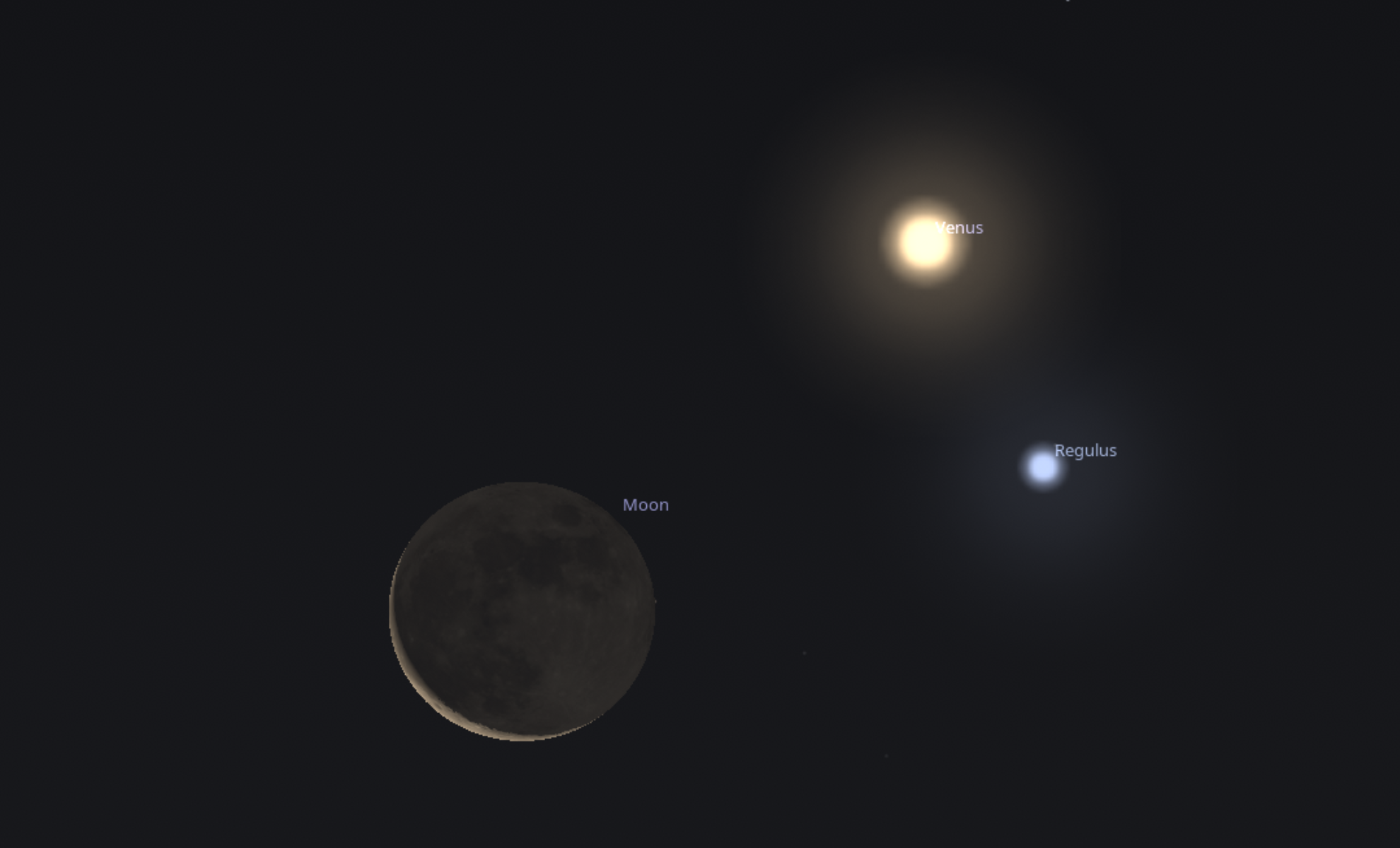
On the morning of September 19, 2025, avid skywatchers and early risers will have the chance to observe an extraordinary cosmic event as Venus, the star Regulus, and a slender crescent Moon cluster together in the eastern dawn horizon. As highlighted by Universe Today, this triple conjunction ranks among the most enchanting astronomical displays of the year, providing a perfect spectacle for both casual observers and astronomy enthusiasts.
The Crescent Moon Joins Venus and Regulus
The event kicks off with a waning crescent Moon, illuminated at just 5%, gliding close to Regulus, the brightest star in the Leo constellation. Meanwhile, Venus shines brilliantly at nearly 89% illumination, dominating the dawn sky. Although Venus, the Moon, and Regulus appear tightly grouped within about , their actual distances from Earth vary drastically: the Moon is approximately 385,000 kilometers away, Venus is about 12 light-minutes distant, and Regulus lies nearly 78 light-years from our planet. Together, they form what stargazers term the “smiling sky”, with Venus and Regulus representing sparkling eyes and the crescent Moon curving like a smiling mouth.
Lunar Occultations Provide a Unique Feature
In addition to the beautiful conjunction, two lunar occultations will take place on September 19. The Moon will temporarily cover Regulus for observers in a small area of northern Siberia, while the Venus occultation will be visible from parts of the northwestern Canadian Arctic across continental Europe to northern Africa. Those outside these regions can still catch glimpses of Venus near the crescent Moon during early dawn, though using binoculars or telescopes will greatly enhance the view. Amateur astronomers can employ tools like Occult 4.2 to precisely track these intriguing celestial movements and determine the best viewing times for their location.

A Celestial Smile Across the Sky
Observers in North America might see the trio lining up more around a vertical axis stretching north, but the clearest “smiling face” formation will appear in areas like Yukon and Alaska, where the crescent Moon arches tenderly below Venus and Regulus amid darker pre-dawn skies. Such perfectly timed alignments—occurring when the Moon is between its last and first quarter phases alongside two bright partners—are rare and need careful observation. From 2000 to 3000 A.D., only about 85 similar occurrences have been recorded, underscoring the uniqueness of this event.
Looking Back and Forward on Rare Alignments
Similar close pairings involving lunar occultations have been seen but remain uncommon. On April 23, 1998, for example, skywatchers at Ascension Island in the South Atlantic witnessed the Moon occulting both Venus and Jupiter, a memorable sight. The next notable event involving Regulus isn’t expected until October 15, 2036, when Saturn will join the cosmic lineup. Additionally, the Moon is set to participate in the last eclipse event of 2025, a significant partial eclipse visible over New Zealand, the South Pacific, and Antarctica on September 21.
How to Best Enjoy the Triple Meeting
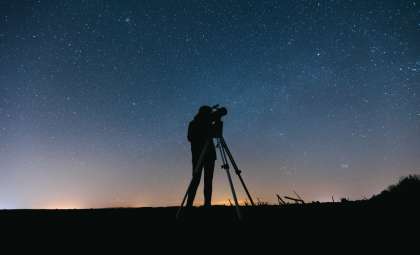
This triple conjunction offers more than visual appeal; it’s an educational chance to witness celestial mechanics firsthand. For optimal viewing, rise early, secure a clear eastern horizon, and keep the Sun hidden behind natural or artificial obstructions. Spotting Venus beside the Moon during daylight hours can be challenging but rewarding, while binoculars or telescopes enhance chances of detecting Regulus close by. Observers who monitor the Moon’s position throughout the morning will notice subtle shifts, providing insight into the dynamic nature of the night sky.
- Categories:
- News



0 comments
Sign in to Comment