

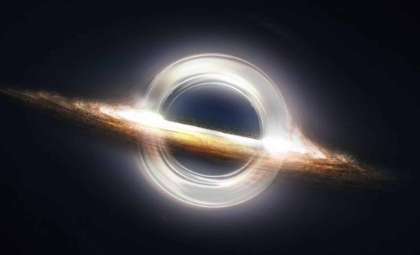
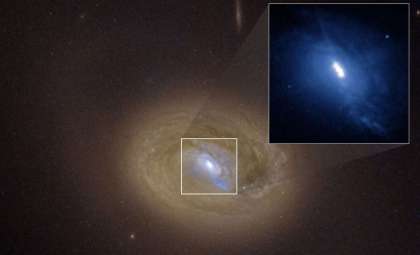
A revolutionary astronomical survey has unveiled a vast collection of previously undetected active black holes nestled within dwarf galaxies, creating the most extensive inventory of intermediate-mass black holes recorded so far.
More than 2,500 dwarf galaxies are now known to contain black holes at their centers—exceeding past estimates by over three times. This discovery opens new possibilities for examining these enigmatic objects in clusters, shedding light on the coevolution of black holes and their host galaxies.
Discovering Three Times More Black Holes in Dwarf Galaxies
Astronomer Ragadeepika Pucha from the University of Utah led the research that dramatically increased the tally of active black holes inhabiting smaller galaxies. Utilizing data collected through the Dark Energy Spectroscopic Instrument (DESI) mounted on the Mayall Telescope in Arizona, scientists found that about 2% of the nearly 115,000 dwarf galaxies examined emit signals consistent with black holes actively accreting matter. This contrasts sharply with previous estimates that put the figure at only 0.5%.

The findings spark intriguing discussions about the relationship between galaxies and black holes. Stéphanie Juneau of NOIRLab, a coauthor of the study, comments, “It’s a complex puzzle: did galaxies emerge first and then nurture black holes, or did black holes catalyze galaxy formation?”

Expanding the Catalog of Intermediate-Mass Black Holes
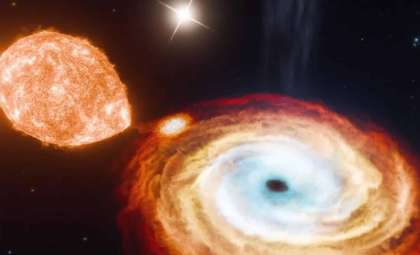
In addition to increasing the count of active black holes, the team pinpointed nearly 300 candidates for intermediate-mass black holes, significantly expanding the known sample from approximately 70. These black holes, weighing between roughly 100 and one million solar masses, are crucial to unlocking how black holes nurture and evolve. They fill the observational gap between stellar-mass black holes, which form from dying stars, and the colossal supermassive black holes anchoring large galaxies.
“These intermediate black holes provide vital clues about the origins of the earliest black holes,” explains Pucha. Their presence suggests an evolutionary sequence where black holes begin small and grow larger over cosmic time through mergers and accretion.
Opening New Horizons in Galaxy Evolution Research
This initial dataset represents only the start. The full results from DESI’s first year of observations are expected to be published in 2025, promising an even broader survey of the cosmos. To date, the DESI survey has charted nearly 1.5 million galaxies in three dimensions, revealing thousands of faint galaxies previously beyond reach.
Astrophysicist Mallory Molina from Vanderbilt University, who was not a participant in the study, notes the significance of this groundbreaking data: “They’ve pinpointed the brightest of these cosmic beacons. Even with straightforward methods, they’re uncovering a vast population of black holes, indicating much more awaits discovery.”




0 comments
Sign in to Comment