
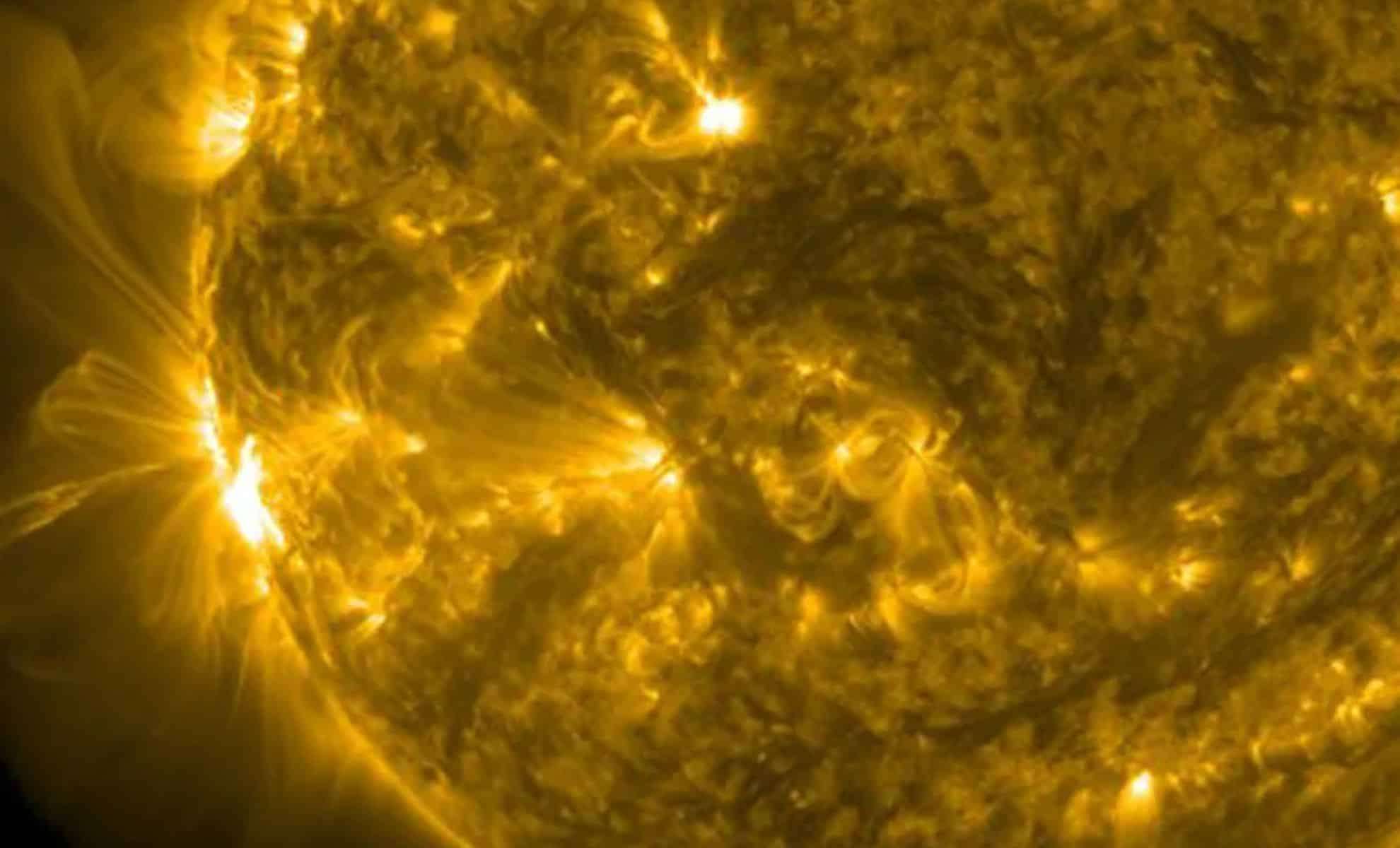
On October 23, 2024, the sun released a significant X3.3-class solar flare originating from the active sunspot AR3869. This powerful burst was detected by NASA’s Solar Dynamics Observatory (SDO) and holds important consequences for Earth's radio systems and auroral displays. The event plays a prominent role in the rising activity of Solar Cycle 25, which is anticipated to reach its maximum in 2025.
Examining the Powerful X3.3 Solar Flare Event
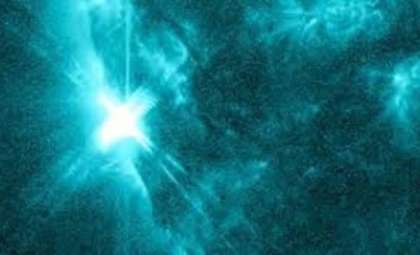
Solar flares are intense emissions of electromagnetic energy capable of influencing terrestrial technology. The X3.3 flare, among the strongest observed in recent times, peaked at 11:57 p.m. EDT on October 23. Being in the X-class category—the highest level—these flares emit intense ultraviolet and X-ray radiation that can affect electric grids, spacecraft components, and communications. NASA noted a distinct “bright flash” from the flare, documented in high-detail ultraviolet images from the SDO.
Following the flare, NOAA’s Space Weather Prediction Center detected shortwave radio blackouts impacting parts of Australia and Southeast Asia, areas facing the sun at that time. These blackouts arise when ultraviolet radiation ionizes Earth's ionosphere, disrupting radio signals. Space weather expert Sara Housseal emphasized the phenomenon by stating, “Shortwave radio blackouts were detected over Australia and the Southeast Pacific,” demonstrating the broad effects of such solar events.

Coronal Mass Ejection and Potential Geomagnetic Disturbances
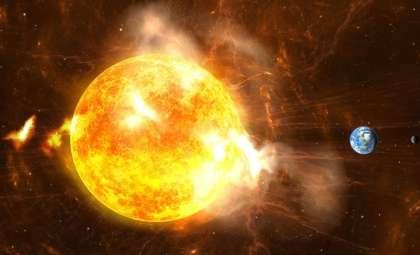
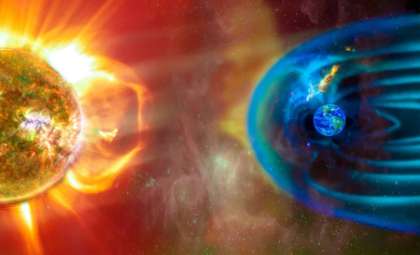
The sunspot AR3869 was also responsible for releasing a coronal mass ejection (CME), a vast expulsion of plasma and magnetic fields from the sun’s atmosphere. CMEs are critical space weather drivers because their interaction with Earth’s magnetic field can cause geomagnetic storms, leading to interference with satellites, electrical infrastructures, and producing visible auroras at lower latitudes. Observers identified the CME during the flare and are currently modeling its path. “AR3869 wasted no time with going straight for an X3.3 flare earlier today with a large CME,” commented Housseal, highlighting the sunspot’s dynamic nature.
Current forecasts indicate that the Earth may experience only a peripheral impact from this CME, but as AR3869 rotates into a more Earth-facing position, the risk of direct encounters with solar flares or CMEs—and consequent geomagnetic storms—will increase.
Monitoring Solar Cycle 25 and Its Influence on Earth
The ongoing Solar Cycle 25 is displaying escalating solar phenomena as it progresses toward its expected peak in 2025. NASA’s SDO continues to monitor sunspot activity like that of AR3869, gathering vital data on the solar cycle's dynamics and their terrestrial effects. Each cycle spans roughly 11 years and notably affects space weather conditions such as radio disruptions, satellite functioning, and power grid stability. Continuous monitoring helps scientists forecast potential disturbances and develop mitigation strategies.
Events such as this flare and CME reinforce the critical role of space weather forecasting in protecting technological systems. NASA collaborates closely with agencies including NOAA’s Space Weather Prediction Center to deliver warnings and updates on solar conditions, supporting sectors reliant on uninterrupted communications like aviation and navigation. As stated by NASA, “flares and solar eruptions can impact radio communications, electric power grids, navigation signals, and pose risks to spacecraft and astronauts.”
With AR3869’s increasing activity, both scientists and aurora enthusiasts anticipate further eruptions as the sunspot moves to face Earth directly. Although predicting large flares like the recent X3.3 remains challenging, NASA’s dedicated spacecraft fleet facilitates real-time surveillance essential for managing space weather hazards.
- Categories:
- Astronomy ,
- News ,
- Nasa





0 comments
Sign in to Comment