
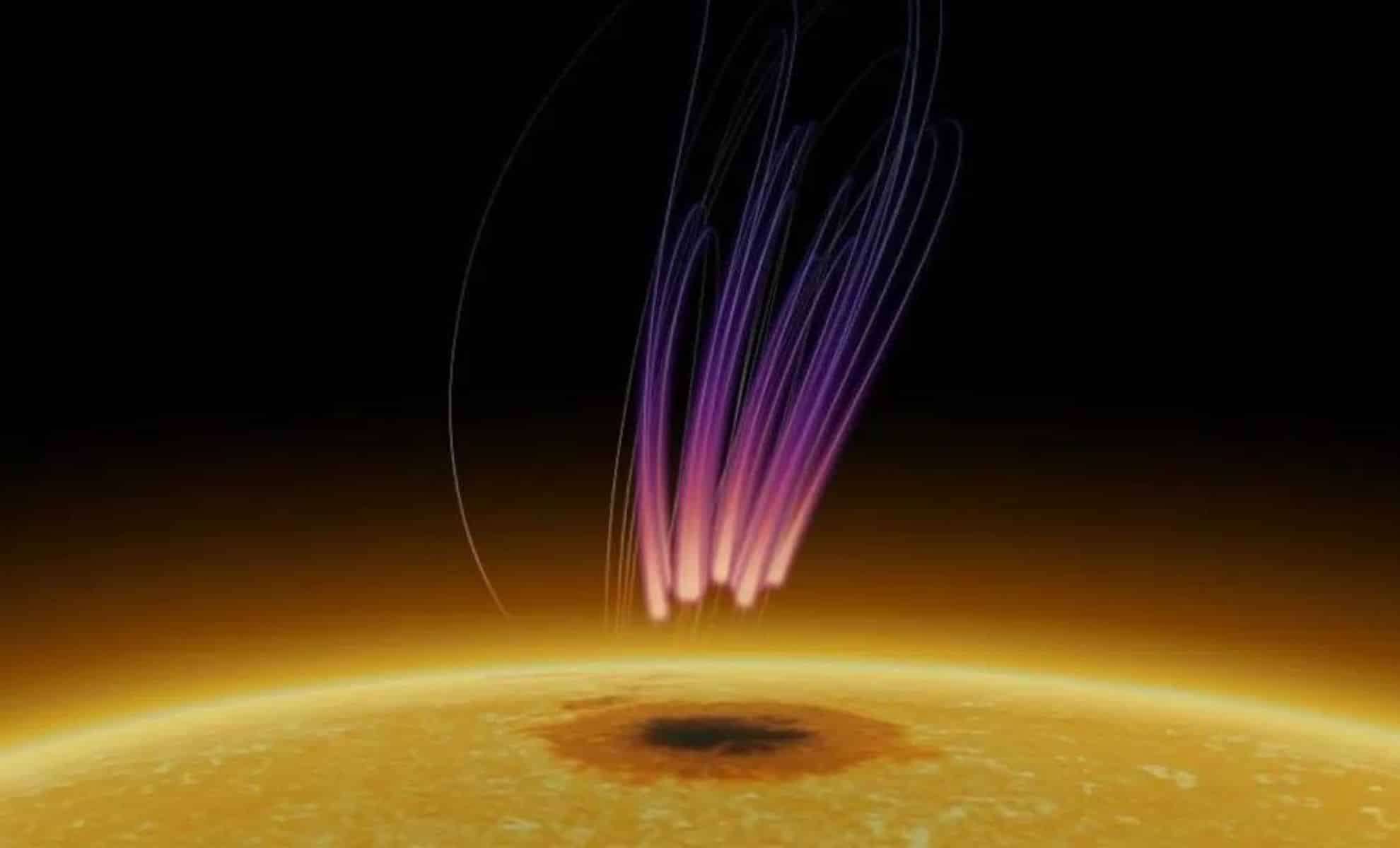
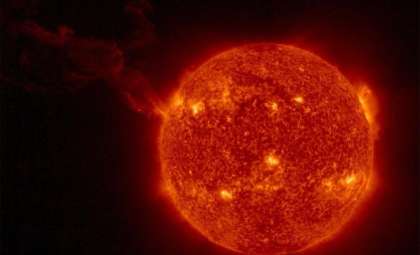
In a rare cosmic event, an immense solar storm in April 2023 caused a temporary opening in Earth’s magnetosphere, creating a unique magnetic connection between our planet and the Sun that lasted about two hours.
This powerful storm not only damaged sections of Earth’s magnetic shield but also transformed it in an unprecedented fashion.
During this brief interval, charged particles moved freely both to and from the Earth and Sun, igniting spectacular auroras at both polar regions and granting researchers a unique chance to observe this extraordinary phenomenon.

Understanding the Alfvén Wings Effect
A recent report in Geophysical Research Letters reveals that Earth commonly travels through the solar wind faster than the Alfvén speed—the velocity at which magnetic pulses spread through plasma. This usually results in a bow shock, described by NASA as similar to the foamy waves created by a boat moving through water. However, an exceptional solar event disrupted this norm.
On April 24, 2023, a coronal mass ejection (CME) unleashed low-density plasma, causing the Alfvén speed to surpass the solar wind’s velocity. This eliminated the bow shock and altered Earth’s magnetic environment, resulting in the formation of Alfvén wings. These wing-like magnetic structures temporarily established a direct route connecting Earth to the Sun, allowing charged particles typically trapped by Earth’s magnetic field to escape sunward.
NASA detailed, “For around two hours, Earth was also releasing particles back toward the Sun.” Instead of the usual one-way particle flow from the Sun to Earth, this formation created a rare two-directional exchange. While any solar auroras generated were too faint for observation, this event was captured by NASA’s Magnetospheric Multiscale (MMS) spacecraft traveling through Earth’s Alfvén wings.
For a brief period during the storm, a two-way “highway” formed between the Sun and Earth.
In other words, the usual one-way flow from the Sun to Earth suddenly went both directions: For about two hours, Earth was also spewing particles back into the Sun! pic.twitter.com/Q2b1o5C9b0
— NASA Sun & Space (@NASASun) August 6, 2024
An Uncommon Yet Enlightening Phenomenon
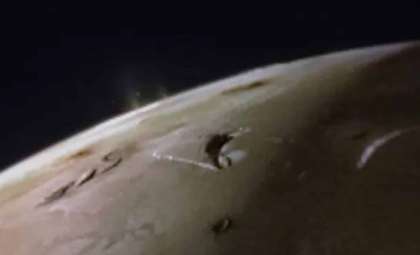
Alfvén wings rarely appear near Earth but are frequently observed near gas giants like Jupiter, where similar magnetic interactions allow charged particles to travel between the planet and its moons, such as Io and Ganymede. This solar event temporarily made Earth’s magnetic environment resemble those of these more magnetically active regions.
The researchers emphasized that this event opened new perspectives on the dynamic interactions between Earth and the Sun, highlighting how magnetic storms can momentarily reshape Earth's magnetosphere in ways previously only seen around giant planets.
Record X-Class Solar Flare Emerges From Unusual Sunspot
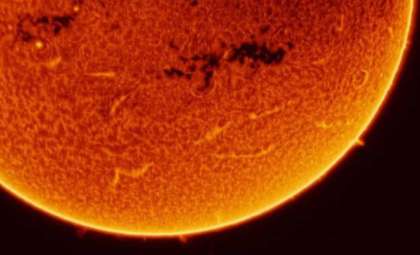
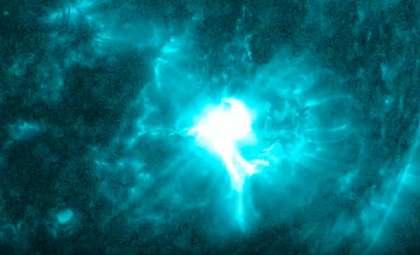
On August 14, 2024, the Sun once again captured global attention by releasing an X-class solar flare, the highest-level solar eruption, which disrupted shortwave radio signals across Asia and the Indian Ocean. Peaking at 2:40 a.m. EDT, this flare highlighted the Sun’s increasing activity as it enters a more energetic phase of its solar cycle.
What makes this flare particularly notable is its origin from sunspot AR3784, an anomalous “rule-breaking” sunspot distinguished by its atypical polarity. Ordinarily, sunspots in the Northern Hemisphere adhere to Hale’s Law with a polarization pattern of -+, but AR3784 exhibits a rare ± polarity, challenging conventional understanding.
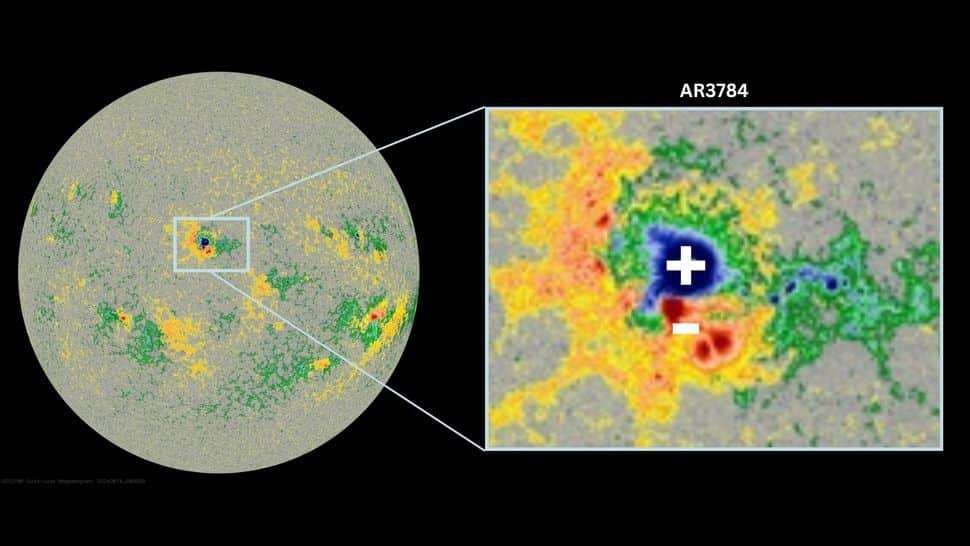
Sunspot AR3784: Challenging Established Solar Science
According to Spaceweather.com, approximately three percent of sunspots contravene Hale’s Law, but AR3784 is especially intriguing because its magnetic polarity doesn't conform clearly to expected types. Scientists suggest the sunspot’s magnetic structure is unusually twisted, increasing the likelihood of powerful X-class flares.
Spaceweather.com noted, “Indeed, the sunspot produced exactly that,” releasing a potent burst of X-rays and ultraviolet radiation aimed at Earth.
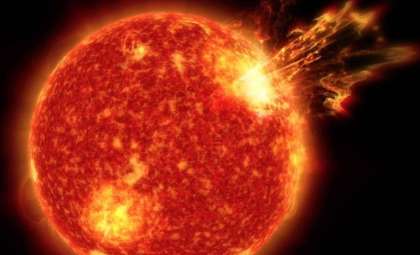
X-class flares are the most intense solar events, capable of interfering significantly with Earth’s radio transmissions and magnetosphere. Accompanying the flare, a coronal mass ejection (CME) was launched toward Earth, stirring excitement among aurora watchers who anticipate vivid auroral displays as it arrives around August 17 or 18.
How Solar Flares and CMEs Influence Earth
Solar flares occur when accumulated magnetic energy in the Sun’s corona is suddenly released, emitting intense electromagnetic bursts, including X-rays and ultraviolet light, which travel at light speed to Earth. Upon arrival, this radiation ionizes the upper atmosphere, increasing its density and disrupting radio signal propagation, often causing shortwave radio outages.
The August 14 X-class flare caused widespread radio communication blackouts throughout Asia and the Indian Ocean, disrupting networks dependent on shortwave frequencies.
Meanwhile, the related CME is expected to induce geomagnetic storms upon interacting with Earth's magnetosphere. As solar ions collide with atmospheric gases, spectacular auroras—the northern and southern lights—may light up sky regions at high latitudes.
Anticipating Enhanced Solar Activity
With the Sun entering a heightened phase of its approximately 11-year activity cycle, scientists predict an increase in both the frequency and strength of solar flares and CMEs in the years ahead. Enhanced understanding of how these phenomena impact Earth’s magnetosphere is vital for forecasting effects on technology such as telecommunications and power infrastructure.
Astronomy enthusiasts and researchers are eagerly monitoring the Sun's activity. Events like the August 14 flare and the 2023 Alfvén wings incident shed light on the intricate relationship between Earth and its star, underscoring the importance of continuous solar observation and research.
Meanwhile, anticipation builds as the latest CME approaches Earth, promising awe-inspiring auroral displays across northern and southern high-latitude areas.
- Categories:
- Astronomy ,
- News ,
- Space ,
- Nasa





0 comments
Sign in to Comment