
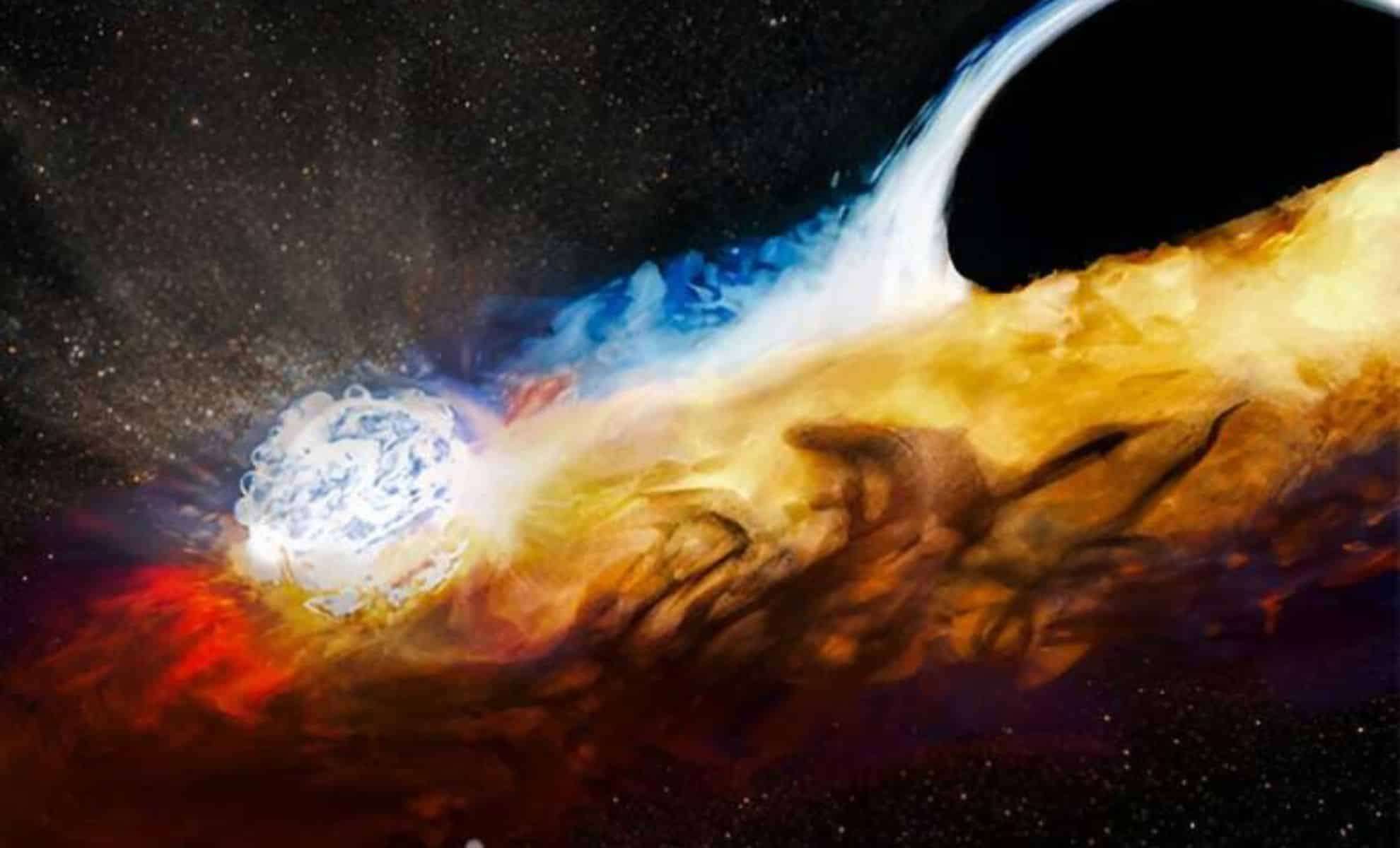
NASA has shared remarkable new observations showing black holes actively tearing apart stars, shedding light on these mysterious cosmic giants.
Thanks to cutting-edge space technologies, scientists are now able to witness the intense and dramatic interactions near black holes firsthand. These discoveries not only enhance our grasp of the cosmos but also prompt fresh questions regarding star life cycles and black hole behavior.
The Fierce Interaction Between Black Holes and Stars
Recent research by NASA centers on black holes and their powerful gravitational pull that leads them to consume nearby stars. Data from multiple NASA missions, including the Hubble Space Telescope and the Chandra X-ray Observatory, have produced striking images and evidence of how black holes disrupt and devour stellar objects.

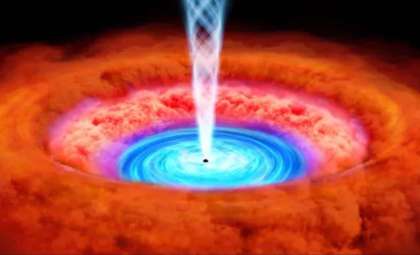
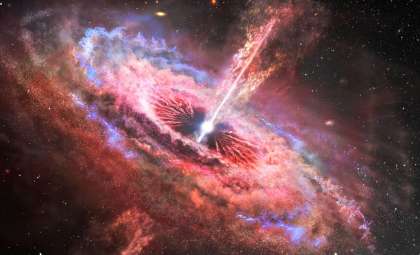
According to data from NASA, “scientists have observed a black hole that destroyed a star and then went after another.” This occurs when a star crosses the critical boundary known as the event horizon, beyond which escape is impossible. Once inside this boundary, the star is shredded by the black hole’s immense gravitational forces, triggering what is known as a tidal disruption event.
Understanding Tidal Disruption Events
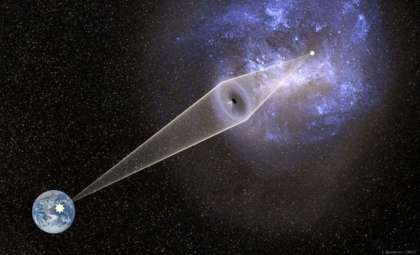
Tidal disruption events (TDEs) provide crucial clues about how black holes consume stars. Per NASA’s research, “The black hole’s immense gravity creates extreme tidal forces that can rip a star apart.” The energy unleashed during this process produces bright flares that astronomers can detect over vast cosmic distances.
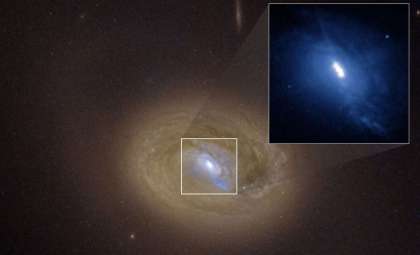
A key example highlighted in the study is a TDE near a black hole in the galaxy NGC 7392. Scientists observed intense bursts of X-rays and visible light as the black hole tore through the star’s material, allowing real-time study of this violent interaction. Such events highlight the dynamic and often destructive nature of black holes within their galactic neighborhoods.
Impact on Stellar Life Cycles
The discoveries carry important implications for our views on how stars evolve and meet their ends. While stars generally follow predictable trajectories from birth to death, the presence of a black hole alters these pathways considerably by actively consuming stars.
The findings underscore the significant influence of black holes on star formation and evolution near their surroundings. When a black hole disrupts a star, it not only absorbs its mass but also affects nearby gas and dust, potentially sparking the birth of new stars. As noted in the Phys.org report, “These observations help scientists understand how black holes shape the galaxies they inhabit.”
Technological Advances Driving Discoveries
NASA’s breakthrough discoveries owe much to sophisticated observation tools. The Hubble Space Telescope and Chandra X-ray Observatory offer unparalleled views of cosmic phenomena, capturing striking imagery and data across multiple wavelengths that deepen understanding of black hole environments.
The success of these findings also rests on the coordination between various observatories and instruments. By integrating data from different sources, researchers create a detailed picture of black hole interactions and their broader effects on galactic evolution.
Prospects for Future Studies
Exploration of black holes and their stellar interactions continues to be a compelling frontier. NASA scientists are committed to advancing this research, equipped with upcoming missions and evolving technology that promise further revelations about these profound cosmic entities.
Particular focus lies on detecting more tidal disruption events and unraveling the physics behind them. By examining diverse TDEs, astronomers aim to better understand black hole distribution throughout galaxies and their ongoing role in shaping star populations.
- Categories:
- Astronomy ,
- News ,
- Nasa




0 comments
Sign in to Comment