

China is rapidly advancing toward a milestone in space exploration by aiming to return samples from Mars. Their Tianwen-3 mission, targeted for launch in 2028, could potentially bring back rock and soil specimens from the Red Planet by 2031, possibly arriving years before the collaborative NASA–ESA Mars Sample Return project.
Progress Rooted in Previous Achievements
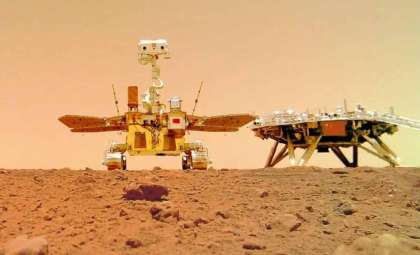
China’s venture into deep space exploration has made remarkable strides. In May 2021, the Tianwen-1 mission marked a significant achievement by successfully landing on Mars, becoming only the second nation after the U.S. to achieve this feat. The mission deployed the Zhurong rover, which began exploration of Utopia Planitia, paving the way for more ambitious projects.
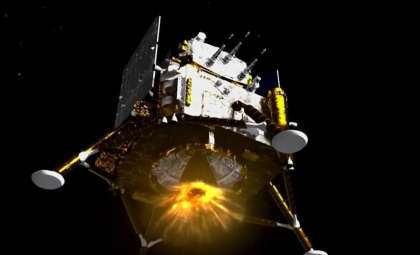
Tianwen-3 represents the next ambitious step, featuring two launches from the Wenchang spaceport in Hainan. One vehicle will deliver the lander, while the second will carry the orbiter and return module. The mission aims to gather a minimum of 500 grams of Martian surface material, which the lander will send into orbit to rendezvous with the orbiter for transport back to Earth.

Key Aspects of the Tianwen-3 Mission
The spacecraft is expected to touch down in the mid-northern regions of Mars, selecting a site at least three kilometers below the average surface level to optimize descent through the thin atmosphere. This mission incorporates proven technology from China's Chang’e lunar expeditions. The lander is designed to drill as deep as two meters and collect surface samples.
An innovative component is a helicopter drone, inspired by NASA’s Ingenuity, which will assist in gathering additional samples within about 100 meters of the landing site. Operating over roughly 60 days, the lander will deploy various instruments, including a Raman spectrometer and ground-penetrating radar, to study the geological features of the area.
After collecting specimens, a solid-fuel rocket booster will launch the sample container into orbit, where it will link up with the orbiter to begin its journey home. Upon Earth return, the samples will be delivered to a dedicated laboratory equipped to handle extraterrestrial materials safely, adhering to strict planetary protection standards that prevent contamination.
Research Objectives and Search for Life
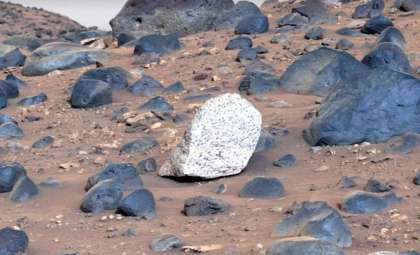
The principal scientific aim of Tianwen-3 is to explore the possibility of life beyond our planet. Scientists are particularly focused on identifying biosignatures, which are chemical or physical indicators of past or present life. Li Yiliang, an astrobiology professor at the University of Hong Kong, highlights that these may include biologically derived molecules, unique isotope patterns, and fossil-like structures embedded in Martian rocks.
Researchers are not limiting their search to familiar Earth life biomarkers but are also open to detecting alternative biochemical signatures resembling DNA and RNA, along with isotopic variations that could suggest biological processes. Discovering such evidence could revolutionize how we perceive the potential for habitable environments and life's uniqueness in the cosmos.
Many experts have applauded the mission’s clear focus. Planetary scientist Mahesh Anand from the Open University in the UK remarked, “This mission aligns precisely with recommendations we have made for years.”
Comparing Approaches: Tianwen-3 vs NASA’s Mars Sample Return
Tianwen-3 contrasts with the intricate Mars Sample Return (MSR) initiative led by NASA and ESA. While NASA’s Perseverance rover has methodically gathered carefully chosen samples over several years from the geologically rich Jezero Crater, China’s mission adopts a more streamlined method.
Though Tianwen-3 samples from a limited, likely flat, and geologically uniform area, it offers advantages in simplicity and a more defined schedule. Prioritizing engineering dependability rather than extensive scientific reach may make it more effective in accomplishing an early sample return.
Some specialists point out that this divergence reflects differing strategic priorities. Casey Dreier from the Planetary Society explained NASA’s approach involves a “curated, carefully documented process,” while China’s is “driven by symbolic goals and demonstrable capability rather than immediate scientific output.” Nevertheless, China’s consistent advancements place it in a competitive position.
Beyond Tianwen-3, China’s larger vision includes missions within the Tianwen program, which means “heavenly questions.” This program has already launched the Tianwen-2 asteroid mission and plans Tianwen-4, targeting Jupiter and its moon Callisto around 2029. Future missions to the ice giants, Uranus and Neptune, are also being considered. Still, Tianwen-3 holds the greatest potential to transform our knowledge of Mars and planetary science as a whole.
- Categories:
- News








0 comments
Sign in to Comment