
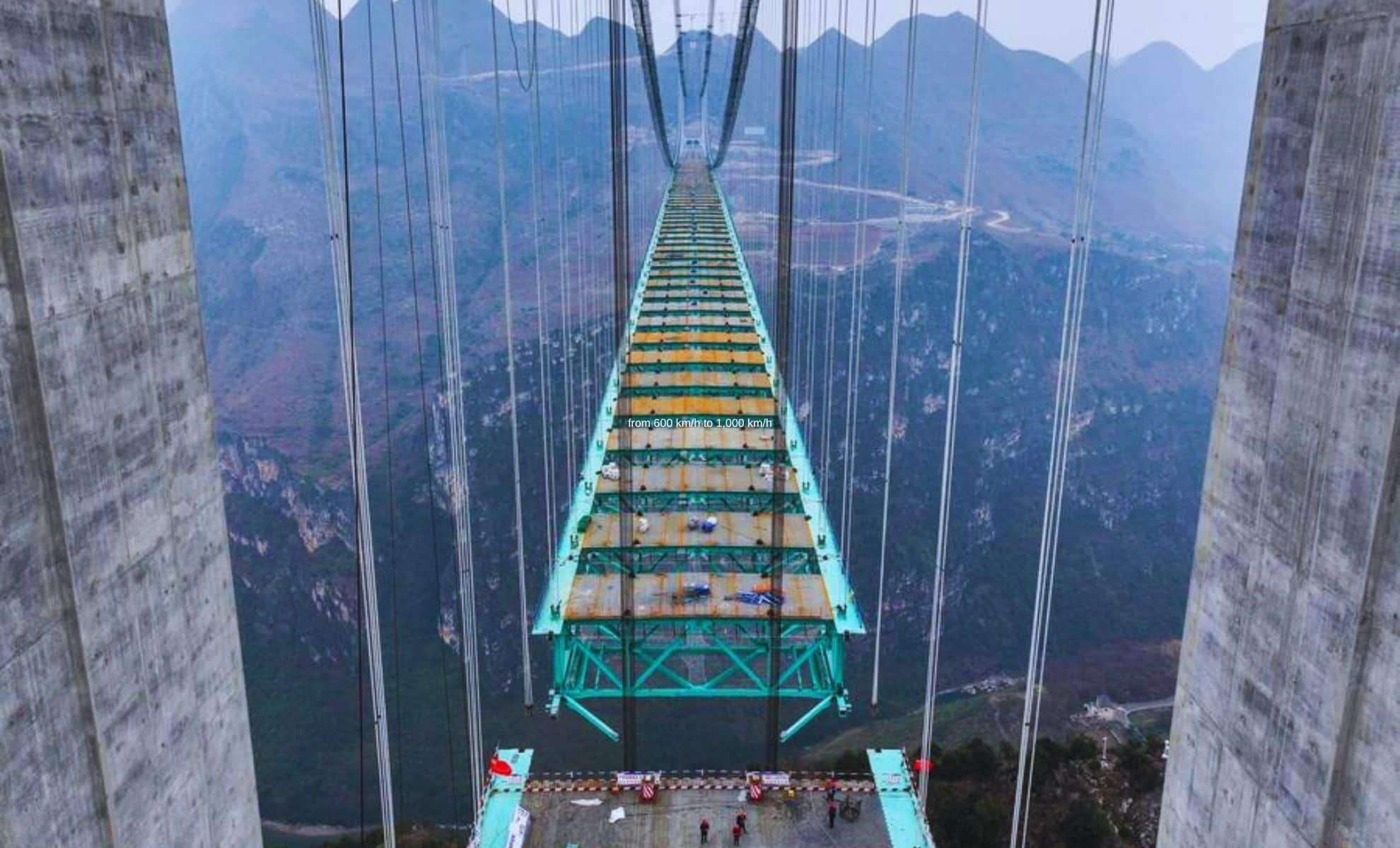
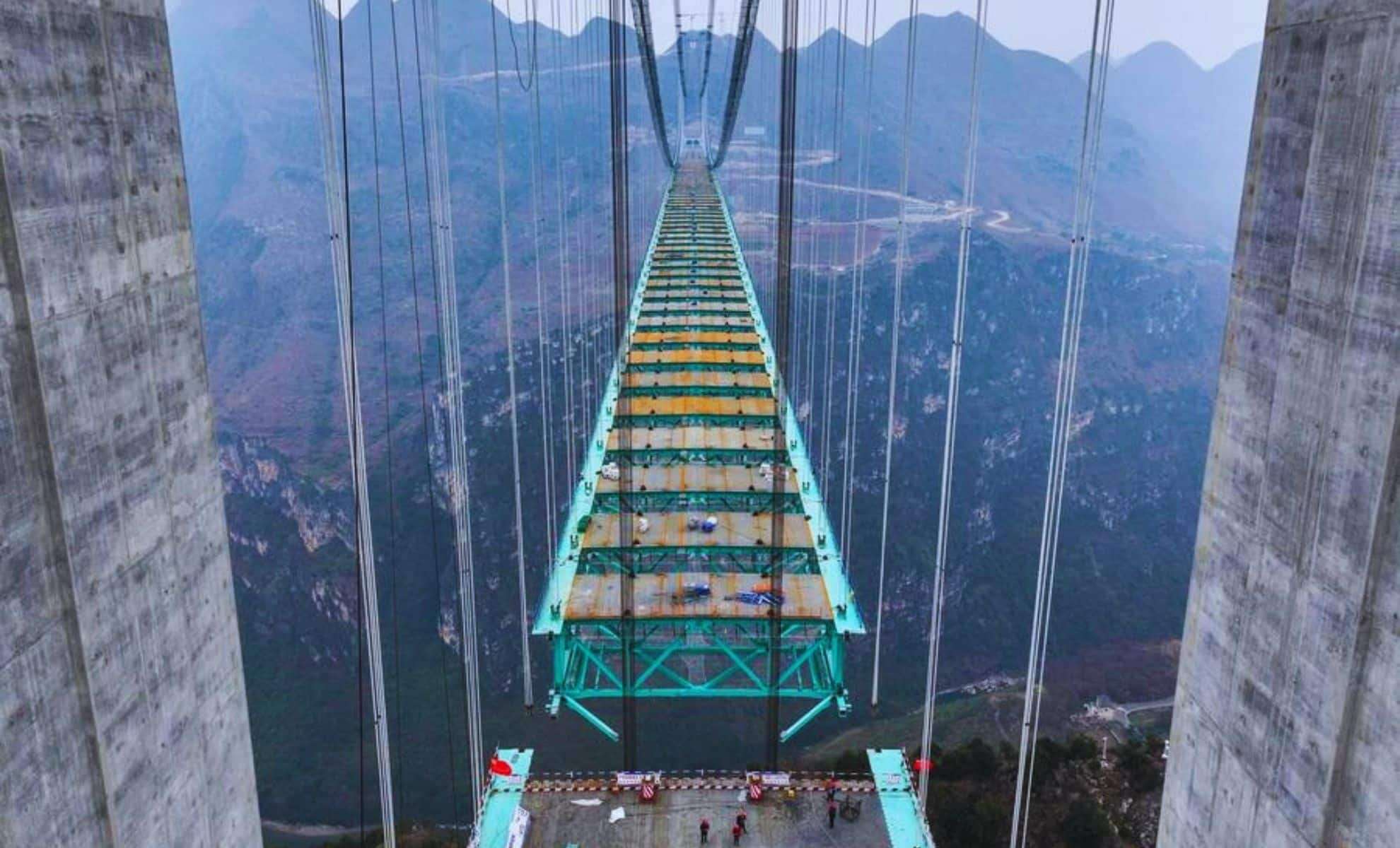
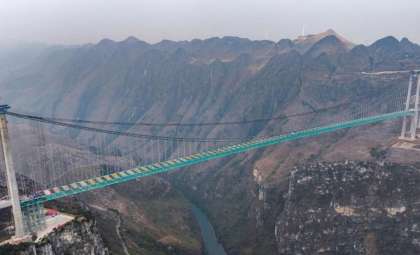
As reported by China Daily, the construction of the Huajiang Grand Canyon Bridge in Guizhou province has reached 95% completion, with an anticipated opening in late 2025. Soaring 625 meters above the river—over double the Eiffel Tower’s height—it is set to claim the title of the highest bridge globally, surpassing the Beipanjiang Bridge which stands at 565 meters. This feat marks not only a new benchmark in engineering but also a strategic move to develop a remote mountainous zone into a thriving travel destination.
Breaking Through Mountains to Cross the "Earth’s Crack"
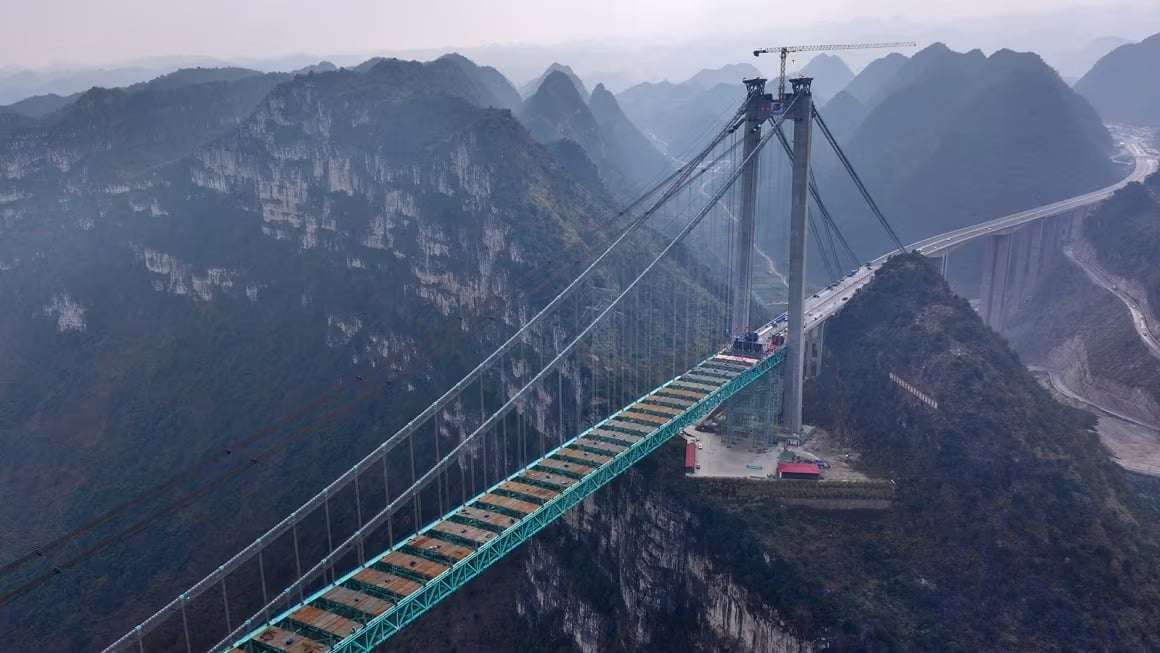
Spanning 1,420 meters between its towers, the bridge holds the record for the longest main span in a mountainous environment worldwide. To establish the alignment of the highway, engineers carved a path right through a mountain, addressing the region’s rugged terrain and deep gorges—known locally as the "Earth’s crack."
Chief engineer Zhang Shenglin from the Guizhou Highway Engineering Group explained that the steel truss framework, weighing approximately 22,000 metric tons—equal to about three Eiffel Towers—was erected over just two months. The primary structure was finalized in January 2025, and crews are currently completing deck assembly along with protective coating work on the main cables.

The bridge will link Liuzhi and Anlong, reducing travel time across the canyon from nearly two hours to just two minutes. This will dramatically improve transportation in Guizhou, where winding mountain roads have long impeded speedy movement.
From Engineering Triumph to Tourist Destination
The Chinese government envisions the bridge as a central attraction for visitors. Planned amenities include glass elevators that ascend from the canyon floor, the world’s tallest bungee jump platform, and multiple viewing decks. The Yundu service center, spanning 21,100 square meters, is designed to offer dining, retail, entertainment, and cultural experiences.
Additional developments under consideration involve suspension bridges, cable cars over the canyon, hotels perched on cliffs, markets selling local food, and “sky cafés” with panoramic views of the gorge. Authorities anticipate this blend of infrastructure and tourism will create lasting economic benefits for nearby communities.
Already, more than 100 young locals have returned to adjacent villages to launch enterprises centered on tourism, including cliff-side hotels, camping grounds, and rock climbing facilities. Officials expect increased sales of ethnic crafts and agricultural goods, helping to diversify a region historically dependent on subsistence agriculture.
An Emblem of China’s Engineering Excellence
Zhang described the Huajiang Grand Canyon Bridge as “a testament to China’s engineering prowess” and a “mega project” that transcends mere geographic connections. The bridge’s height rivals that of a 200-story skyscraper, and the rapid pace of construction underscores China’s growing expertise in developing massive infrastructure amid challenging conditions.
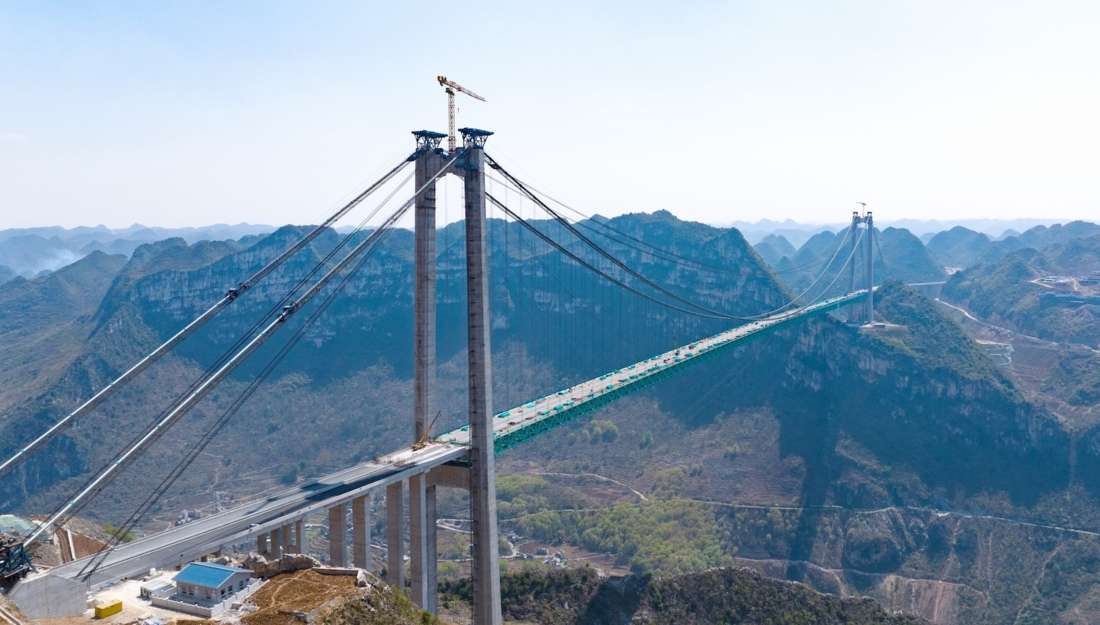
Upon its completion later this year, the Huajiang Grand Canyon Bridge will not only claim new records but also exemplify how infrastructure can drive both enhanced connectivity and tourism-fueled economic development. Its success is likely to serve as a model for other mountainous regions facing similar transportation hurdles.
- Categories:
- News






0 comments
Sign in to Comment