
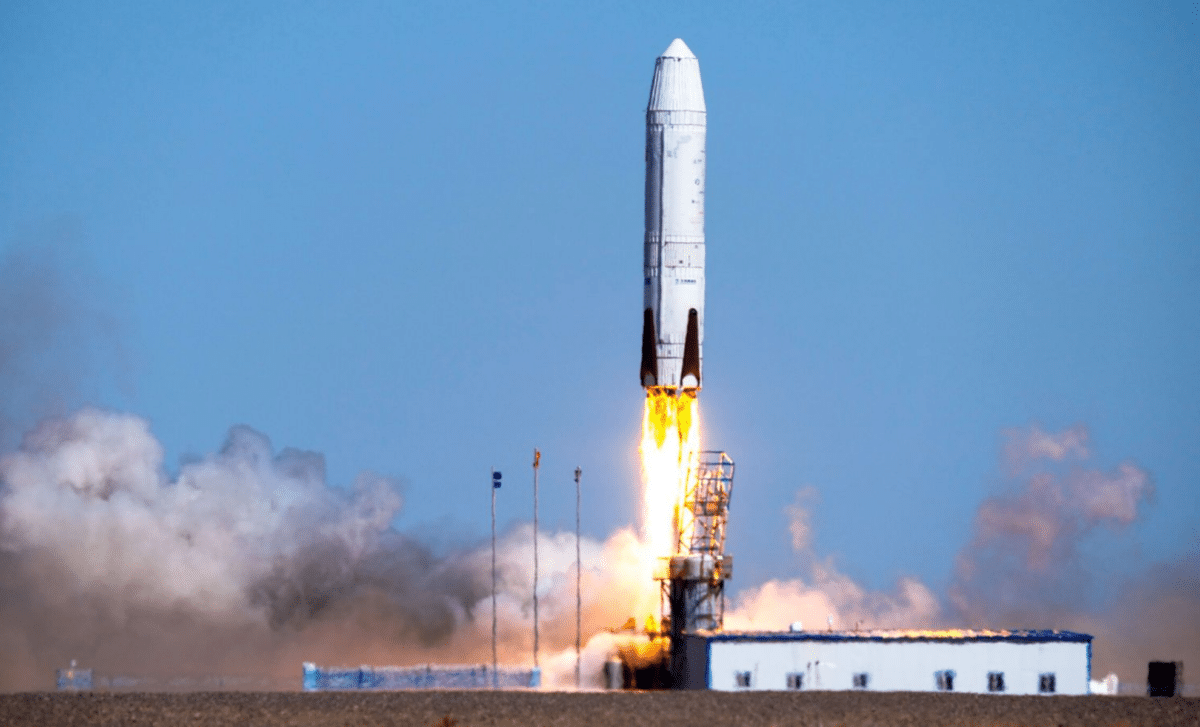
China's rapidly advancing private space industry is now targeting human space tourism, with a Beijing-based startup unveiling plans to transport paying customers on suborbital trips by 2028. This initiative highlights China's shifting focus in the commercial space sector from primarily satellite launches to offering crewed spaceflight experiences previously limited to government agencies.
A New Competitor Joins the Global Space Tourism Arena
China is steadily broadening its commercial human spaceflight goals, with space tourism emerging as a prominent next milestone. The Beijing-based startup InterstellOr has announced plans to conduct its inaugural crewed suborbital flight by 2028, positioning itself among a select group of companies worldwide providing private space access. The company recently showcased a full-scale prototype of its CYZ1 crew capsule, advancing beyond mere conceptual phases.
The CYZ1 is designed to carry passengers briefly above the Kármán Line—the widely accepted boundary of space at roughly 62 miles altitude. During these flights, passengers will experience several minutes of microgravity before safely descending under controlled conditions. InterstellOr has successfully completed a landing buffer trial, marking an important step toward ensuring passenger safety during touchdown.

Though timelines depend on further testing and regulatory approvals, the startup has already begun accepting bookings. This signals growing confidence in China's private space sector as it adopts business models similar to those pioneered by U.S. companies in recent years.
Star Bookings Highlight Marketing With Global Echoes
InterstellOr’s early announcements stand out with its engagement of notable passengers. Chinese actor Johnny Huang Jingyu has reportedly reserved a spot for a future journey, becoming the company’s first celebrity space traveler and assigned passenger number 009. This mirrors tactics used by Western space tourism firms, where celebrity endorsements garner publicity and bolster legitimacy.
According to Space.com, tickets for InterstellOr’s suborbital flights come with a price tag near 3 million Chinese yuan (roughly $430,000), requiring a 10% deposit to reserve a seat. The company also announced that Lin Xiaoyan, a Chinese-American poet, is slated to become the first female astronaut of overseas Chinese descent on its missions, underscoring the symbolic impact of the program.
These initial bookings serve multiple purposes, providing critical funding during capital-intensive phases and shaping public views on who can access space tourism. In a market where no Chinese commercial entity yet operates crewed civilian flights, establishing reputation and visibility is crucial.
Expertise and Ambitions Fuel Industry-Wide Efforts
Formed in early 2023, InterstellOr has quickly gained attention due to its technical team's background. Several key members previously worked within China’s state-managed human spaceflight projects, potentially benefiting the startup with expertise related to safety, spacecraft design, and operational rigor.
The company’s goals are part of a broader competitive landscape. Various Chinese firms are advancing suborbital tourism initiatives. For example, CAS Space—a commercial branch of the Chinese Academy of Sciences—recently conducted an uncrewed capsule launch to test microgravity technologies. Likewise, Deep Blue Aerospace is developing reusable rocket systems aimed to support short-duration human spaceflights.
This expanding ecosystem points to a collective effort to commercialize space access in China. Multiple enterprises progressing simultaneously could shape pricing strategies, safety standards, and the speed of technological advancement.
Opening a New Era in China’s Commercial Crewed Spaceflight
If InterstellOr realizes its goal of flying paying passengers by 2028, it will mark a landmark achievement for China's private space sector. Such a venture would be the first commercial Chinese mission carrying civilians, expanding the country's role in an industry largely influenced by U.S.-based operators.
Challenges remain, including stringent testing, certification processes, and creating regulatory frameworks tailored to commercial human space travel. Nevertheless, early prototype showcases, celebrity involvement, and growing domestic competition suggest strong momentum. Once a distant vision, space tourism in China is now evolving into an attainable commercial reality.
- Categories:
- Space





0 comments
Sign in to Comment