
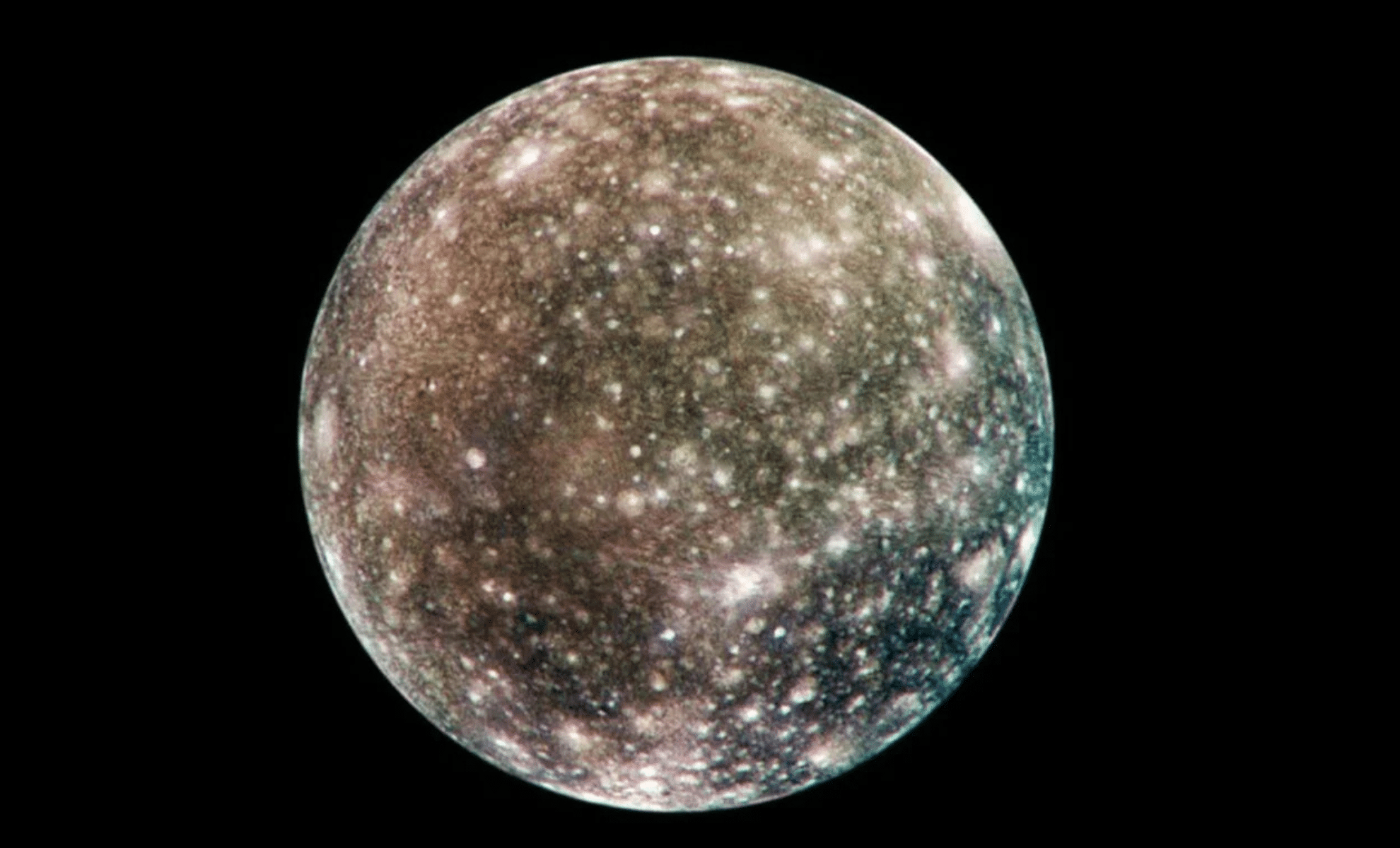
Researchers have unveiled compelling new indications that Jupiter’s moon Callisto may conceal an extensive ocean underneath its icy exterior, potentially joining Europa and Ganymede as water-rich bodies within the outer solar system. By revisiting and refining data collected by NASA’s Galileo mission, scientists filtered out long-standing interference from Callisto’s robust ionosphere, uncovering a clear signal pointing towards a global salty ocean beneath the moon's frozen crust.
This finding carries considerable significance for future explorations targeting extraterrestrial habitability, with upcoming spacecraft such as NASA’s Europa Clipper and the European Space Agency’s JUICE mission positioned to validate these discoveries within the next decade.
Advanced Analysis Reveals Hidden Ocean Beneath Callisto’s Surface
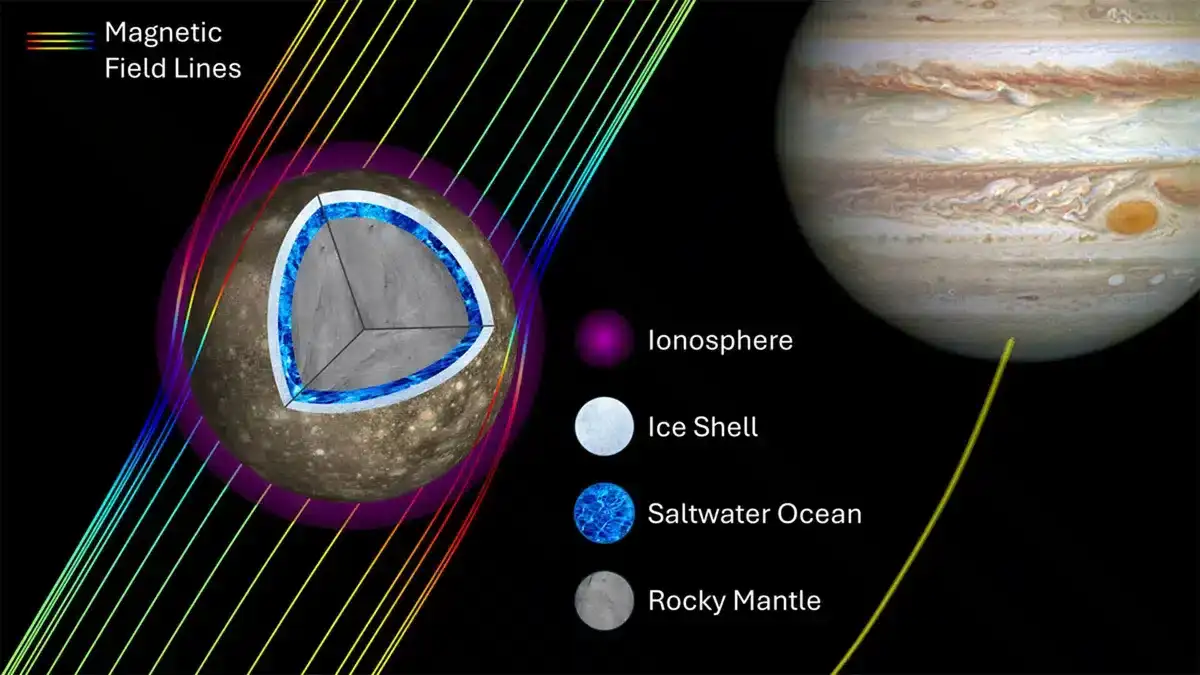
Scientists have speculated about the existence of an underground ocean on Callisto, Jupiter’s second-largest satellite, for years; however, previous magnetometer data remained inconclusive due to interference. A recent publication in Earth and Space Science introduces a novel technique that significantly improves detection capabilities of subsurface oceans. Applying this method to Callisto’s data yields strong support for a vast liquid water reservoir beneath its icy shell.

Led by Corey J. Cochrane, the research team employed Principal Component Analysis (PCA) to dissect magnetic induction signals, effectively distinguishing authentic oceanic signatures from noise and disturbances caused by Callisto’s ionosphere. This analytical breakthrough unveiled a distinct magnetic response consistent with the presence of a deep, saline ocean.
This advancement not only positions Callisto among the solar system’s potential habitable icy worlds but also highlights how innovative data processing can extract fresh insights from archival mission information. With missions like NASA’s Europa Clipper and ESA’s JUICE set to explore the Jovian moons in finer detail, researchers now possess enhanced tools to verify and understand the ocean’s characteristics, including its salinity and habitability potential.
Exploring the Potential for Life Within Callisto’s Ocean
Callisto often remains in the shadow of Europa, which is renowned for its subsurface ocean and geological dynamism and is considered one of the most promising candidates for extraterrestrial life. However, Callisto’s relatively lower radiation environment and plentiful surface oxygen offer a compelling alternative for astrobiological exploration.
While it is still uncertain whether life could thrive within Callisto’s hidden ocean, its chemical makeup and interaction with Jupiter’s magnetic field might unlock vital clues about the prerequisites for habitability.
“Europa Clipper is actually a habitability mission (not to be confused with life detection), which will provide the data required to better help us answer this question,” explained Cochrane.
Upcoming Missions Set to Illuminate Callisto’s Secrets
NASA’s Europa Clipper, scheduled for launch in 2024 and arrival at Jupiter by 2030, will incorporate sophisticated magnetometers and radar systems to probe Callisto’s interior with unprecedented accuracy. Additionally, ESA’s JUICE (Jupiter Icy Moons Explorer), expected to reach the Jovian system in 2031, will conduct comprehensive studies of Callisto along with Europa and Ganymede.
Cochrane emphasized the importance of continued observations: “Each flyby provides just a brief snapshot of the magnetic environment. The new missions will help ‘fill in the gaps’ left by Galileo’s limited dataset.”
Should these findings be confirmed, Callisto would stand as the third moon of Jupiter known to harbor a subsurface ocean, broadening the roster of environments in our solar system that might support life.
- Categories:
- News











0 comments
Sign in to Comment