
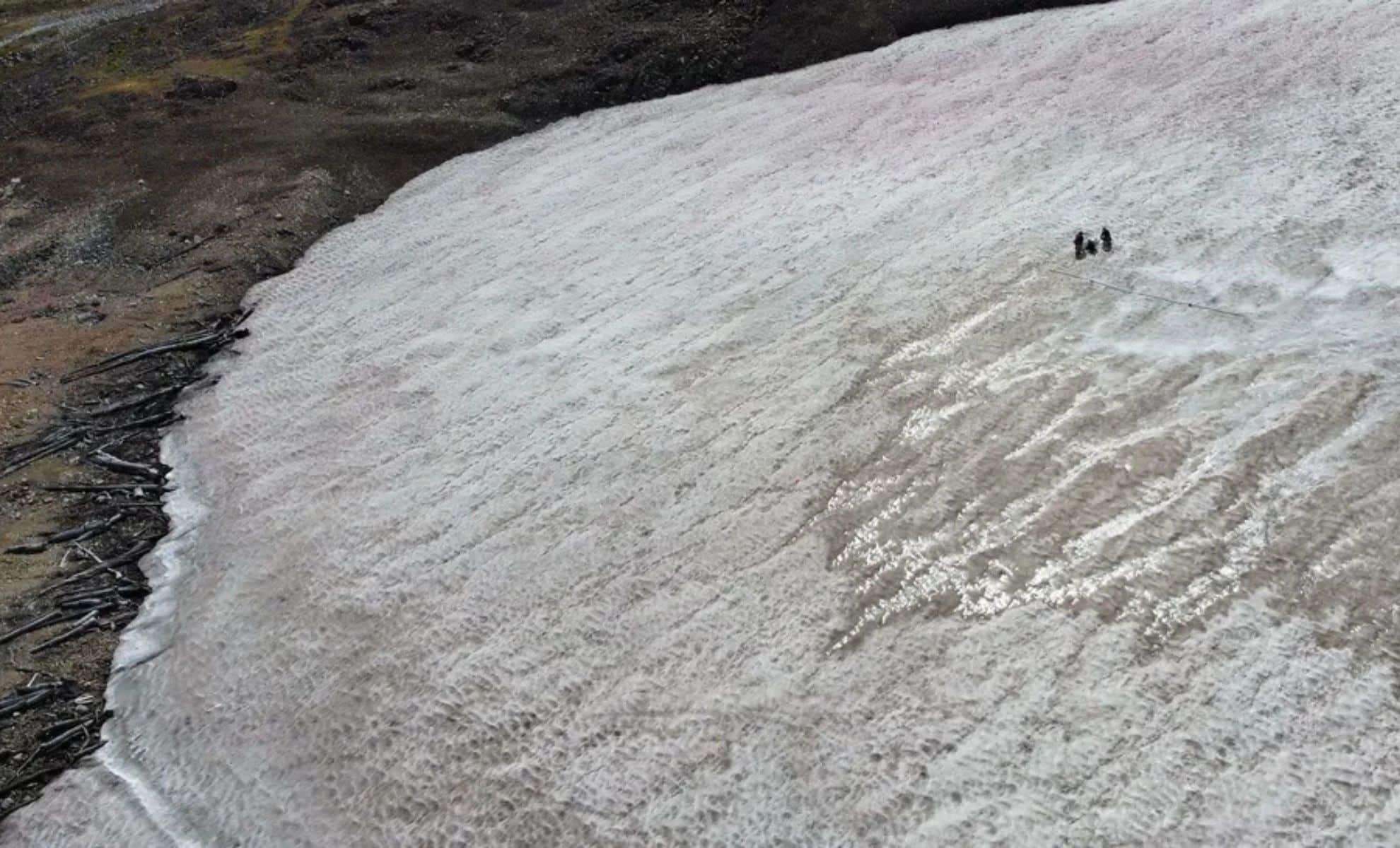
A remarkable find has come to light as retreating ice patches on the Beartooth Plateau, located high in the Rocky Mountains, have revealed a perfectly preserved ancient forest. This stand of whitebark pines (Pinus albicaulis) has been locked in ice for millennia, providing scientists with a unique window into an alpine ecosystem that existed thousands of years ago. Situated above 10,000 feet elevation, these trees have remained frozen and undisturbed since a significant climatic cooling event occurred roughly 5,500 years ago.
The ancient forest, safeguarded beneath ice for thousands of years, is now surfacing due to rapid melting driven by climate change. Montana State University associate professor and study co-author David McWethy commented, “No one realized these ice patches had persisted for millennia. The landscape back then was vastly different from what we see today.” This discovery offers valuable insights into the evolution of alpine environments and highlights the susceptibility of these fragile habitats amid global warming.
Insights from the Preserved Woodland
The recovered forest on Beartooth Plateau represents an alpine ecosystem that flourished under warmer conditions following the last glacial period. Between 10,000 and 5,500 years ago, elevated temperatures allowed whitebark pines to grow at higher mountain altitudes than they inhabit today. These trees were integral to a thriving ecosystem that supported diverse wildlife and the humans who hunted in the area.

“These alpine environments have been remarkably dynamic over time, with both people and animals utilizing the landscape,” said Cathy Whitlock, director of Montana State University’s Paleoecology Lab and the study’s lead author. Archaeological findings near the ice reserve include a wooden spear shaft dating back 10,000 years, likely used for hunting purposes.
The trees, remarkably well-preserved despite bark removal, appear nearly lifelike, offering researchers an extraordinary glimpse into a vanished ecosystem. This discovery sheds light on how past climatic oscillations influenced mountain vegetation and human presence, demonstrating the impact of temperature changes and ice cover over thousands of years.
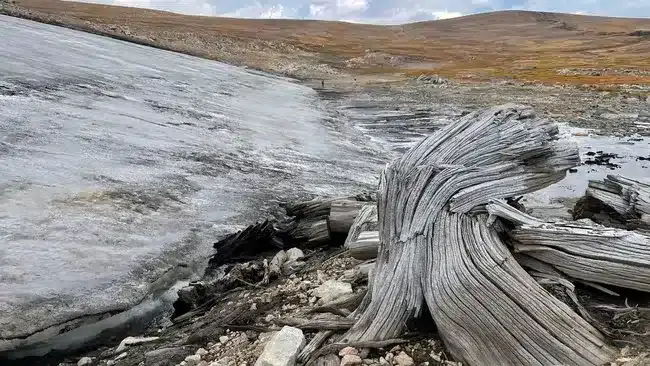
Discovery Highlights
How the Forest Became Entrapped in Ice
The survival of this forest is credited to both climatic and volcanic influences. After a long period of warm conditions favorable to tree growth, a cooling trend began about 5,500 years ago, which ultimately led to the forest’s demise. The process was intensified by volcanic eruptions that spewed ash and aerosols into the atmosphere, triggering faster global cooling.
This swift temperature drop caused ice to rapidly envelop the woodland, preserving the trees in a frozen state that protected them from decomposition and environmental wear for thousands of years. Until recent warming trends accelerated ice melt, these ice patches remained intact.
As human-induced warming causes higher temperatures, ancient ice layers are disappearing much faster, exposing the forest. While this offers valuable scientific data, it also serves as a sobering indicator of the fragility of mountain ecosystems.
“While such findings are fascinating, they also highlight how vulnerable alpine environments are to ongoing climate shifts,” stated Whitlock.
Implications of Climate Change on Mountain Ecosystems
The melting ice on Beartooth Plateau reflects a broader global pattern affecting high-elevation and polar habitats. Accelerated warming from human activity threatens the preservation of ancient ice formations. Although revealing previously hidden ecosystems improves scientific understanding, it simultaneously raises concerns about the stability of these ecosystems moving forward.
Species such as the whitebark pine are already endangered by diseases and habitat stress. Continued ice loss could also lead to the destruction of other preserved ecosystems and cultural artifacts. While melting ice uncovers historical treasures, it underlines a problematic environmental trajectory.
The evolving history of the Beartooth Plateau reveals resilience yet also warns about the rapid pace of modern climate change, which may exceed natural adaptive capacities.
A Rare Glimpse into an Ancient World
For researchers, this frozen forest provides a priceless opportunity to understand ecosystem responses to past climate variations. The preserved pines and related artifacts illustrate a lively ancient environment where plants, animals, and humans coexisted under warmer conditions.
Nevertheless, the discovery also signals caution. As Whitlock emphasized, the melting ice presents both scientific opportunity and a clear reminder of ecosystem vulnerability.
This find serves as a wake-up call—to protect the remaining alpine habitats and curb human-driven climate impacts. The frozen forest on the Beartooth Plateau stands as both an invaluable archive and a warning about what could disappear if current environmental trends continue.
- Categories:
- News










0 comments
Sign in to Comment