
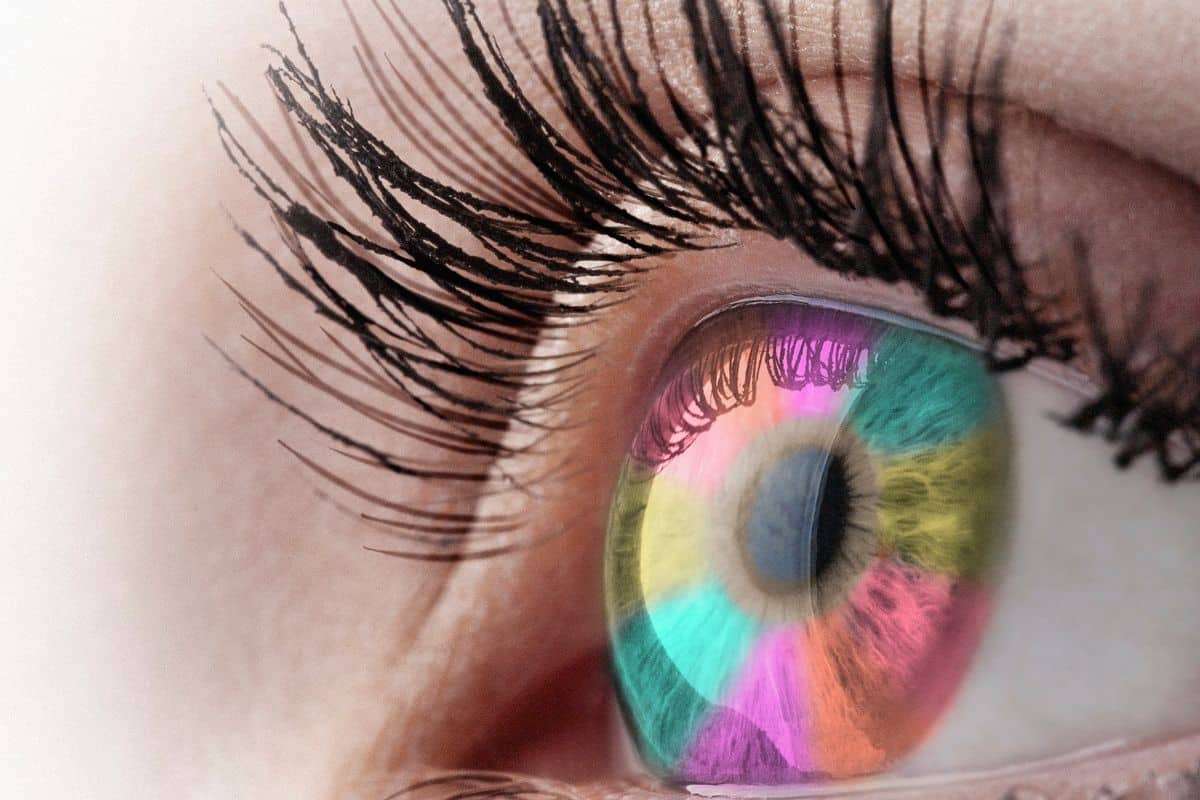
Scientists have recently sparked a fascinating conversation online by revealing that one beloved color isn’t actually real in a physical sense. This intriguing phenomenon, rooted in how our brains interpret light, challenges the way we understand color and perception.
The Mystery Behind Purple’s Absence in the Spectrum
Colors such as red, green, and blue correspond to specific wavelengths along the visible spectrum of light. When sunlight breaks apart through prisms or droplets, it forms a familiar rainbow sequence: red, orange, yellow, green, blue, indigo, and violet.
However, purple does not appear in this natural sequence. Lacking a unique wavelength, purple is classified as a non-spectral color, meaning it is absent from the ordered range produced by the dispersion of light. It isn’t found anywhere on the electromagnetic spectrum.

Unilad explains that purple emerges when our brain combines red and blue light. The article describes it as a visual effect created when these two wavelengths overlap and interact, producing a color that doesn't physically exist in the natural world like other spectral hues.
The Brain’s Role in Color Creation
The human visual system is incredibly complex. When it receives simultaneous input from red and blue wavelengths, it does not register them as separate but instead fuses them into a singular new color: purple.
On Reddit, one user summarized this insight simply: “Purple often represents a blend of red and blue light, so it isn’t found in the rainbow. If you consider only spectral colors as real, then purple isn’t truly a color.”
This phenomenon isn’t exclusive to purple; many colors we recognize, such as seafoam green or burnt umber, are also non-spectral. They don’t align with one wavelength but arise from our brain’s ability to mix various signals.
Another Reddit contributor added, “There are numerous non-spectral colors that appear close enough to spectral ones for people to give them familiar names. There’s no single wavelength of light corresponding exactly to ‘seafoam green’ or ‘burnt umber.’”
Invisible Colors Beyond Human Sight
The visible light spectrum forms only a small part of the vast electromagnetic range. Beyond the violet end lies ultraviolet, and just past red is infrared. Though invisible to our eyes, these wavelengths exist and can be detected using specialized technology.
As noted by the European Space Agency, “While we perceive a broad array of colors, there are additional ‘colors’ invisible to us, located beyond red and violet—these are infrared and ultraviolet.”
The ESA further emphasizes that photographs taken in infrared, ultraviolet, and visible light demonstrate how the spectrum extends far beyond what human vision can capture, effectively showing that the rainbow continues beyond our sight.
- Categories:
- Science

















0 comments
Sign in to Comment