
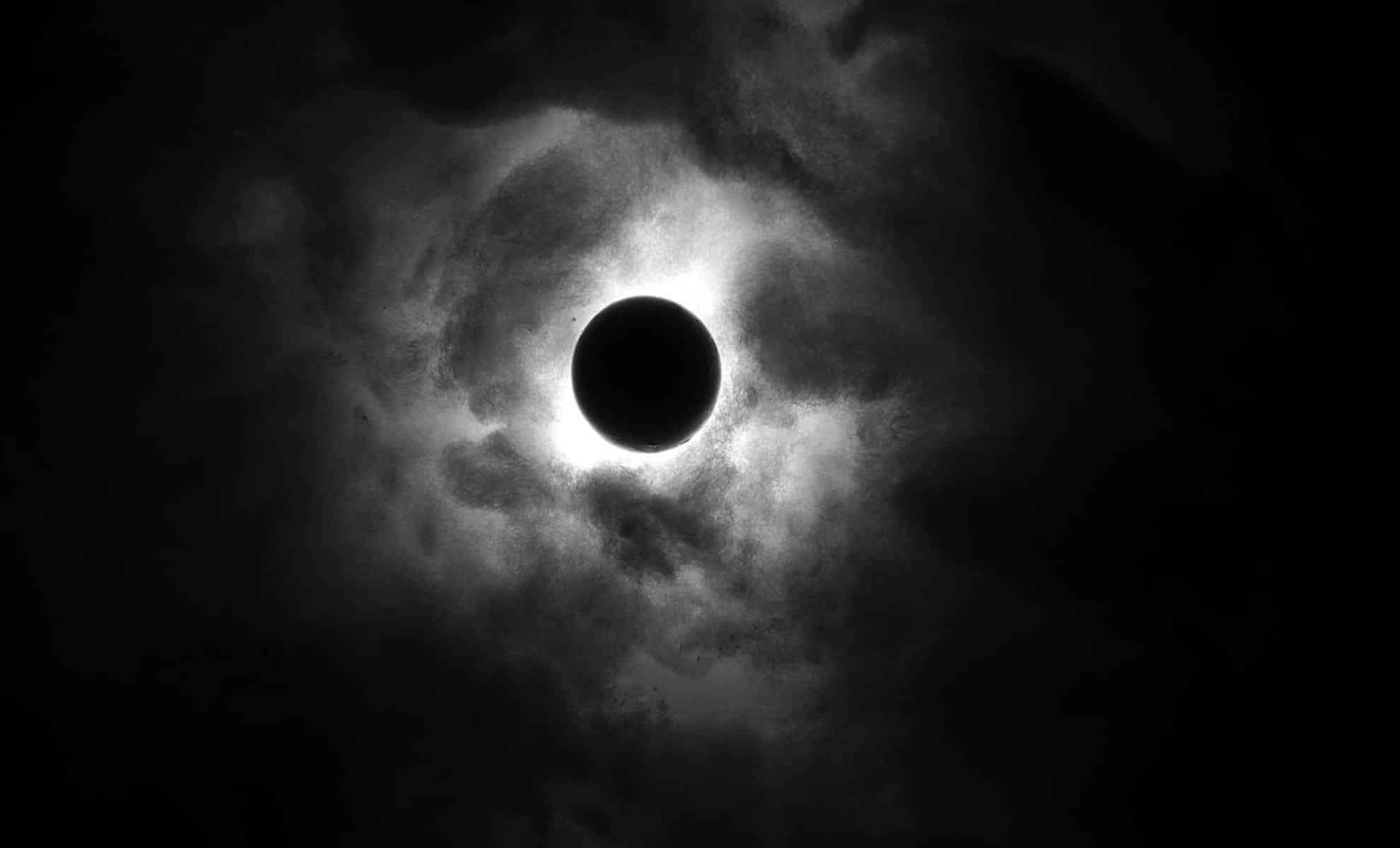
As the final days of 2024 approach, stargazers are treated to an extraordinary astronomical spectacle: the black moon. Defined as the second new moon in a calendar month, this rare lunar event offers an exceptional chance to enjoy exceptionally dark skies, perfect for observing the cosmos.
This piece explores the meaning behind the black moon, its visibility around the world, and tips for skywatchers eager to experience this uncommon astronomical occurrence.
Understanding the Black Moon
A black moon arises when the lunar cycle—lasting roughly 29.5 days—aligns so that two new moons happen within one calendar month. This phenomenon leads to darker night skies as the moon’s illuminated side faces away from Earth, rendering it invisible during this phase. Unlike the radiant full moon, a new moon occurs when the sun and moon are aligned with the sun's light hidden from view.

Although not an official term in astronomy, “black moon” captures the imagination similarly to a “blue moon,” which describes a second full moon within a single month. For both amateur and professional astronomers, the moon’s absence during this time offers prime conditions for spotting distant stars and celestial features often hidden by moonlight.
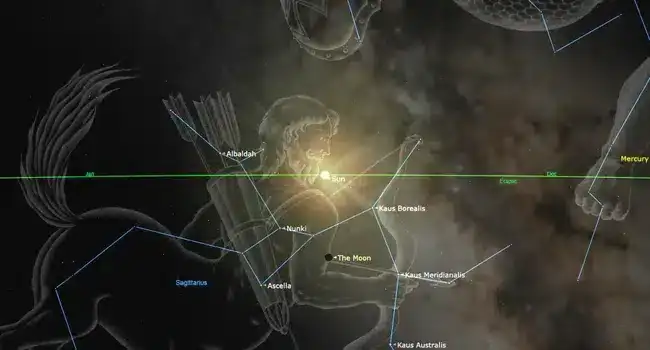
Mercury-Moon Conjunction on December 28
Before the black moon peaks, a significant event unfolds on December 28 at 11:24 p.m. ET, as the moon aligns closely with Mercury. The two will appear about six degrees apart, though this alignment won’t be visible from most of the U.S.
Early risers in New York City will see Mercury rise at 5:38 a.m. on December 28, with the sun following at 6:48 a.m. and the moon at 5:26 a.m. By 6:15 a.m., both Mercury and the faint crescent moon will hover about six degrees above the eastern horizon. Spotting Mercury to the moon’s left is possible but challenging due to their low position in the sky.
In Cairo, this conjunction occurs at 6:24 a.m. local time on December 29, where both lunar and Mercurial bodies brighten the southeastern sky at higher altitudes. Observers in Cape Town may experience slightly improved visibility, although the early sunrise limits the viewing window.
Timing of the Black Moon’s Peak
The black moon culminates on December 30, 2024, at 5:27 p.m. ET (22:27 GMT). While the moon itself remains hidden, the darkness it brings unlocks excellent conditions for deep-sky observations.
Those located in low light pollution areas—such as countryside or dark-sky parks—will enjoy the best views. Weather permitting, faint celestial wonders like distant nebulae and galaxies will be more easily spotted during this moonless night.
Planets Visible During the Black Moon
The black moon coincides with a striking planetary display visible across hemispheres. Here's what you can look for:
Northern Hemisphere
- Mercury: Best observed before dawn on December 31 around 5:45 a.m. in New York, reaching roughly nine degrees above the southeastern horizon an hour later if skies are clear and the horizon flat.
- Venus and Saturn: Stand out in the southwestern sky shortly after sunset on December 30, with Venus positioned about 22 degrees high, and Saturn 35 degrees above the horizon.
- Jupiter: Shines near Aldebaran, Taurus’s brightest star, contrasting the star’s warm reddish glow with its steady white light.
- Mars: Rising at 6:07 p.m., Mars can be watched glowing red in the eastern night skies throughout the evening.
Southern Hemisphere
In places like Buenos Aires, the lengthy summer days delay total darkness, yet the night sky remains impressive:
- Venus and Saturn: Seen in the western sky after sunset, Venus sets by 10:54 p.m., and Saturn follows around 11:44 p.m.
- Jupiter: Located near Aldebaran in Taurus, though appearing lower in the northeastern horizon compared to northern viewers.
- Mars: Rises late, at about 9:42 p.m., with best viewing near 11:30 p.m. as it climbs higher in the northeast.
Stargazing Highlights: Winter and Summer Constellations
The absence of moonlight during the black moon enhances the brilliance of well-known constellations in both hemispheres.
Northern Hemisphere
Winter stars such as Orion and Taurus dominate the night sky:
- Orion’s Belt: The trio of bright stars helps locate neighboring features, including the Hyades cluster in Taurus.
- Canis Major and Canis Minor: These constellations rise later, with Canis Major hosting Sirius, the brightest star visible from Earth.
Southern Hemisphere
Summer constellations like Puppis, Carina, and Vela light the southern night sky:
- The Southern Cross (Crux) emerges low on the southern horizon as a key star pattern.
- Canopus, the sky’s second-brightest star, shines prominently in Carina, representing the keel of a ship.
Tips for Observing the Black Moon
To fully immerse yourself in this extraordinary event, keep these pointers in mind:
- Choose your location: Find a spot away from city lights, ideally a rural area or an official dark-sky reserve.
- Bring gear: Binoculars or a telescope will enhance your view of faint planets and deep-sky wonders.
- Plan your timing: Schedule your observation around sunset or just before dawn depending on your region.
Astronomy photographers can take advantage of the black moon’s darkness to capture spectacular images using long exposure settings that reveal subtle stars and nebulae.
- Categories:
- News







0 comments
Sign in to Comment