
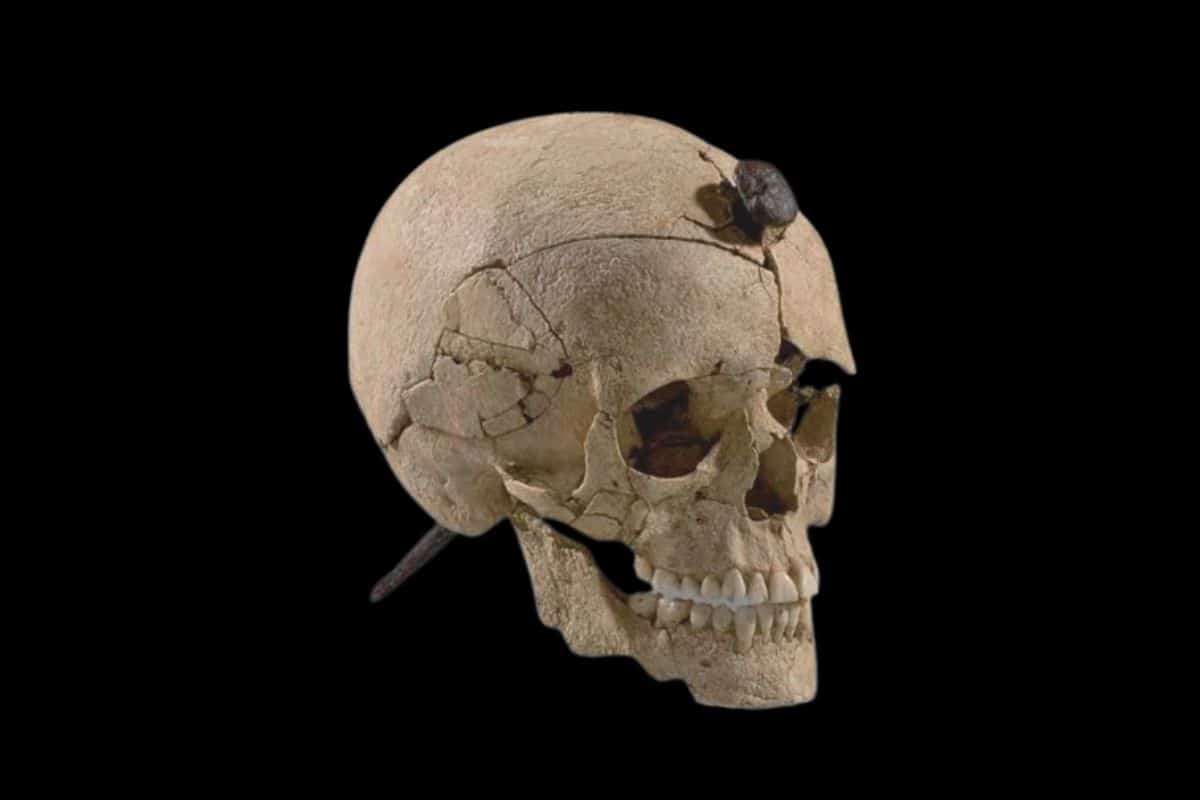
For years, experts have debated the meaning behind the severed heads discovered at Ancient Iberian Iron Age sites, often found nailed to structures or suspended prominently. Were these grim artifacts mere war trophies meant to intimidate adversaries, or did they represent venerated community members? Contemporary studies hint at a far more intricate explanation.
Beheading Practices in Ancient Iberian Burial Customs
New evidence from the Spanish archaeological sites of Puig Castellar and Ullastret indicates that decapitation wasn’t exclusively used on enemies. Scientists employed isotopic analysis on seven skulls to distinguish locals from outsiders. The mixed provenance suggests that severed heads served varying purposes depending on their social and cultural context.
At Puig Castellar, isotopic data revealed that three out of four heads came from non-residents, positioned near the settlement’s entrance possibly as a deterrent to invaders.

Paying Respect or Sending Warnings?
Meanwhile, the Ullastret site yielded a combination of local and foreign skulls, reflecting a diverse practice. Two of the three heads belonged to locals and were located along a public street, hinting that they might have been displayed on domiciles or communal areas.
The third skull, from a stranger, was found in a refuse pit, possibly signifying captured foes. This duality points to a complex tradition in Iberian culture: some heads were honored, while others served as trophies symbolizing dominance.
A More Sophisticated Ritual Than Once Thought
This fresh research disputes the common assumption that all severed heads from Iron Age Iberia were merely spoils of battle. Instead, the practice appears to have had layered meanings that differed by location and context.
Lead researcher Rubén de la Fuente-Seoane comments, “The pattern of displaying severed heads varied between sites, suggesting that there was no single symbolic meaning. However, additional research is essential to fully understand these rituals.”
The treatment of these heads, either revered or discarded, offers valuable clues about Iron Age concepts of mortality, authority, and group identity.
Future Directions in Iberian Iron Age Studies
Despite these insights, many uncertainties linger. Could these decapitation customs have been influenced by neighboring cultures like the Celts or Carthaginians? Did Roman conquest modify or suppress these traditions?
Progress depends on further digs and more comprehensive isotopic examinations of additional skulls, which could deepen our understanding of death rites and warfare in ancient Iberian societies.
- Categories:
- Science










0 comments
Sign in to Comment