
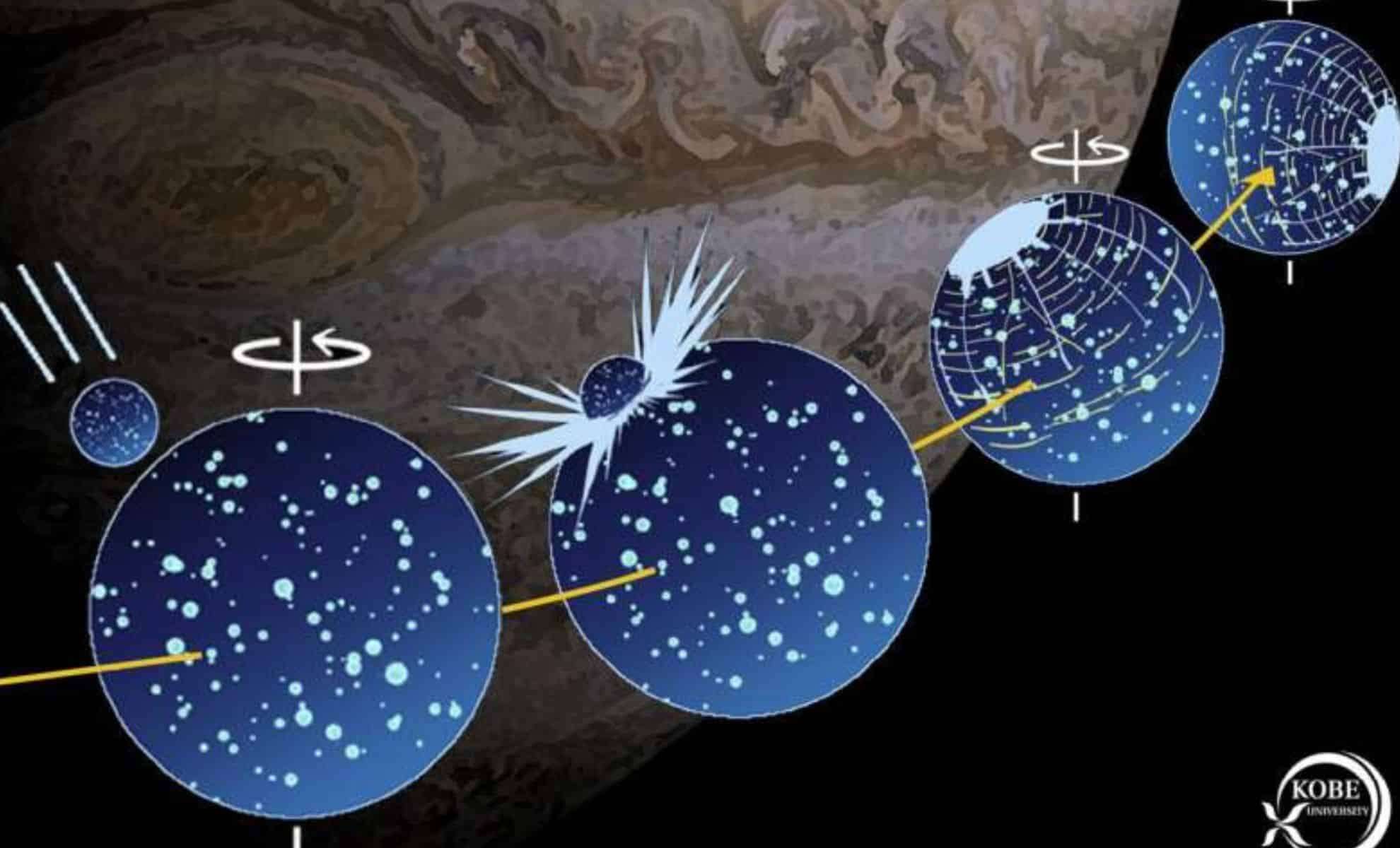
New research reveals that an enormous asteroid strike around 4 billion years ago significantly altered the spin axis of Ganymede, the solar system's largest moon.
This breakthrough offers fresh understanding of Ganymede's early development and highlights the violent events shaping Jupiter’s many moons.
The Massive Collision That Reshaped Ganymede
Ganymede, which is larger than Mercury and ranks as the ninth-largest body orbiting our sun, endured an impact from an asteroid roughly 300 kilometers (186 miles) wide. This is about 20 times bigger than the asteroid linked to Earth’s dinosaur extinction. The force of this collision was enough to tilt the moon’s rotational axis, leaving distinct geological clues visible on its surface.

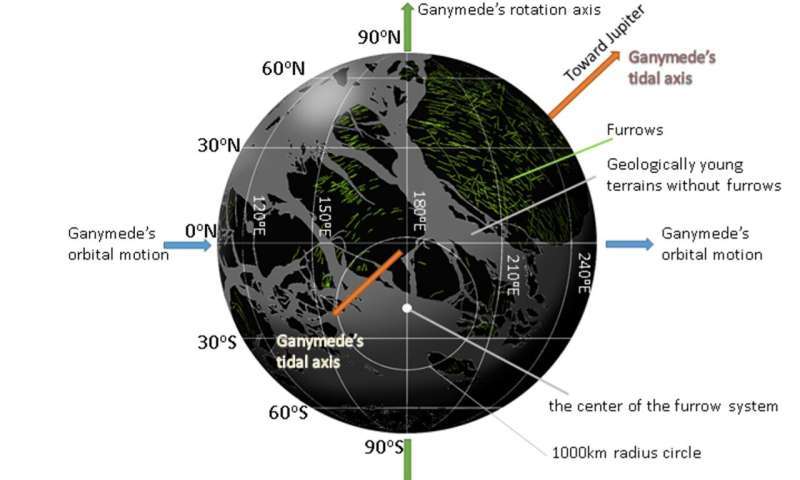
Hirata Naoyuki, a planetary scientist from Kobe University, pinpointed that the asteroid hit nearly exactly opposite Jupiter’s meridian on Ganymede. This positioning implies that the impact triggered a major reorientation of the moon’s spin axis. Hirata drew comparisons to a similar axis shift caused by an impact on Pluto. Using computer models, he estimated the size of the asteroid and the consequent changes. “We knew the asteroid impact occurred about four billion years ago, but details about its size and effects were uncertain,” Hirata stated, emphasizing the importance of these findings.
Geological Scars: Tracing Ganymede’s Tumultuous Past
The impact created lasting imprints on Ganymede’s surface, most noticeably in the form of concentric furrow patterns that span a large area. These circular fissures, first studied in the 1980s, were linked to a major impact event though their origins remained mysterious until Hirata’s latest research confirmed their direct connection to the asteroid strike.
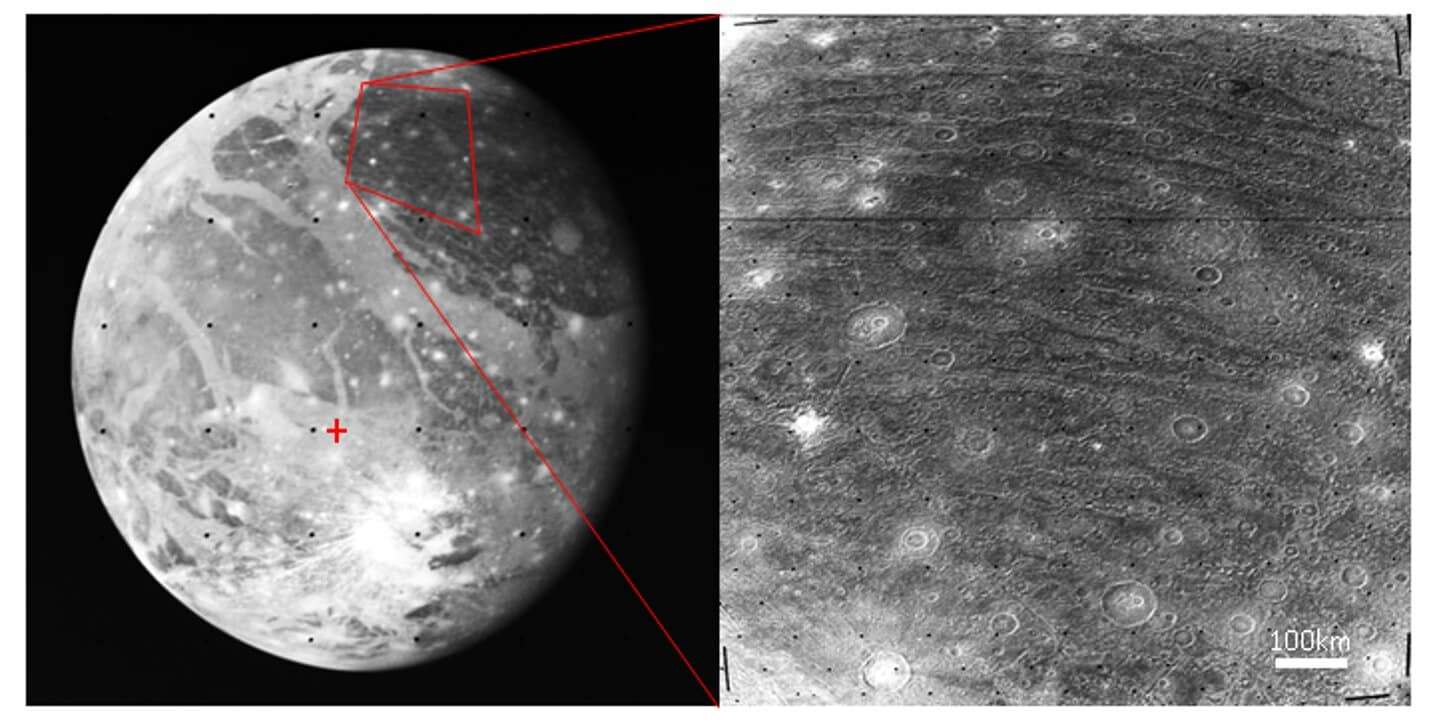
The collision generated a temporary crater between 1,400 and 1,600 kilometers wide, dramatically reshaping Ganymede’s interior and surface. Hirata's modeling demonstrated that such an enormous impact was necessary to redistribute enough mass in the moon’s interior to pivot its rotation axis to the position we observe today. This phenomenon has counterparts on other celestial bodies, like Pluto, highlighting the enduring impact of early solar system collisions.
Ganymede’s Distinctive Traits and Scientific Value
Ganymede is remarkable as the largest moon within our solar system, measuring 5,268 kilometers (3,273 miles) in diameter, exceeding Mercury’s size. It is distinguished by its possession of both a magnetic field and a tenuous atmosphere, features unique among moons.
This thin atmosphere includes oxygen, and observations from the Hubble Space Telescope have identified water vapor, hinting at subsurface oceans beneath its icy crust. These traits elevate Ganymede as a compelling target for astrobiological research, especially given the detection of organic molecules and salts on its surface by NASA’s Juno mission in 2021.
Upcoming Exploration: Peering Deeper into Ganymede’s Mysteries
Ganymede’s intriguing past and present have motivated further study, notably by the European Space Agency’s JUpiter ICy moons Explorer (JUICE), set to orbit Ganymede in 2034. This mission will be groundbreaking as the first spacecraft to orbit a moon other than Earth's, aiming to reveal detailed information about Ganymede’s surface, interior, and ocean beneath the ice shell.
Hirata emphasizes, “The colossal impact likely played a key role in shaping Ganymede’s early evolution, yet the effects on its thermal and internal structure are still unexplored.” JUICE’s observations are expected to fill these knowledge gaps, helping scientists reconstruct Ganymede’s geological timeline.
Implications for Understanding Solar System Evolution
The revelation of the asteroid collision’s influence on Ganymede’s spin axis informs broader perspectives on how celestial impacts have directed planetary and lunar development across the solar system. These violent events form an integral thread in unraveling the history and formation environments of planetary bodies.
Research led by Hirata highlights the impactful role that such encounters have had over billions of years. As missions like JUICE advance, we anticipate new insights not only about Ganymede but also about the evolutionary narratives of other moons and planets in our cosmic neighborhood.
Ultimately, the massive asteroid event that tilted Ganymede’s axis underscores the intense and ever-changing nature of our solar system’s past. With upcoming exploratory missions, our understanding of these distant worlds and their histories will continue to deepen, shedding light on the dynamic processes still at work today.
- Categories:
- Astronomy ,
- News ,
- Science ,
- Space







0 comments
Sign in to Comment