
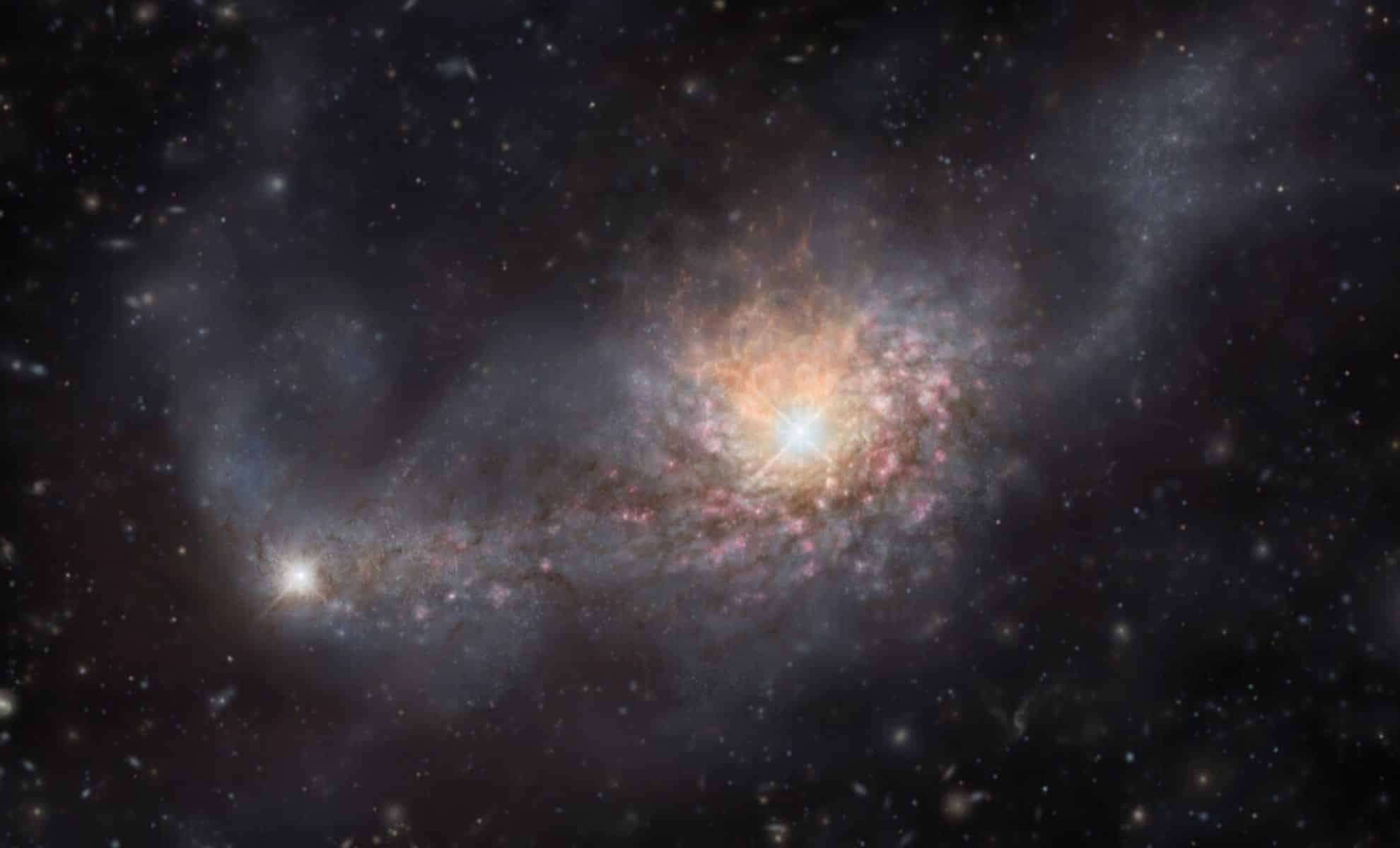
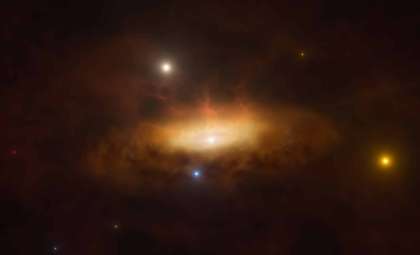
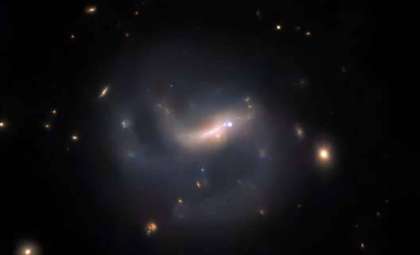
Researchers have identified a spectacular event happening 12.9 billion light-years away: the merging of two primordial quasars, a process destined to form a gigantic galaxy often dubbed a “monster galaxy.”
This breakthrough grants an exceptional view of the universe’s infancy, roughly 900 million years post-Big Bang, shedding light on the birth of massive galaxies and their central supermassive black holes.
Revealing the Quasar Collision
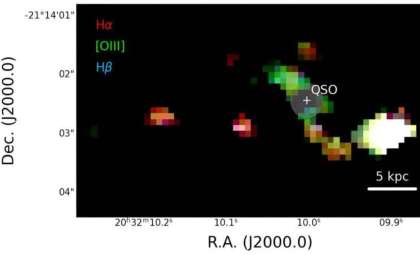
Led by Dr. Takuma Izumi from the National Astronomical Observatory of Japan, the team utilized the Atacama Large Millimeter/submillimeter Array (ALMA) in Chile to detect faint signals originating from cold gas and dust enveloping the quasars. These quasars rank among the universe's brightest and most powerful phenomena, fueled by supermassive black holes at their cores.

The quasars, situated in the direction of the Virgo constellation, appear dimmer than typical ancient quasars, indicating they remain in early developmental phases. As these quasars and their galactic hosts merge, their combined stars, gas, and black holes will yield a tremendously massive galaxy, culminating in a luminous “monster galaxy.”

Quasar Dynamics and Star Formation
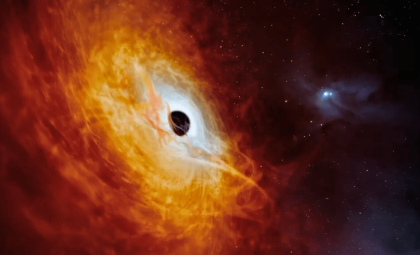
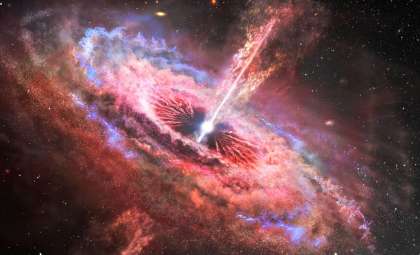
Quasars, found at galaxy centers, emit vast energy as matter accretes onto their supermassive black holes. The gravitational forces in this merging system have sparked both heightened star formation and quasar activity. Observations revealed a colossal reservoir of gas amounting to nearly 100 billion times the mass of our sun, fueling energetic processes.
“The vast supply of material clarifies how these early quasars grew so swiftly, solving a longstanding enigma in astronomy,” the team explained. They also detected gas turbulence and outflows demonstrating the quasars’ influence on their environment—a feedback mechanism vital for understanding the evolution of monster galaxies.
As the merger advances, quasar luminosity is expected to surge significantly. Eventually, the two quasars will unite, forming a single extraordinarily bright quasar within the newly configured giant galaxy — a crucial phase in the emergence of the most massive galaxies observed today.
Insights into the Universe’s Formative Years
Spotting this quasar merger offers an extraordinary “infant snapshot” of some of the universe’s largest galaxies. This discovery opens a window into the creation of giant galaxies and supermassive black holes during the universe’s earliest epochs. The evidence highlights the fundamental role mergers play in black hole growth and galaxy formation.
These observations are vital for decoding the complex developments that shaped the cosmos. The combined starburst and quasar activity seen here is poised to generate one of the universe’s brightest objects—a monster galaxy. “This isn’t merely about distant celestial bodies; it’s about tracing the origins of the cosmic structures that surround us today,” the researchers remarked.
Published in The Astrophysical Journal, this study showcases how advanced instruments like ALMA allow scientists to explore the universe’s distant past, unraveling the cosmic interactions that have sculpted our cosmos. Ongoing investigations into such early events will further illuminate the forces driving the universe’s growth and transformation.
- Categories:
- Astronomy ,
- News ,
- Space


0 comments
Sign in to Comment