
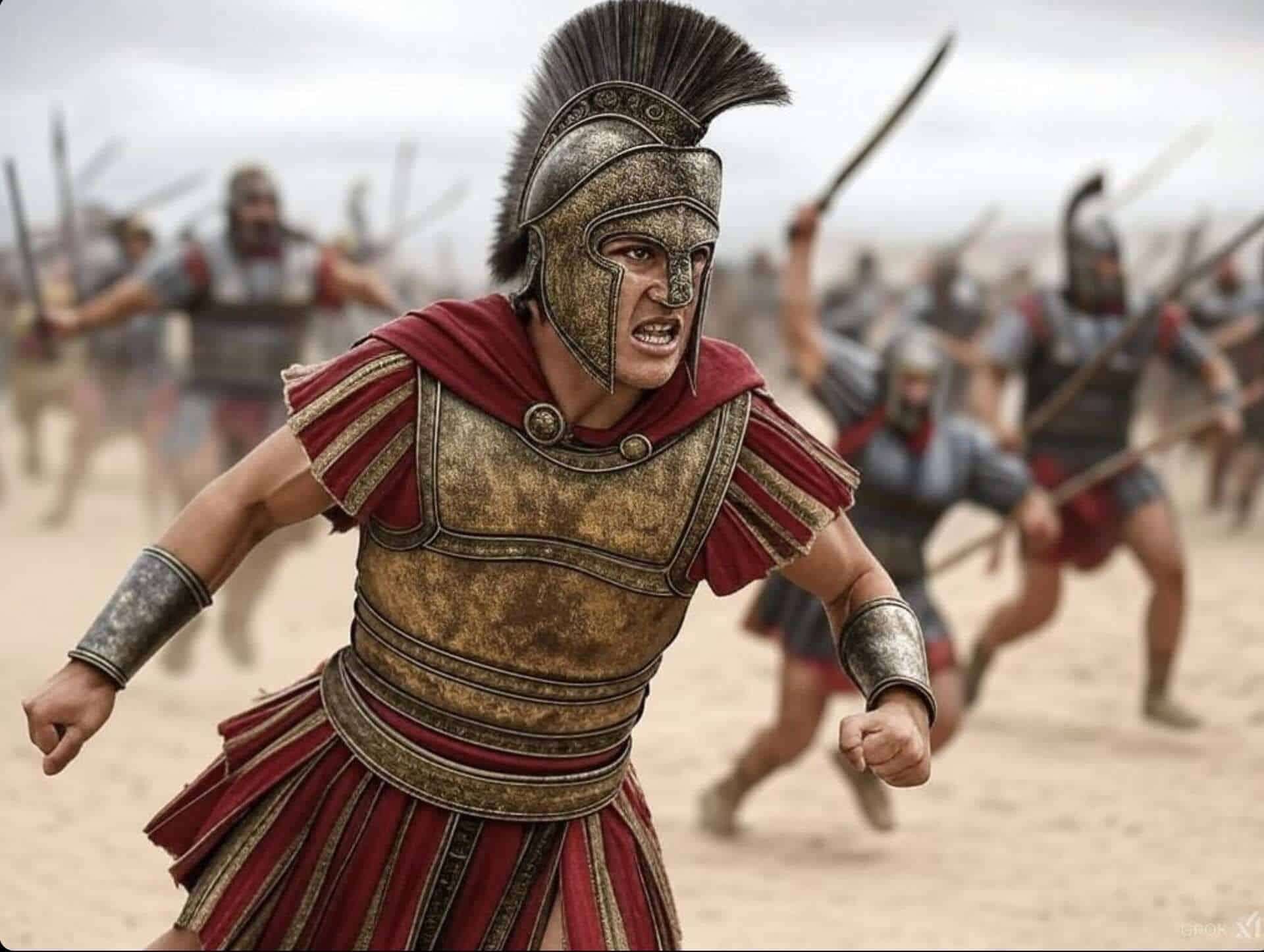
Few archaeological discoveries ignite imagination like those tied to Alexander the Great. Recent excavations in Eastern Europe and Western Turkey have shed new light on one of his earliest military triumphs: the Battle of the Granicus. This fresh evidence not only celebrates Alexander’s tactical brilliance but also deepens our insight into this pivotal historical confrontation.
Unveiling the Battle Location
The exact location of the Battle of the Granicus has been a subject of debate among historians and archaeologists. Near Çanakkale, approximately 62 miles east on the Biga plain, lies a landscape rich with clues. Featuring geographical markers such as the Granicus River, this site has become a focal point for uncovering the movements of Alexander’s forces.
This clash marked a significant turning point when Alexander’s army faced the mighty Persian Empire. Despite being heavily outnumbered—around 18,000 Macedonians opposed to nearly 90,000 Persians—Alexander’s innovative war tactics secured a decisive victory that set the stage for his expansive campaigns throughout Asia.

Recent Archaeological Insights
For over two decades, experts have meticulously excavated the Biga plain region. Their efforts have revealed remnants of ancient roadways and a likely military encampment near the city of Hermaion. Additionally, local farmers uncovered burial sites containing period weapons, which were promptly preserved by officials. These discoveries establish concrete connections to the battle’s timeframe and corroborate hypotheses about its location.
Scholars combined analyses of historical texts detailing the ancient landscape with current river formations to identify sections corresponding to the original Granicus River. The discovery of tombs nearby strengthens the significance of this area during Alexander’s military operations.
Alexander’s Tactical Mastery
The Battle of the Granicus highlighted Alexander’s exceptional command skills. His forces were not limited to seasoned infantry; elite cavalry units played a critical role in overwhelming the Persian troops. This strategic win halted Persian expansion and enabled Alexander to extend his reach further into new territories.
The victory had major implications: toppling one of the era’s most formidable empires underscored Alexander’s leadership qualities and paved the way for his continued advancement across Asia. It demonstrated his ability to exploit openings and disarray within enemy ranks with remarkable effectiveness.
Enduring Significance
Alexander’s campaigns extended well beyond this battle, spanning from Eastern Europe to expansive territories in Asia. Crossing key locations such as the Dardanelles and Gallipoli Strait, he confronted King Darius III amidst internal Persian unrest around 335 BC, notably in Egypt. These movements highlight both geopolitical shifts and the impact of domestic upheavals on global history.
As research continues along these ancient paths, each finding enriches our comprehension of events that shaped human civilizations millennia ago. Excavations near Çanakkale provide valuable perspectives on how figures like Alexander navigated complex military and political landscapes to leave a lasting legacy.
Investigating these ancient narratives reinforces the importance of preserving historical knowledge: it bridges us to our collective past and motivates future generations through stories long buried but now emerging once again.
- Categories:
- News












0 comments
Sign in to Comment