
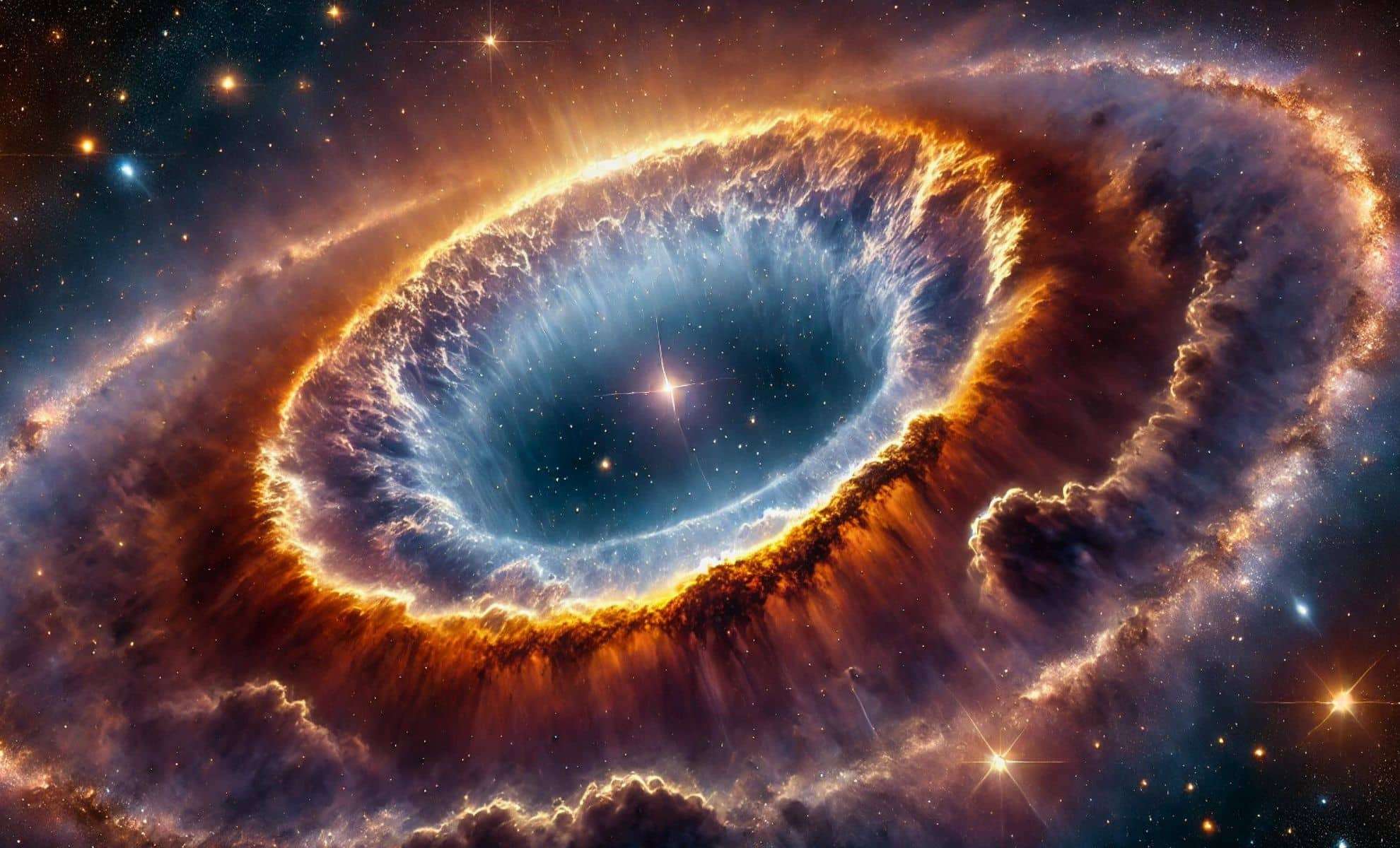
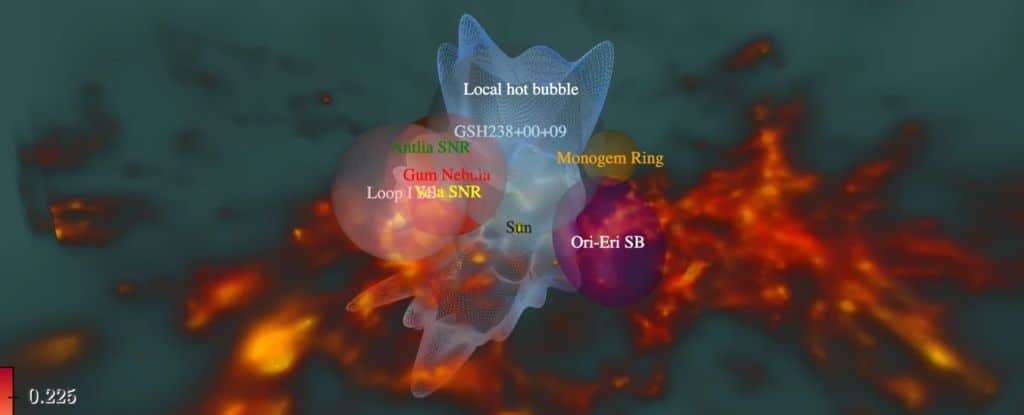
Scientists have recently produced a detailed map of the Local Hot Bubble (LHB), an immense, scorching cavity around 1,000 light-years wide that envelops our Solar System. This rarefied region, heated to over a million Kelvin, likely originated from ancient supernovae explosions and has intrigued researchers because of its distinctive properties. A groundbreaking study now uncovers a surprising feature embedded within the LHB: a mysterious interstellar tunnel directed toward the Centaurus constellation.
Unraveling the Mystery Behind the Local Hot Bubble
The LHB is believed to have been carved millions of years ago by multiple supernova blasts in our galactic neighborhood. These stellar explosions cleared out the gas, heating the area to extremely high temperatures while forming the bubble's current low-density interior. Mapping such an enormous and complex region from within challenges astronomers significantly.
To overcome this, researchers utilized eROSITA, an advanced X-ray telescope onboard a space observatory positioned well beyond Earth's atmospheric interference. Under the leadership of Michael Yeung and the Max Planck Institute for Extraterrestrial Physics team, eROSITA's comprehensive X-ray data exposed intricate details of the LHB's shape and temperature variations.

Highlights from the LHB Survey
Key observations emerging from the recent LHB mapping include:
- Structure: A bipolar nebula-like form featuring asymmetrical bumps and protrusions.
- Temperature: Around 1 million Kelvin, maintained by supernova-derived energy while remaining relatively sparse.
- Dimensions: Spanning roughly 1,000 light-years across.
- Expansion Behavior: Exhibits quicker growth perpendicular to the galactic plane, consistent with supernova debris paths.
- Unique Feature: The detection of an interstellar tunnel pointing toward Centaurus, distinct from cooler surrounding gas.
Refined Structure and Thermal Characteristics
The updated LHB map illustrates a bipolar nebula-like shape marked by unusual irregularities and pointed features, differing from the previously assumed smooth morphology. Notably, the region expands more rapidly away from the galactic plane, aligning with predictions involving supernova activity carving out space.
This asymmetry and changing temperature profile support the theory that sequential stellar explosions heated and elongated the bubble preferentially in certain directions.
The most intriguing revelation is the presence of a tunnel-shaped void inside the LHB, directed toward Centaurus. This channel stands out as if it has been hollowed out through the surrounding cooler interstellar environment.
Exploring the Interstellar Passage
This unusual tunnel has sparked curiosity among astronomers. It may represent a link between the Local Hot Bubble and other neighboring low-density regions like the Gum nebula or dense molecular clouds. If verified, this could support the long-standing idea that the Milky Way is threaded by a network of interconnected hot cavities and passages.
First suggested in 1974, this concept remained largely hypothetical due to limited evidence. The detection of the Centaurus tunnel could be the first direct observational hint toward such a cosmic structure.
Possible Connections to Other Galactic Features
- Gum Nebula: Another nearby low-density bubble potentially linked to the tunnel.
- Molecular Clouds: Dense gas regions that might border or influence the tunnel's formation.
- Additional Galactic Bubbles: The theorized system of interconnected bubbles forming a web-like backbone across our galaxy.
Looking Ahead
Thanks to eROSITA’s exceptional observations, researchers are nearing solutions to the mysteries surrounding the Local Hot Bubble. Confirming an interconnected network of galactic bubbles and tunnels could revolutionize our perspective on the Milky Way’s architecture and its historical dynamics.
While the precise extent and purpose of the Centaurus tunnel require further investigation, its discovery brings us closer to comprehending the cosmic environment we occupy. This new LHB mapping may clarify why our Solar System resides where it does and unveil an unseen galactic infrastructure waiting to be explored.
- Categories:
- Space






0 comments
Sign in to Comment