
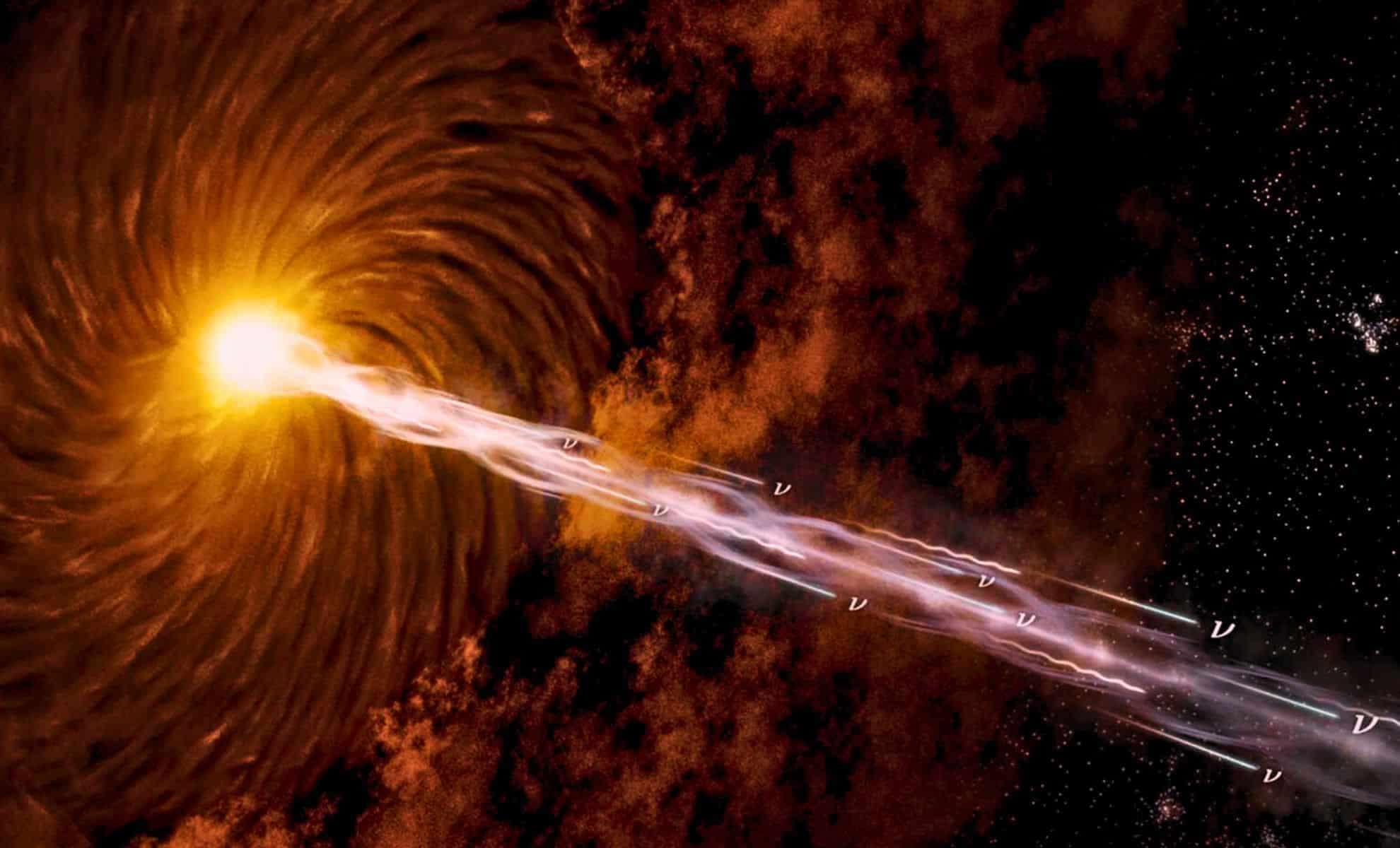
Particles traveling close to light speed are reaching Earth from an immense black hole seated more than 13 billion light-years away. This remarkable cosmic event, involving a rare astronomical source called a blazar, is captivating scientists and prompting new perspectives on cosmic development.
Defining a Blazar
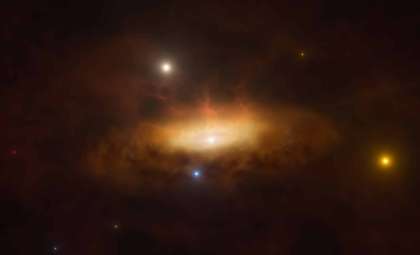
A blazar is a unique kind of galaxy harboring a supermassive black hole at its center that emits concentrated jets of energy directed straight toward our planet. The recently identified blazar, known as VLASS J041009.05−013919.88, stands as the most remote blazar ever detected. Researchers estimate it existed during the epoch of reionization, roughly 800 million years following the Big Bang.
Key Details About VLASS J041009.05−013919.88
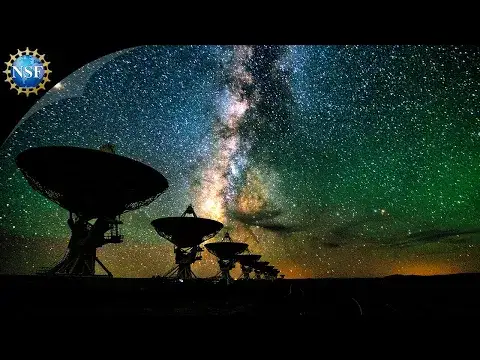
- Discovery Technique: Detected through the Karl G. Jansky Very Large Array (VLA) radio telescope system during the VLA Sky Survey (VLASS), which scopes out 80% of the sky in three stages over seven years.
- Black Hole Scale: Estimated to be around 700 million times the mass of our Sun, vastly exceeding the Milky Way’s central black hole, Sagittarius A*, with about 4 million solar masses.
A Potent Cosmic Beacon
This blazar’s powerful jets are composed of high-energy particles accompanied by intense electromagnetic radiation. The output is so tremendous it outshines entire galaxies, including our own Milky Way. This energy is generated by a rapidly spinning black hole actively consuming material and launching relativistic jets.

Astrophysicist Emmanuel Momjian from the National Radio Astronomy Observatory (NRAO) explains, “this blazar provides an extraordinary setting to examine the dynamics between jets, black holes, and their surroundings during one of the universe’s most pivotal epochs.”
While these particles won’t harm Earth directly, their detection provokes intriguing questions about the rapid buildup of supermassive black holes in the young cosmos shortly after the Big Bang.
Transforming Our Cosmic Understanding
This extraordinary blazar challenges prevailing ideas regarding the creation of black holes and the influence of dark matter in the early universe. Some theorists even propose that fundamental laws of cosmology may require adjustment. James Webb Space Telescope (JWST) observations alongside other advanced tools could be key to unraveling these mysteries.
VLASS J041009.05−013919.88’s intense radiation might have contributed significantly to the reionization process, transforming early neutral hydrogen and helium atoms and illuminating the once-dark ancient universe.
Exploring the Early Universe
By leveraging state-of-the-art observatories like the Very Long Baseline Array (VLBA), Chandra X-ray Observatory, and Atacama Large Millimeter/submillimeter Array (ALMA), researchers are probing this distant blazar with extraordinary precision. Their investigations are expanding our knowledge of black hole mechanics, cosmic reionization, galaxy progression, and the hidden nature of dark matter.
VLASS J041009.05−013919.88 highlights the turbulent and enigmatic character of our cosmos. Its discovery could revolutionize scientific perspectives on the early universe, questioning existing theories about dark matter, black hole evolution, and cosmic phenomena. As Momjian underscores, analyzing this blazar “raises crucial questions about the origins and growth of supermassive black holes and their host galaxies in the distant universe.”
- Categories:
- News









0 comments
Sign in to Comment