
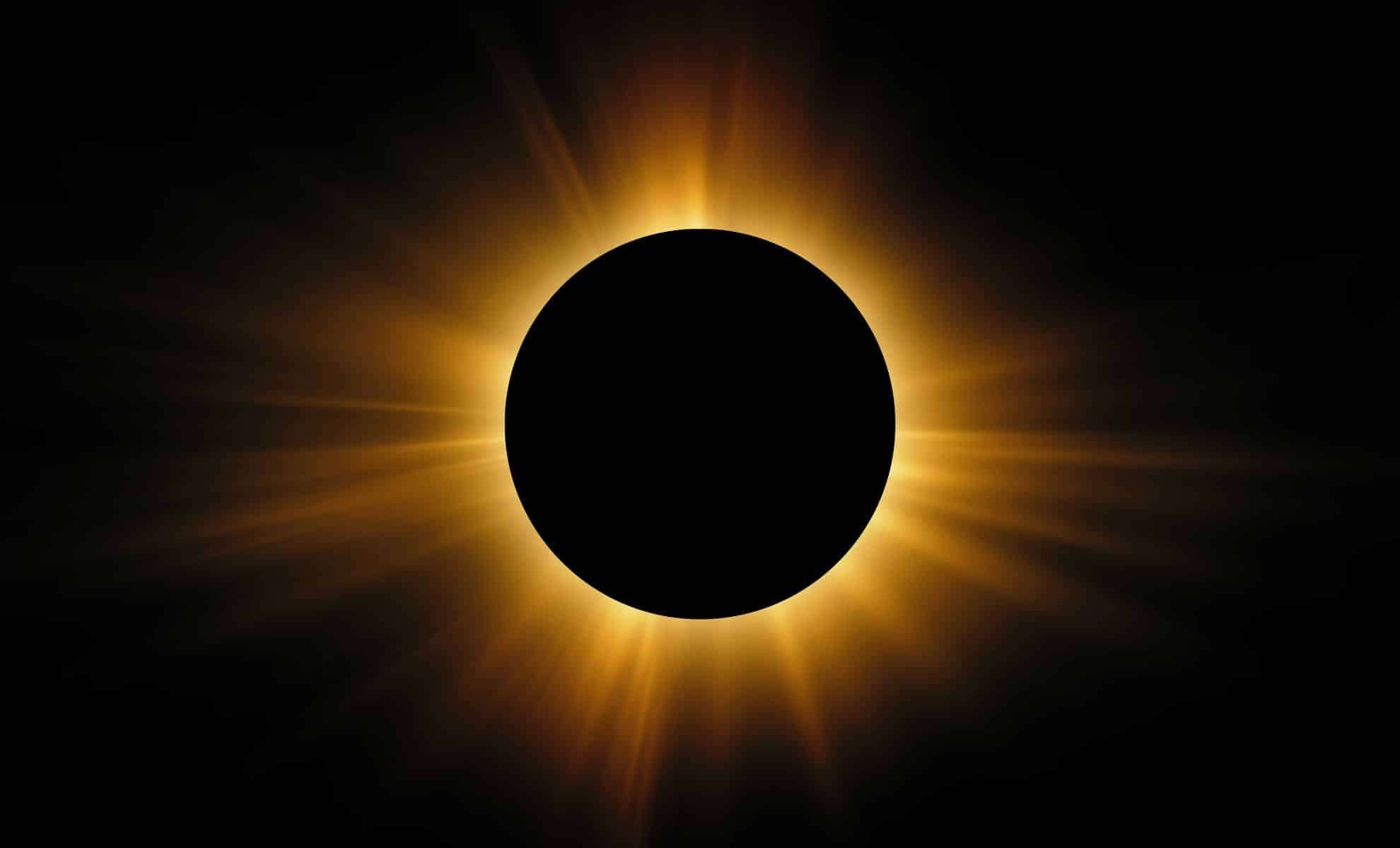
The European Space Agency (ESA) has orchestrated a pioneering space mission where two spacecraft precisely align to replicate a solar eclipse. This unique technique offers an unprecedented glimpse of the Sun’s faint corona and serves as a proving ground for innovative technologies that could reshape future space exploration.
Simulating a Solar Eclipse in Space
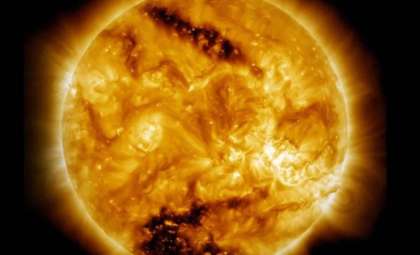
Capturing the Sun’s outer atmosphere, the corona, presents a significant challenge for scientists because its subtle glow is overwhelmed by the Sun’s brilliant surface. Normally visible only during a natural solar eclipse—a rare event lasting mere minutes and observable from limited locations on Earth—the corona remains hidden most of the time.
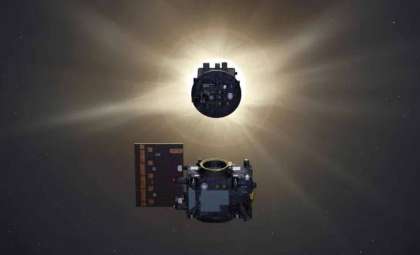
To address this, ESA developed the Proba-3 mission, involving two coordinated spacecraft. One spacecraft maneuvers closer to the Sun, blocking its bright disk in a manner similar to how the Moon obscures the Sun during an eclipse. This controlled eclipse casts a shadow onto a second spacecraft equipped with instruments designed to capture detailed images of the Sun’s surrounding corona.

Precision Engineering in Spaceflight
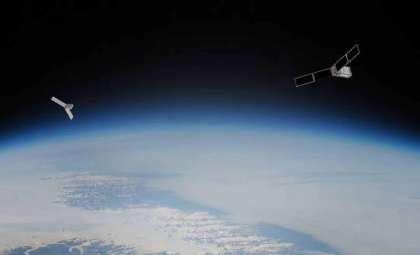
The Proba-3 mission demonstrates not only remarkable astrophotography but also breakthrough spacecraft navigation technology. Flying roughly 150 meters (492 feet) apart, these two satellites maintain perfect alignment within millimeters, despite traveling at speeds reaching 127,460 km/h (79,200 mph). This precise formation flying is a critical capability destined to support future operations such as satellite servicing, debris removal, and deploying space-based telescopes requiring exact positioning.
Controlling this duo autonomously at such velocities marks a major advancement in spaceflight technology. These spacecraft maintain their relative positions independently, without ground control input, while orbiting Earth at altitudes ranging from 600 km (372 miles) to more than 60,000 km (37,282 miles).
Advancing Space Weather Understanding
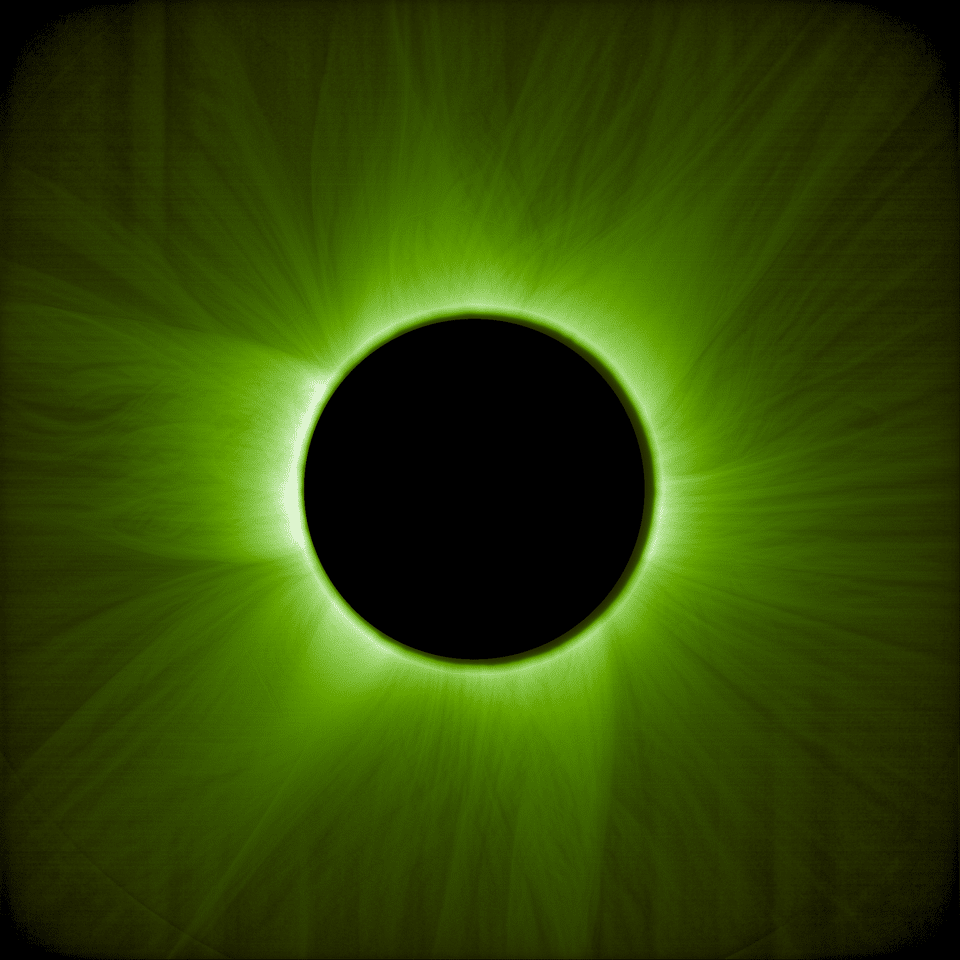
Beyond technological innovation, the Proba-3 mission offers valuable insights into solar phenomena affecting space weather. By observing energetic solar particles streaming into space, the spacecraft contribute to research on how solar activity impacts Earth’s environment, including potential hazards to orbiting satellites.
This new observational method helps scientists better forecast solar storms and improve preparedness against their disruptive effects. The mission’s findings can also enhance predictions of natural light displays like the aurora borealis, which—while visually stunning—highlight the broader influence of solar dynamics on technological systems.
Opening Doors for Future Exploration
Launched in 2024, Proba-3 operates in a specialized orbit that enables the spacecraft to simulate eclipse-like conditions at will. Its achievement in flawlessly aligning to observe the solar corona sets the stage for future missions employing similar precision techniques—whether to safeguard satellites or to study distant objects in space.
By replicating the eclipse phenomenon, the Proba-3 initiative is not only illuminating the Sun’s secrets but also pushing forward the technology that will power tomorrow’s space exploration efforts.
- Categories:
- News



0 comments
Sign in to Comment