
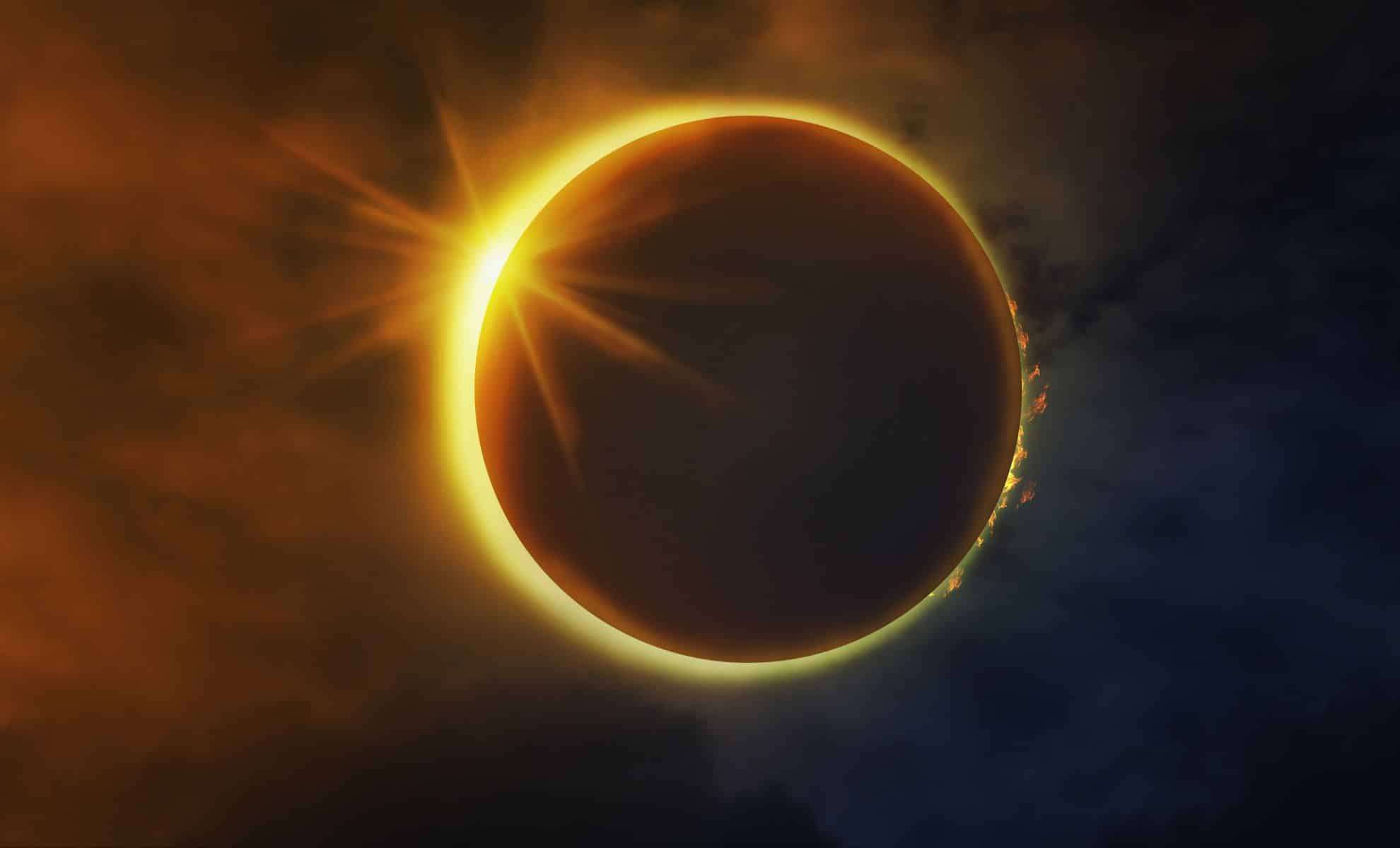
An innovative upcoming mission could soon enable researchers to observe the sun’s corona with remarkable precision. The Moon-Enabled Sun Occultation Mission (MESOM), developed by scientists from the Mullard Space Science Laboratory at University College London (UCL) and Aberystwyth University, aims to recreate solar eclipses directly in space. This initiative was recently showcased at the Royal Astronomical Society’s National Astronomy Meeting (NAM 2025), drawing notable interest from experts. MESOM's observations promise to deepen our understanding of solar phenomena such as solar flares, coronal mass ejections, and space weather, with launch plans potentially set for 2028 pending green light from the European Space Agency (ESA).
Innovative Technique to Examine the Sun’s Outer Atmosphere
The Moon-Enabled Sun Occultation Mission introduces a unique approach to observing the sun’s corona, which is usually only visible during total solar eclipses when viewed from Earth. This mission intends to place a compact satellite into an orbit synchronized with the moon’s shadow roughly every 29.6 days. This alignment will simulate total eclipses in space, extending observation periods to about 48 minutes—far surpassing the brief duration of eclipses witnessed from Earth, which last only a few minutes. By producing these eclipse-like scenarios beyond Earth’s atmosphere, MESOM aims to enhance our comprehension of critical solar processes impacting space weather and satellite functionality.
MESOM will enable measurements of the solar corona closer than any prior mission. Operating below 1.02 solar radii, this satellite will approach as near as 710,000 km from the sun’s surface—50,000 km nearer than ESA’s existing Proba-3 mission. Such proximity, paired with prolonged observation time, promises highly detailed insights into the solar dynamics and magnetic fields that have been difficult to study in depth until now.

Examining Solar Weather Effects on Earthly Technology
The sun’s corona significantly influences space weather events like solar flares and coronal mass ejections, which can jeopardize satellites, communication networks, and power grids on Earth. Dr. Nicola Baresi, a key contributor to MESOM, highlighted, “When the sun aligns with the moon’s orbital plane, we can witness total eclipses lasting up to 48 minutes. This extraordinary window allows extended measurements of the physical phenomena responsible for disruptive space weather such as solar flares and coronal mass ejections.” Gaining detailed knowledge of these mechanisms could lead to more accurate forecasting of solar storms.
The MESOM spacecraft will host cutting-edge instruments, including a high-resolution coronal imager to capture sharp photos of the sun’s outer atmosphere, alongside a corona mass spectrometer to study the properties of coronal plasma. Additionally, a spectropolarimeter onboard will analyze the magnetic fields surrounding the sun. Together, these tools will offer unmatched data on the corona and its influence on space weather, equipping scientists to unravel the sun’s complex behavior.
- Categories:
- News








0 comments
Sign in to Comment