
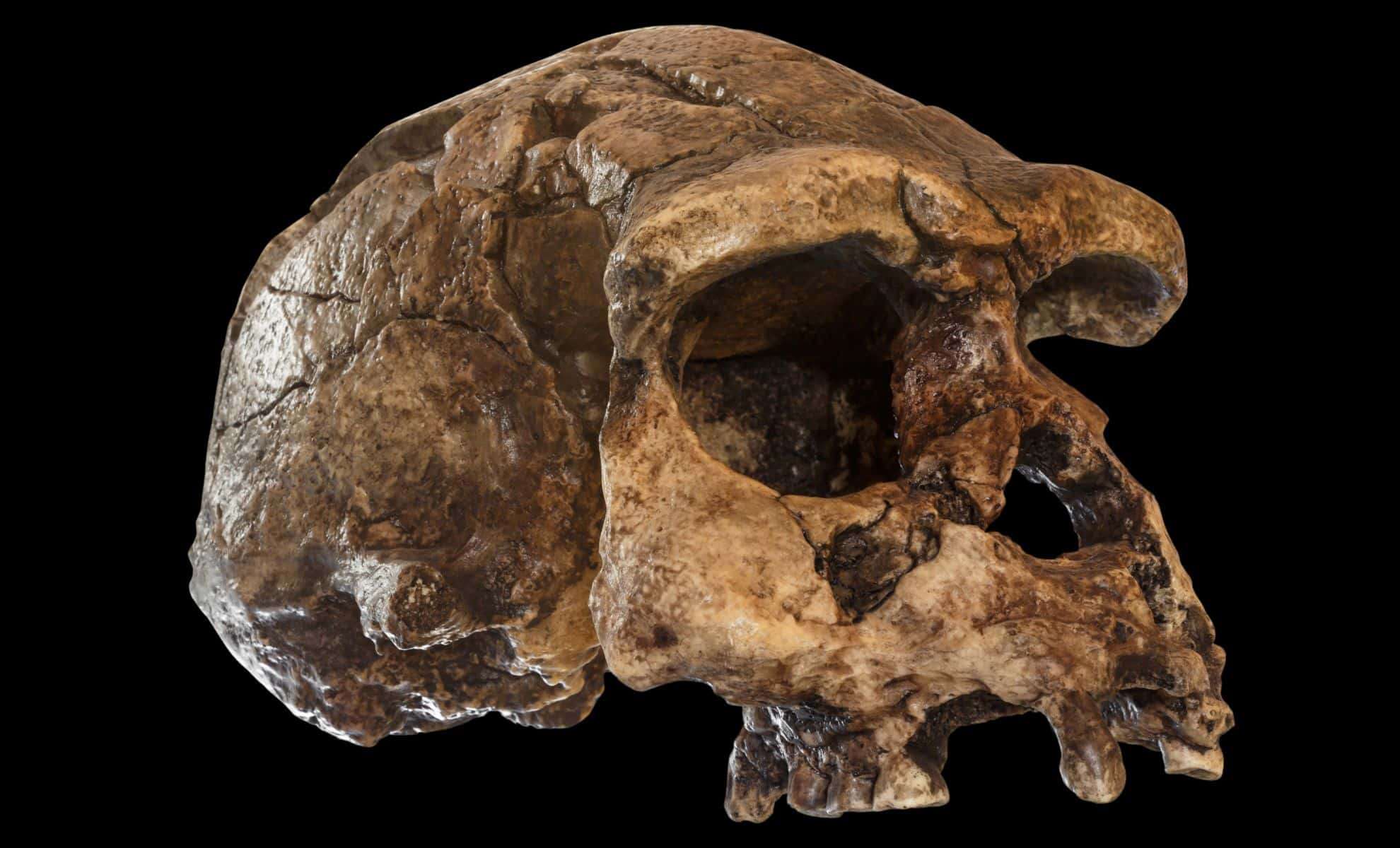
New research uncovers prehistoric teeth as a rich source of information on human ancestry, challenging long-held beliefs about the significance of enamel characteristics in our evolutionary history. Scientists have detected minute, shallow pits on fossilized teeth that could deepen our understanding of early hominin connections.
Unexpected Findings in Enamel Texture
While tooth enamel might not seem like a prime candidate for evolutionary clues, a recent paper in the Journal of Human Evolution reveals that these enamel pits could be an important new marker. Previously thought to result from childhood illness or nutritional deficiencies, these shallow, round indentations on teeth carry greater evolutionary importance than once assumed.
These enamel pits were initially observed in Paranthropus robustus, a South African hominin species closely related to the genus Homo. Found across various fossil specimens, these evenly distributed pits prompted scientists to reconsider their origins. Rather than being mere tooth defects caused by environmental hardships, these pits likely hold key evolutionary insights.

Rethinking Evolutionary Markers Beyond Damage
The frequent occurrence of these pits in different Paranthropus species and some eastern African Australopithecus challenges the older view that they stemmed from disease or malnutrition. The pits are consistently spaced and located in particular sections of the tooth crowns, without other signs of damage, suggesting a deliberate biological pattern rather than random impairment.
Examining hominin fossils spanning over two million years—including samples from the Ethiopian Omo Valley and southern African sites like Swartkrans and Drimolen—scientists found these pits present in both Paranthropus and Australopithecus. Notably, early human ancestors from more than three million years ago also showed the traits, while members of the genus Homo did not. This points to the possibility that enamel pitting functions as a unique evolutionary characteristic rather than a symptom of stress or illness.
Could the Pits Stem from Genetics?
The similarity of these pits across various species implies a genetic or developmental origin instead of a reaction to external stress. Modern humans exhibit enamel defects under stress that form horizontal bands across teeth, but these ancient pits appear in specific tooth regions and lack that pattern, bolstering the hypothesis they are inherited traits.
This consistent enamel pitting observed over millions of years across species evokes parallels with the rare modern genetic disorder amelogenesis imperfecta, which affects enamel in roughly one out of every 1,000 individuals today. However, the ancient pitting differs, occurring in nearly half of Paranthropus specimens rather than a small minority, indicating a distinct phenomenon.
New Avenues for Studying Evolutionary Links
These findings offer paleontologists a novel method for mapping the evolutionary relationships among early hominins. Much like enamel thickness and patterns of tooth wear have assisted researchers in distinguishing between species, these uniform enamel pits could become a valuable classification tool.
For example, the common presence of these pits within Paranthropus bolsters the theory that species in this genus share a recent common ancestor and did not evolve independently from various Australopithecus groups. This supports an earlier divergence of Paranthropus, refining our understanding of hominin evolutionary timelines.
An especially captivating case involves the enigmatic Homo floresiensis, nicknamed the “hobbit” due to its small stature. Early dental examinations reveal enamel pitting similar to that in Paranthropus, hinting at a possible closer relation to ancient Australopithecus species than to modern Homo. Further study is essential to confirm these connections.
- Categories:
- News








0 comments
Sign in to Comment