
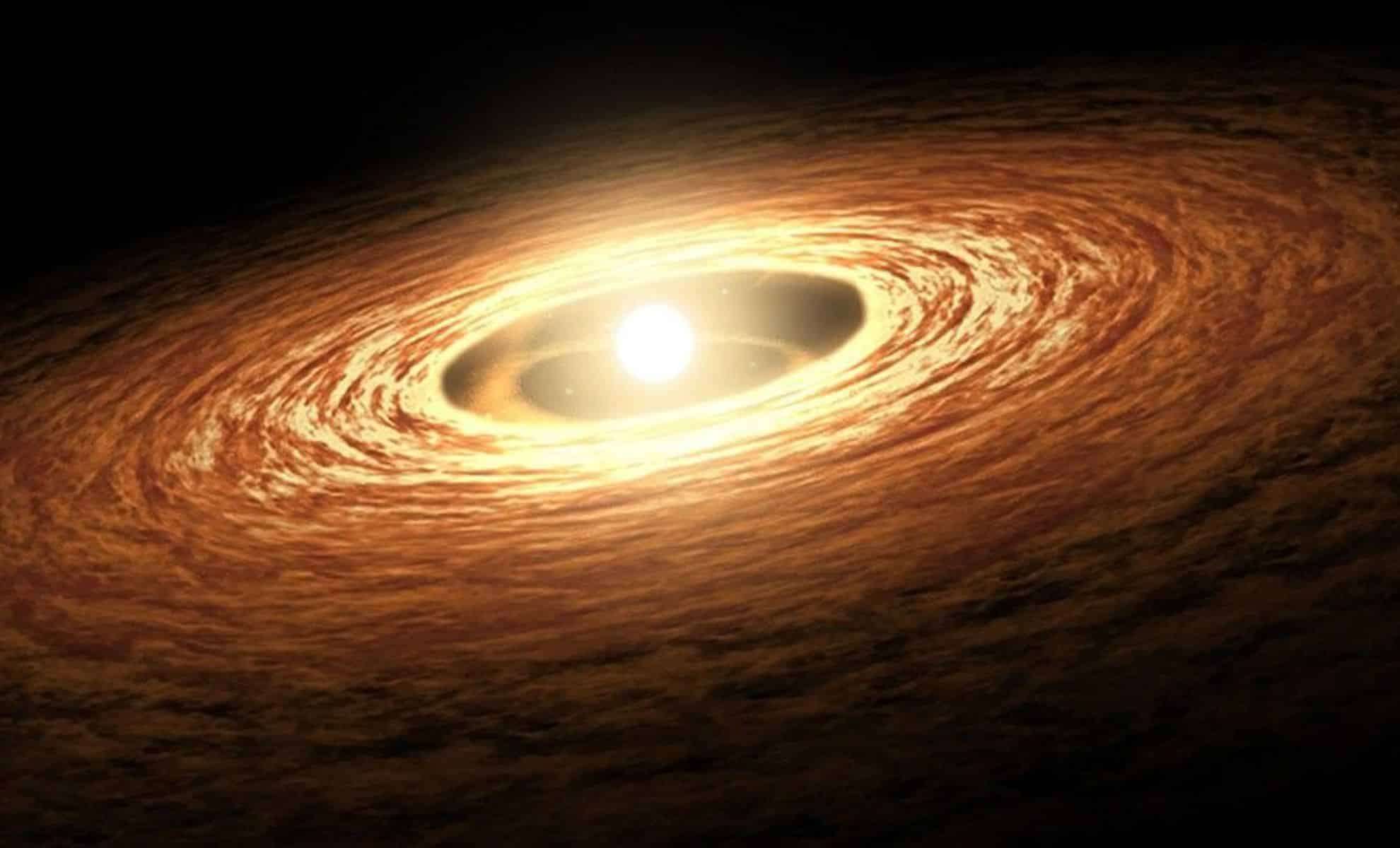
Researchers have uncovered surprising new details about how the cosmos has evolved. Utilizing observations from the Atacama Cosmology Telescope (ACT) alongside the Dark Energy Spectroscopic Instrument (DESI), scientists have detected unexpected behaviors in the development of large-scale cosmic formations. Featured in the Journal of Cosmology and Astroparticle Physics, the new analysis shows that matter in the universe is less densely clustered than prior theoretical models had anticipated, pointing toward a stronger influence of dark energy on cosmic structure growth.
By combining data from primordial cosmic radiation and detailed galaxy surveys, this work calls into question previous assumptions about matter’s distribution across vast scales. Although not yet prompting a full overhaul of cosmological theory, these results hint at previously unrecognized physical processes affecting how galaxies and clusters form over time.
Mapping Matter’s Subtle Patterns Across the Universe
The investigation, directed by Joshua Kim and Mathew Madhavacheril at the University of Pennsylvania, confirms that Einstein’s gravitational framework broadly matches the universe’s large-scale structure, but reveals a subtle deviation in matter clustering. As explained by Madhavacheril:

“Our work cross-correlated two types of datasets from complementary, but very distinct, surveys, and what we found was that for the most part, the story of structure formation is remarkably consistent with the predictions from Einstein’s gravity. We did see a hint of a small discrepancy in the amount of expected clumpiness in recent epochs, around four billion years ago, which could be interesting to pursue.”
This near-present-day divergence in clustering intensity hints at forces beyond standard gravity, potentially linked to dark energy’s enhanced role in shaping cosmic matter distribution.
Piecing Together the Universe’s Timeline
The research team integrated measurements from the Atacama Cosmology Telescope (ACT), which observes the ancient cosmic light, with observations from the Dark Energy Spectroscopic Instrument (DESI), which surveys galaxies nearer in time. Kim elaborates on how ACT data capture the universe’s earliest light:
“ACT, covering approximately 23% of the sky, paints a picture of the universe’s infancy by using a distant, faint light that’s been travelling since the Big Bang. Formally, this light is called the Cosmic Microwave Background (CMB), but we sometimes just call it the universe’s baby picture because it’s a snapshot of when it was around 380,000 years old.”
By aligning this primordial snapshot with modern galaxy distribution maps, the scientists constructed a comprehensive, layered visualization—akin to a ‘cosmic CT scan’—of how cosmic matter has changed over billions of years.
What This Means for Dark Energy and Cosmology’s Next Steps
Although these observations introduce compelling questions about the forces shaping cosmic structure, they stop short of definitive explanations. The subtle differences in matter clumping could be early indicators of unknown phenomena, possibly tied to dark energy, the enigmatic force driving the universe’s accelerated expansion.
Looking ahead, the researchers plan to leverage forthcoming data from advanced facilities like the Simons Observatory to sharpen and expand their results. This continued exploration aims to better understand dark energy’s impact and other mechanisms influencing cosmic development, uncovering new layers of insight into the universe’s ongoing story.
- Categories:
- News






0 comments
Sign in to Comment