
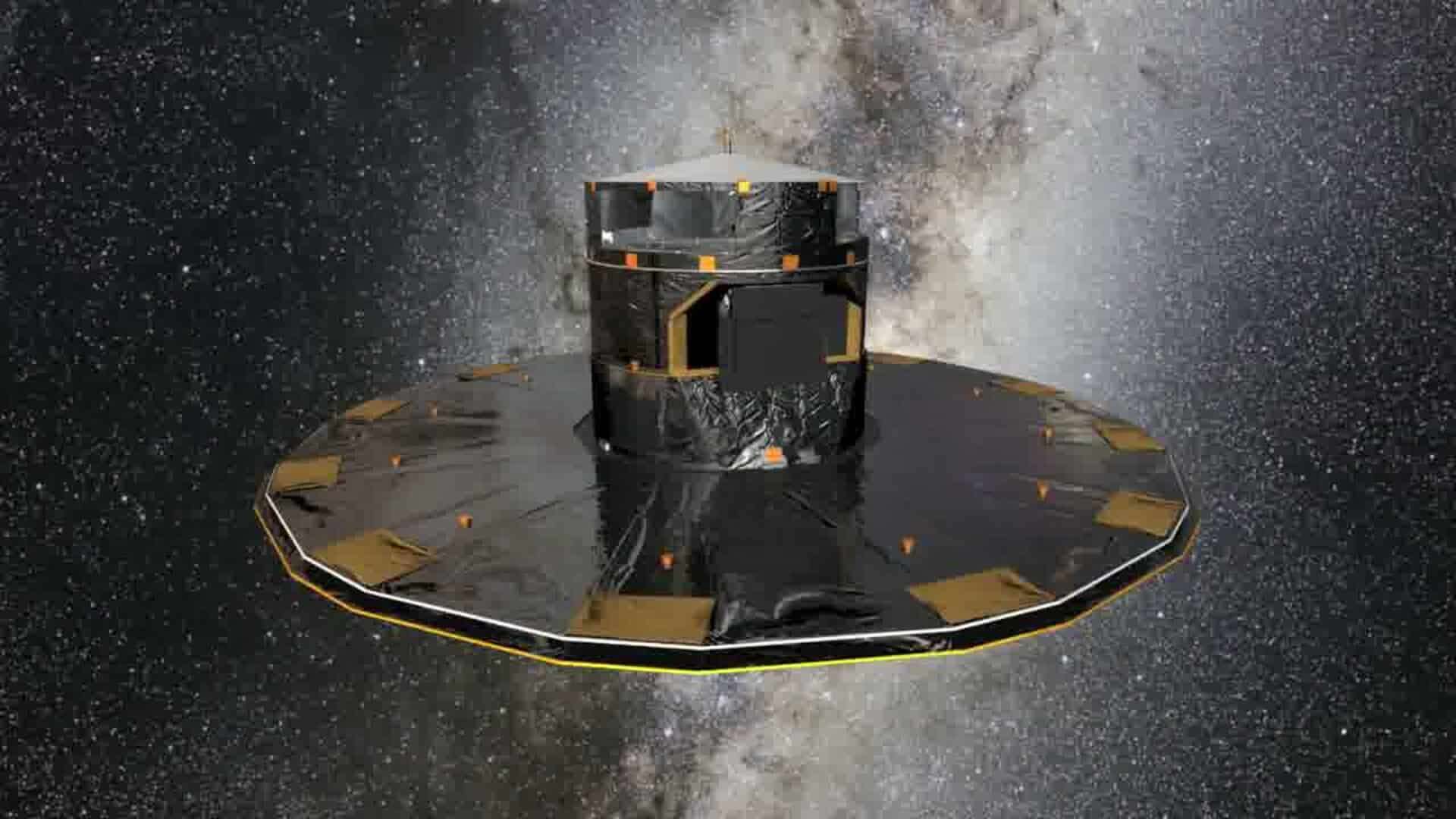
After more than ten years in orbit, the European Space Agency’s Gaia spacecraft has officially concluded its mission, marking the end of one of the most pioneering projects in space science. Launched in 2013, Gaia charted nearly two billion stars with unprecedented accuracy, profoundly enhancing our knowledge of the galaxy’s formation, composition, and dynamics.
On March 27, 2025, the ESA mission team at the European Space Operations Centre (ESOC) executed the final commands to deactivate the spacecraft and placed it into a carefully planned solar orbit. Although silent now, Gaia’s influence on astronomy is far from over.
Mapping the Galaxy Like Never Before
Gaia wasn’t just a typical observatory; it acted as an extraordinary cosmic cartographer. Over its 11-year lifetime, it delivered the most precise 3D star map ever produced, capturing detailed data about star locations, trajectories, distances, and luminance.

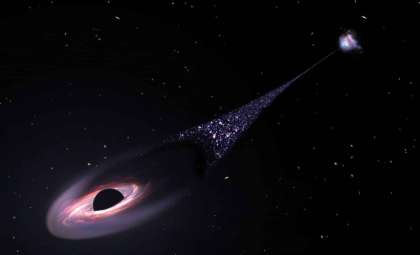
The mission uncovered remarkable phenomena—from revealing the remnants of ancient galactic mergers and identifying new star clusters to discovering exoplanets, spotting elusive black holes, and cataloging countless quasars and asteroids. “Gaia’s vast data archives are invaluable across astrophysics and have impacted nearly every branch of astronomy,” noted Gaia Project Scientist Johannes Sahlmann.
Upcoming data sets, such as Data Release 4 in 2026 and a comprehensive Gaia legacy catalog expected in 2030, will continue to enrich our cosmic insight for years to come.
The Complex Process of Powering Down Gaia
Built for endurance, Gaia could withstand challenges like intense solar radiation, micrometeor impacts, and temporary communication blackouts. Shutting down this resilient spacecraft involved more than a simple power-off.
“Turning off a spacecraft sounds straightforward,” explained Gaia Spacecraft Operator Tiago Nogueira, “but these systems are designed to keep going.”
The shutdown required disabling Gaia’s multiple backup systems step-by-step. The final action involved corrupting the onboard software to prevent any chance of reboot—even if solar panels later received sunlight. The mission ended with the deactivation of Gaia’s central computer and communication system, silencing its voice permanently.
Ensuring a Safe Retirement Orbit
Gaia was gently moved away from its operational site near the Sun-Earth L2 point, a location favored by many scientific satellites, into a long-term orbit around the Sun. This measure prevents interference with future missions and ensures Gaia will remain distant from Earth for at least a century.
“Finding a responsible end-of-life strategy was crucial,” the team remarked, reflecting ESA’s increasing dedication to sustainable space management.
Final Tests to Inform Future Missions
Before its retirement, engineers conducted last rounds of tests, including pushing Gaia’s micro-propulsion system to its limits. Insights gained will be valuable for upcoming ESA endeavors, especially the LISA mission, which will employ similar propulsion technology to detect gravitational waves.
Leaving a Legacy Written in Memory
In a moving tribute, during Gaia’s final shutdown, ESA engineers embedded the names of over 1,500 contributors to the mission in the spacecraft’s memory. Some team members also recorded farewell notes, allowing Gaia to carry the spirit and dedication of its creators throughout the cosmos.
“There’s a mix of joy for completing these crucial steps and sorrow in saying goodbye,” shared Julia Fortuno, Spacecraft Operations Engineer. “I’m proud to have been a part of this extraordinary mission.”
Uwe Lammers, Gaia Mission Manager, reflected poignantly: “Gaia will always be part of us, and we will never forget Gaia.”
- Categories:
- News





0 comments
Sign in to Comment