
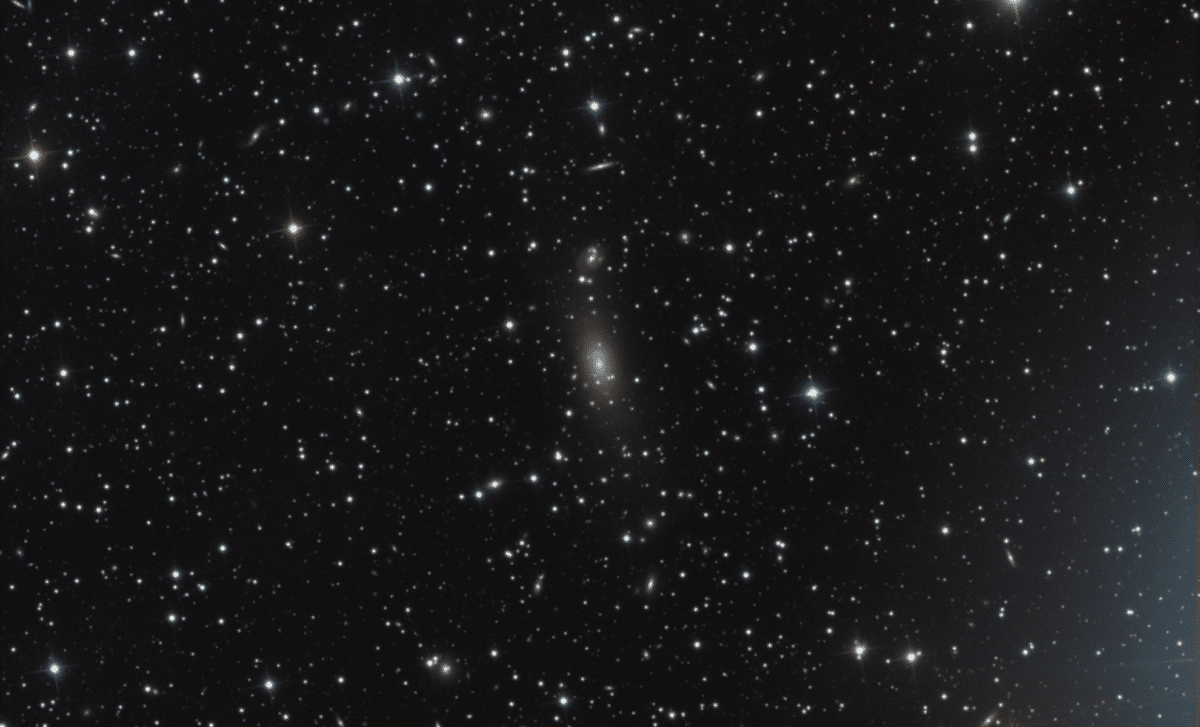
Utilizing data from the Einstein Probe (EP), astronomers have identified faint yet significant disruptions within the galaxy cluster Abell 3571, offering fresh perspectives on its collision history and internal workings. Published on January 8, 2026, via the ArXiv platform, this research provides an in-depth examination of the X-ray characteristics and the internal configuration of this colossal cluster situated in the Shapley Supercluster.
X-Ray Observations Uncover Hidden Disturbances
Massive galaxy clusters such as Abell 3571 consist of thousands of galaxies linked by gravity. They generally develop through merging processes and absorption of smaller groups. Prior X-ray studies portrayed Abell 3571 as a relatively stable entity, marked by a smooth, spherical shape and a cool central region. However, the newest findings from the Einstein Probe reveal a more dynamic situation.
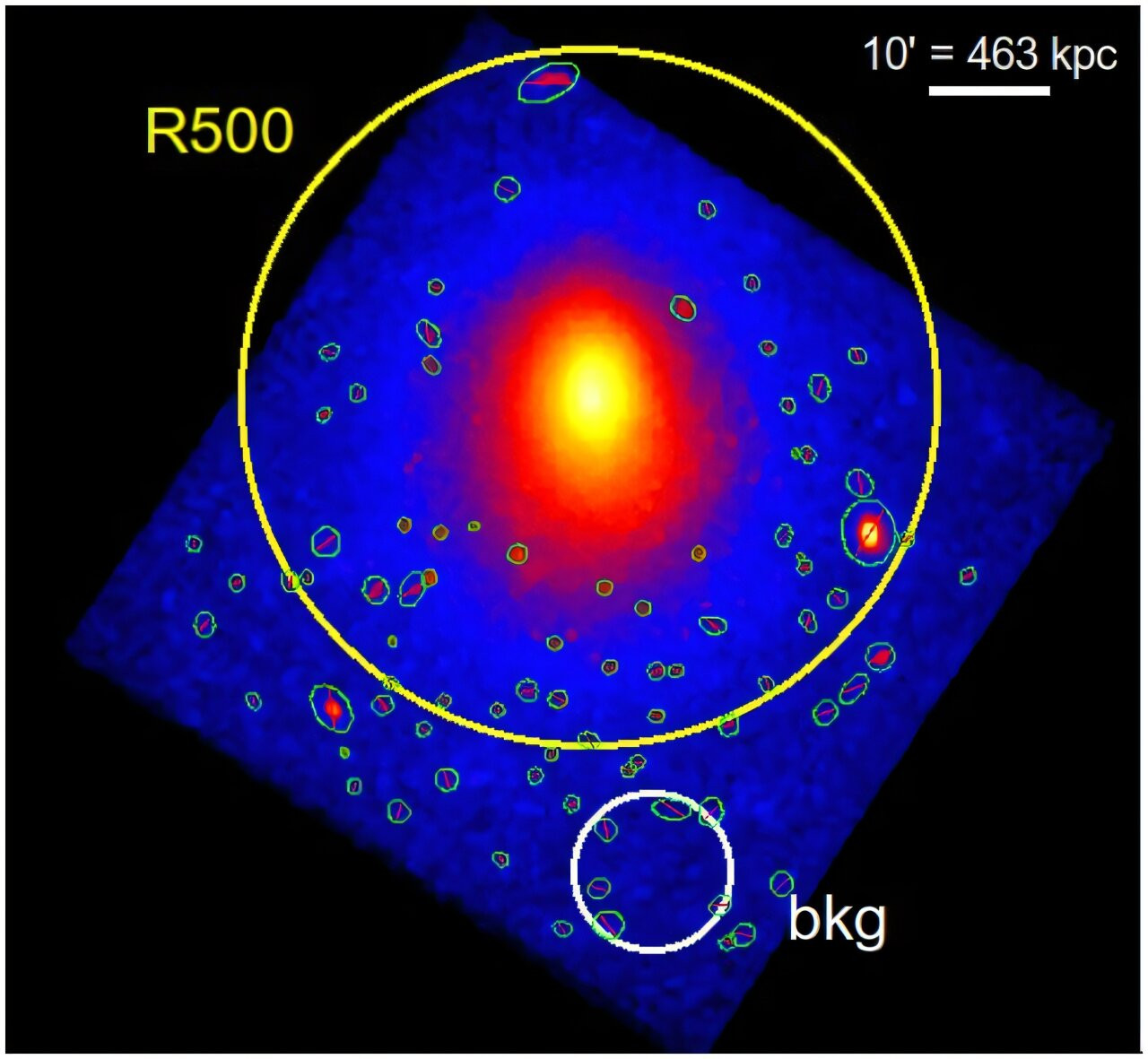
Under the leadership of Xinyi Zheng from Beijing Normal University, researchers integrated data from EP’s Follow-up X-ray Telescope (FXT) with optical imagery from the DESI Legacy Imaging Surveys. Although Abell 3571 looks structurally undisturbed, precise residual and thermodynamic mapping exposed internal irregularities—subtle ripples in its hot gas atmosphere—indicating a more chaotic past than previously thought.

The ArXiv paper highlights two distinct surface brightness enhancements: one located north and the other to the southwest of the cluster's core. The southwestern region hosts hotter gas, while the northern area remains cooler. This uneven distribution supports the hypothesis of an off-center collision shaping these features.
Signs of a Gentle Galactic Collision
The research team detected a clear north-south asymmetry both in the temperature readings and in the density of galaxies observed optically. This consistent directional imbalance across various wavelengths points to a merger event along this axis.
“We propose that the structure of A3571 originates from gas sloshing triggered by the off-axis passage of a low-mass subcluster moving from south to north. The sloshing displaces low-entropy gas from the cool core, producing a fan-shaped brightness excess to the north,” the astronomers explain.
This phenomenon known as "sloshing"—an oscillatory motion of the cluster’s gas induced by gravitational disturbances—is a typical consequence of minor mergers. It causes redistribution of gas and temperature, producing subtle irregularities visible only through sensitive X-ray imaging. In Abell 3571, these quiet indicators reveal the cluster is still in the process of reaching equilibrium after the event.
A Cluster in Recovery
The authors suggest that Abell 3571 is presently in a post-merger state, gradually healing from gravitational interactions that led to these disturbances. Despite its smooth, balanced outer layers, the inner regions narrate a tale of ongoing cosmic restoration. The exceptional sensitivity of the Einstein Probe's FXT was pivotal in capturing the faint shifts in temperature and luminosity missed by previous instruments.
This research underscores the critical role of advanced X-ray astronomy in exposing the concealed frameworks of the cosmos and enriches our understanding of how vast galaxy clusters evolve through cycles of collision, disruption, and eventual stabilization.
Once considered a serene giant, Abell 3571 now emerges as a resilient cosmic entity, its structure still recording signatures of an ancient cosmic collision.
- Categories:
- Space








0 comments
Sign in to Comment