
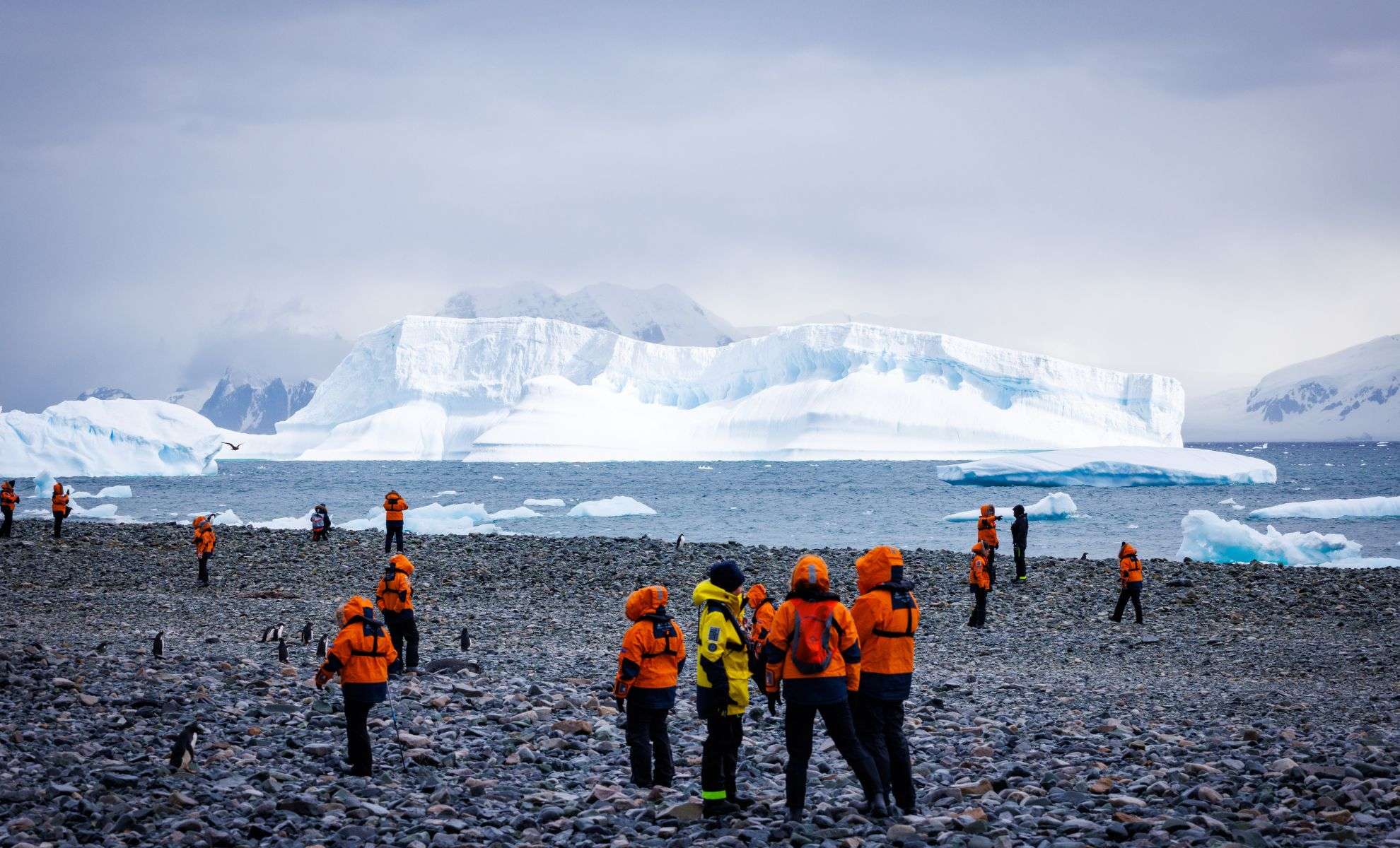
Antarctica, though devoid of indigenous populations, has become a surprising hotspot for linguistic development. Recent studies suggest the formation of a distinct “Antarctica accent” fostered by the diverse group of scientists residing temporarily across the continent’s research stations.
The Rise of a Distinct Antarctic Speech
Despite Antarctica’s transient and multinational population, an emerging accent is becoming noticeable. The continent’s remote nature and the close interaction within its scientific communities have helped cultivate a shared speech pattern. This emerging accent is particularly prominent during the summer months when the population reaches about 5,000 inhabitants.
During the colder months, the number of people drops to roughly 1,000. The small, rotating community accelerates linguistic adaptations, offering a rare real-time glimpse into accent formation and evolution—something usually observable only over extended periods in much larger populations.

@thelakhandamaniHow to Pronounce “Antarctica” in English 🇺🇲 | Mispronounced Antarctica | pronunciation in 15 seconds 🗣️ | The Lakhan Damani #howtopronounce #pronunciationpractice #pronunciationin15seconds #thelakhandamani #pronunciation #pronunciationtips #pronunciationguide #antarctica #foryou
♬ original sound – The Lakhan Damani
Tracking Changes in Speech Patterns
In 2019, researchers from Ludwig Maximilian University of Munich launched a research project involving 11 individuals from the British Antarctic Survey. Originating from countries like the UK, the US, Germany, and Iceland, these participants were recorded every six weeks throughout their Antarctic deployment. Over time, scientists noticed subtle shifts: vowel sounds were elongated and certain phonetic elements, such as the “ou” vowel, were pronounced differently—resulting in a faint yet measurable accent change.
Jonathan Harrington, a Professor specializing in Phonetics and Speech Processing at Ludwig Maximilian University, noted, “The Antarctic accent isn’t yet perceptible as a distinct dialect—it would require more time—but it can be detected acoustically.”
He elaborated that this emerging accent blends characteristics from the participants’ native accents along with new phonetic developments. While still nascent compared to established dialects, it exemplifies how language evolves in isolated, multicultural groups.
Isolation’s Role in Language Evolution
Though accent evolution usually happens over extended periods and generations, Antarctica’s isolated and diverse scientific community accelerates this process. The frequent, intense communication in this confined setting promotes the blending and creation of novel speech patterns.
Harrington highlighted the early stage of this development, describing it as “much more embryonic than typical English accents.” He noted that the brief time frame and limited speaker group intensify these changes, allowing linguists to observe language adaptation at an unusually fast pace.
Insights from a Unique Linguistic Experiment
This emerging Antarctic accent offers researchers a unique natural laboratory to examine how accents form under isolated conditions. The modest size of this community, spanning only a few thousand people, creates an ideal environment to track linguistic shifts and better understand the processes underlying accent emergence.
As investigations continue, scientists anticipate gaining deeper knowledge about the fundamental mechanisms that drive changes in human language worldwide.
- Categories:
- News












0 comments
Sign in to Comment