
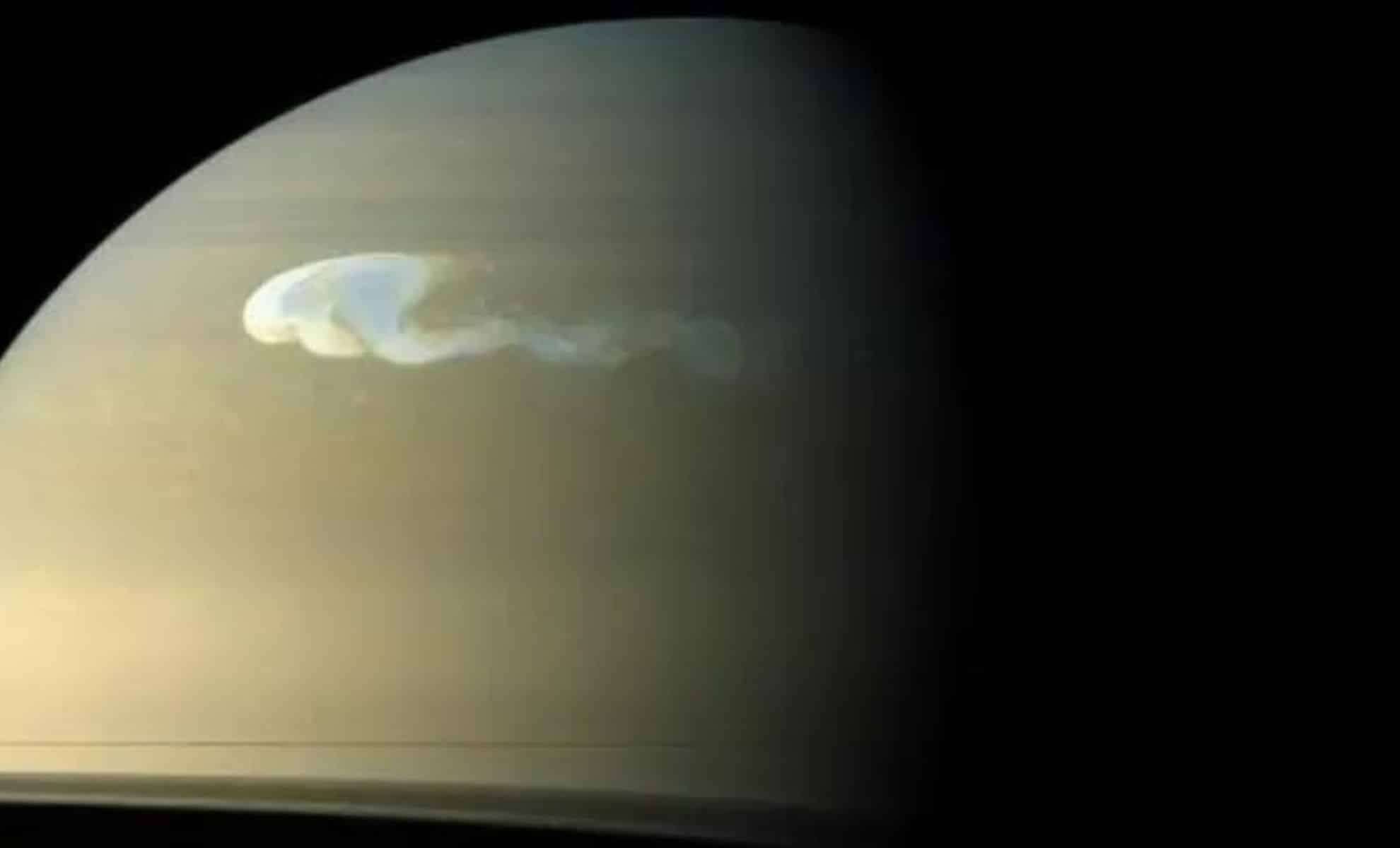
Using data gathered by NASA’s Cassini mission, researchers have uncovered pivotal details about the planet Saturn’s seasonal heat disturbances.
These discoveries challenge prior assumptions and enhance our comprehension of the gas giant’s atmospheric behavior and energy exchanges.
Seasonal Thermal Fluctuations on Saturn
Saturn’s atmospheric activity is strongly shaped by its seasonal thermal fluctuations. Unlike Earth, where seasonal energy changes are modest, Saturn endures extreme variations due to its pronounced orbital eccentricity, which significantly alters the solar radiation the planet receives during different points in its 30-year orbit. As Saturn moves between its perihelion and aphelion, these shifts drive major changes in atmospheric temperatures and dynamic patterns.

Scientists from the University of Houston report that Cassini data reveals that Saturn’s energy imbalance originates from these seasonal transitions. At certain periods, the planet releases more heat into space than it gains from the sun, primarily fueled by internal heat generated deep within its core. This remnant heat of planetary formation produces temperatures soaring to 15,000 degrees Fahrenheit (8,300 degrees Celsius), surpassing the surface temperature of the sun.
Key Observations from Cassini
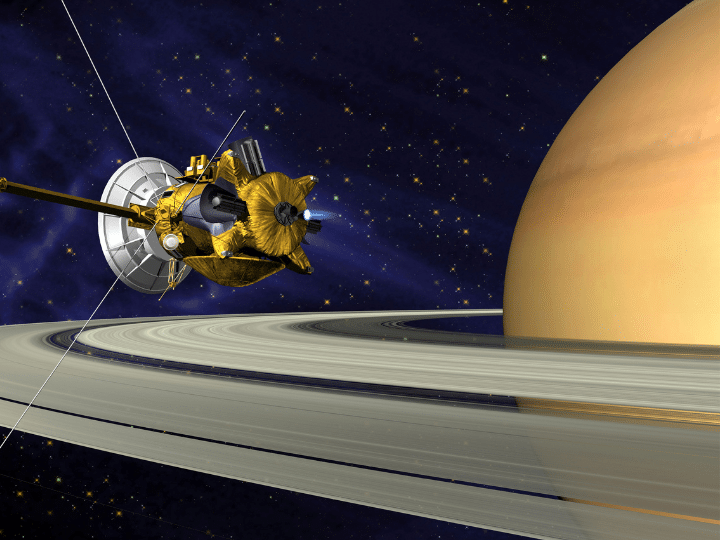
Since arriving at Saturn in 2004, the Cassini spacecraft has offered valuable seasonal data. At that time, Saturn was experiencing southern summer, with the south pole angled towards the sun and the northern hemisphere engulfed in winter shadow. Cassini recorded three seasons in the northern hemisphere—spring, summer, and winter—with each lasting approximately seven Earth years.
These seasonal measurements revealed that Saturn’s heat radiation varies between hemispheres, with the hemisphere in summer emitting more thermal energy. “Our discovery of this seasonal energy disparity suggests we need to revisit and update existing atmospheric models,” explained Xinyue Wang, the lead author of the study. Research led by Liming Li and Xinyue Wang from the University of Houston stressed the necessity of incorporating these seasonal energy shifts into models to better portray the climate and evolution of gas giants like Saturn.
Consequences for Planetary Atmosphere Studies
Findings from Cassini’s observations hold profound implications for understanding planet-wide atmospheric processes. Saturn’s seasonal energy imbalance directly influences its climate patterns and is a driving factor behind its enormous storm systems. Fueled by the internal heat and seasonal cycles, these storms can sweep across the planet, generating complex and tumultuous weather. “This insight reshapes our approach to planetary and atmospheric sciences, offering fresh perspectives on how such processes develop,” noted Liming Li.
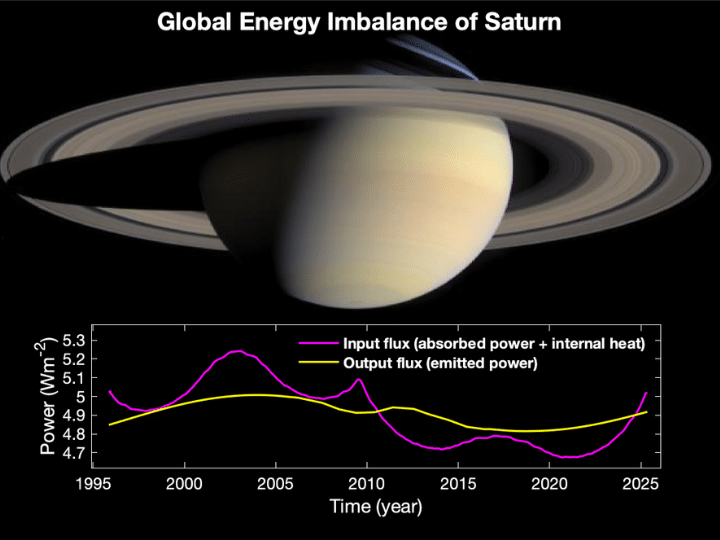
The new study also indicates that similar energy irregularities might be present on other giant planets like Uranus, which also experiences a highly eccentric orbit and extreme axial tilt. Future exploratory missions to such planets are expected to delve deeper into these phenomena to enhance our grasp of how energy imbalances govern their atmospheric environments and overall climate systems.
Energy Imbalance’s Role in Storm Formation
Data further suggests that the uneven distribution of energy on Saturn is fundamental to the genesis of the planet’s immense storms, which dominate its weather landscape. These massive convective storms are powered by the planet’s substantial internal heat and the fluctuating solar energy it receives. “Examining the connection between energy budgets and storm development on Earth remains incomplete, and we plan to explore if parallels exist,” said Xinyue Wang.
Expanding Understanding of Giant Planets
The Cassini mission’s legacy sets the stage for forthcoming explorations of gas giants. Researchers are preparing to focus on Uranus next, with a planned flagship mission in the coming decade aimed at investigating its pronounced seasonal energy disparities caused by unique orbital and axial features. “Our findings imply that Uranus may exhibit even more marked energy imbalances than Saturn because of its orbital shape and extreme tilt,” Wang added.
Continued examination of Saturn’s seasonal energy variations and their atmospheric impacts highlights the intricate and evolving character of planetary systems. As scientists reassess data from past missions and look forward to new expeditions, we anticipate a richer, more nuanced knowledge of our solar system's gas giants, unveiling fresh details about their origins, transformation, and current dynamics.
- Categories:
- Astronomy ,
- News ,
- Space ,
- Nasa








0 comments
Sign in to Comment