
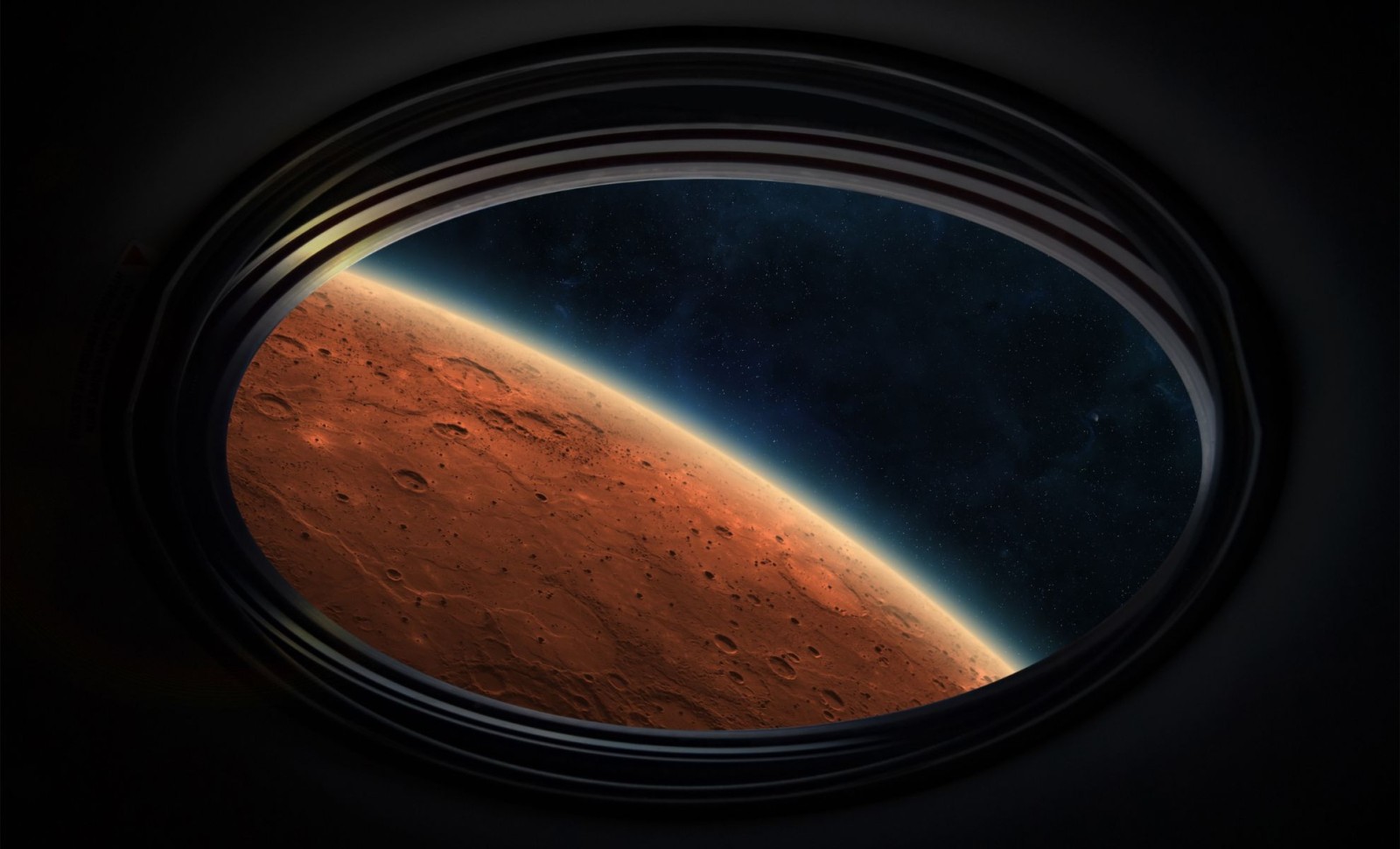
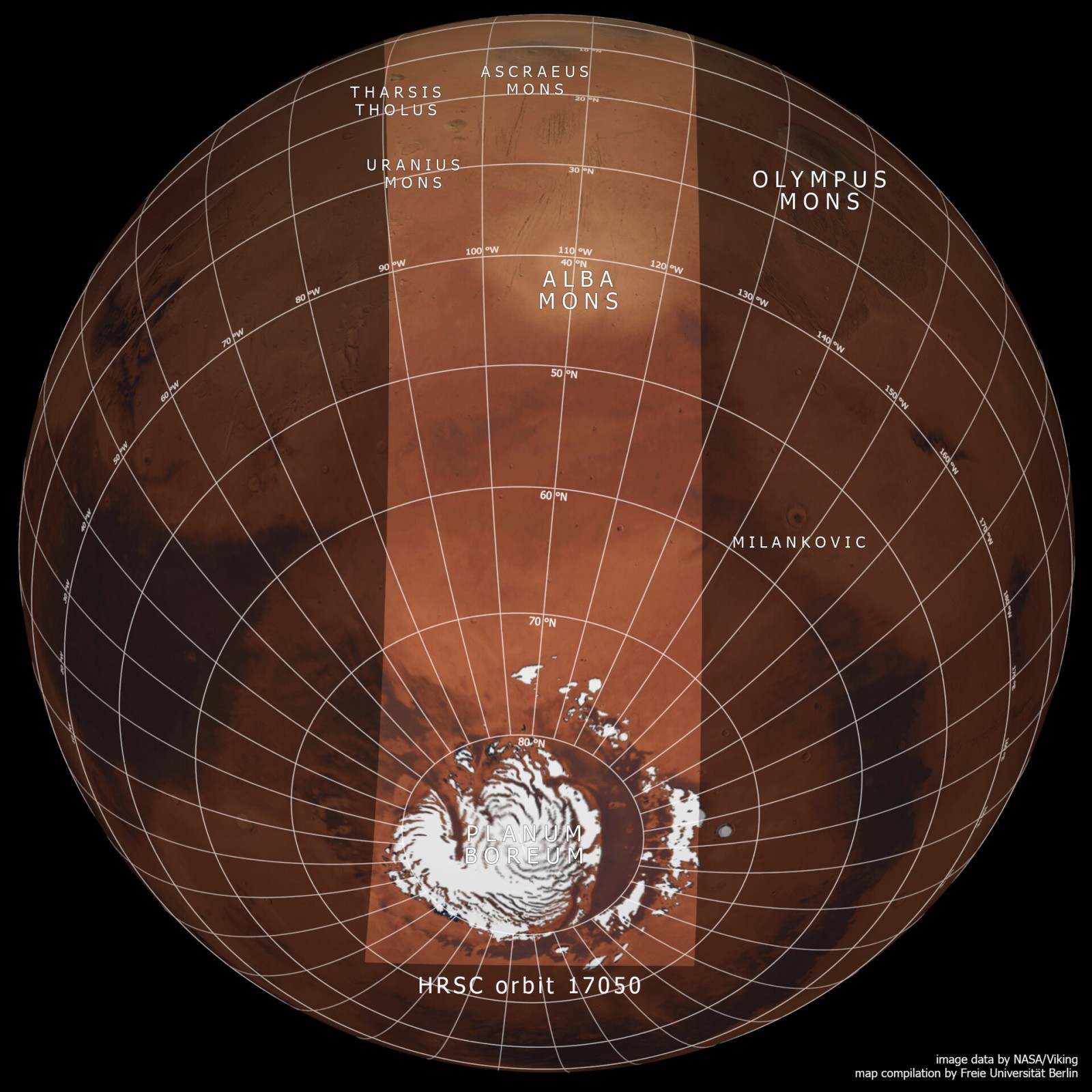
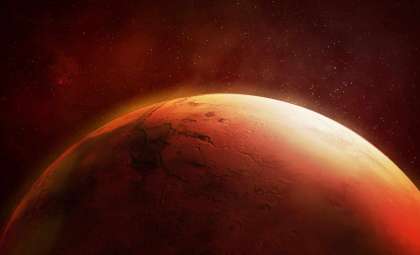
On June 19, 2017, the European Space Agency’s Mars Express orbiter captured a remarkable wide-angle image of Mars showing the planet from an unconventional upside-down perspective. This photo, taken during a camera calibration process, reverses Mars’ usual orientation by positioning the North Pole at the bottom and the equator at the top of the frame.
Since arriving in orbit around Mars in 2003, Mars Express has been a vital asset in expanding our knowledge of the Martian surface. Despite setbacks such as losing contact with its Beagle 2 lander, the orbiter continues to send back breathtaking imagery and valuable scientific information.
An Alternative Angle on Mars’ Frosty North Pole
This unique photo, snapped amid routine camera checks, showcases the northern polar ice cap of Mars near the bottom of the image. The European Space Agency explains the shot was taken as Mars Express traveled from the North Pole heading toward the equator. The inversion presents a striking contrast between the bright polar ice and the neighboring terrain.

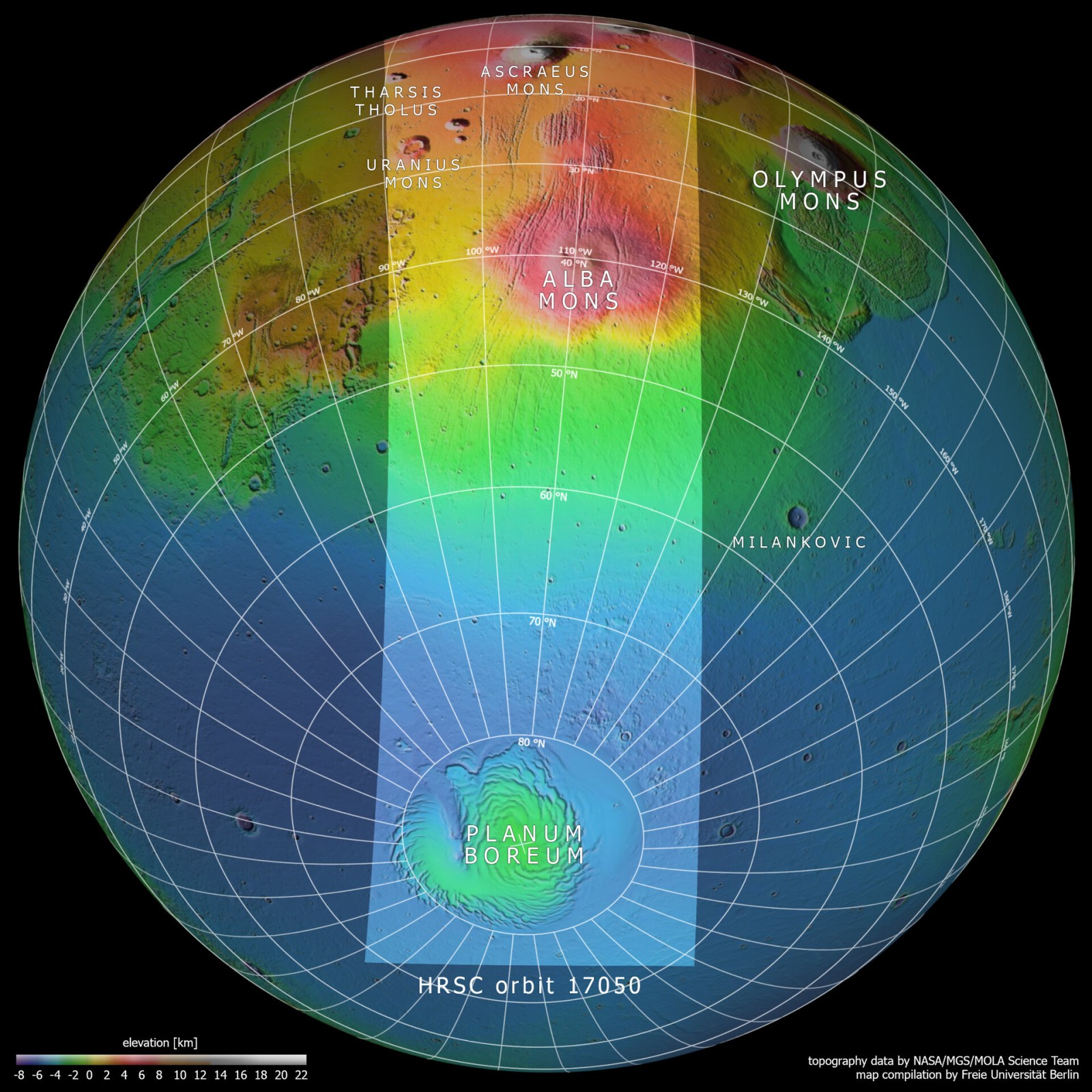
The picture also features Alba Mons, Mars’ largest volcano by area, which extends over 1,000 kilometers across the surface. Positioned within the upper third of the scene, Alba Mons stands out prominently. Just above it, Ascraeus Mons rises as Mars’ second tallest volcano, with clouds lingering around its summit located 15 kilometers high.
“Other volcanoes can also be seen to the left of Ascraeus Mons, including Uranius Mons, Ceraunius Tholus, and Tharsis Tholus,” noted the ESA in the report.
Mars Express: Pioneering Exploration Around the Red Planet
Launched in 2003, the Mars Express spacecraft serves as ESA’s flagship mission orbiting Mars, delivering groundbreaking scientific observations of the planet’s surface and atmosphere. Although the Beagle 2 lander failed to deploy its solar panels after touchdown, the orbiter itself remains a remarkable success, continually transmitting amazing Mars images. This recent picture forms part of ongoing efforts to fine-tune its instruments.
The high-resolution stereo camera onboard, equipped with nine imaging channels including color and stereo modes, has been crucial in producing detailed Martian maps. It provides researchers with data to study Mars’ geology, climate, and prospects for life.
“The northern polar cap was composed of water ice and dust at the time of imaging, at the beginning of spring. The carbon dioxide ice present in winter had already evaporated from the solid form to a gas.”
The Significance of Viewing Mars ‘Upside-Down’
Although space lacks a universal up or down, planetary images typically orient with the North Pole on top. Flipping Mars’ orientation offers a fresh visual approach that emphasizes features that might otherwise be overlooked. By exploring alternate viewpoints, ESA and NASA deepen our understanding of Mars’ varied landscape and complex history.
- Categories:
- Space







0 comments
Sign in to Comment