
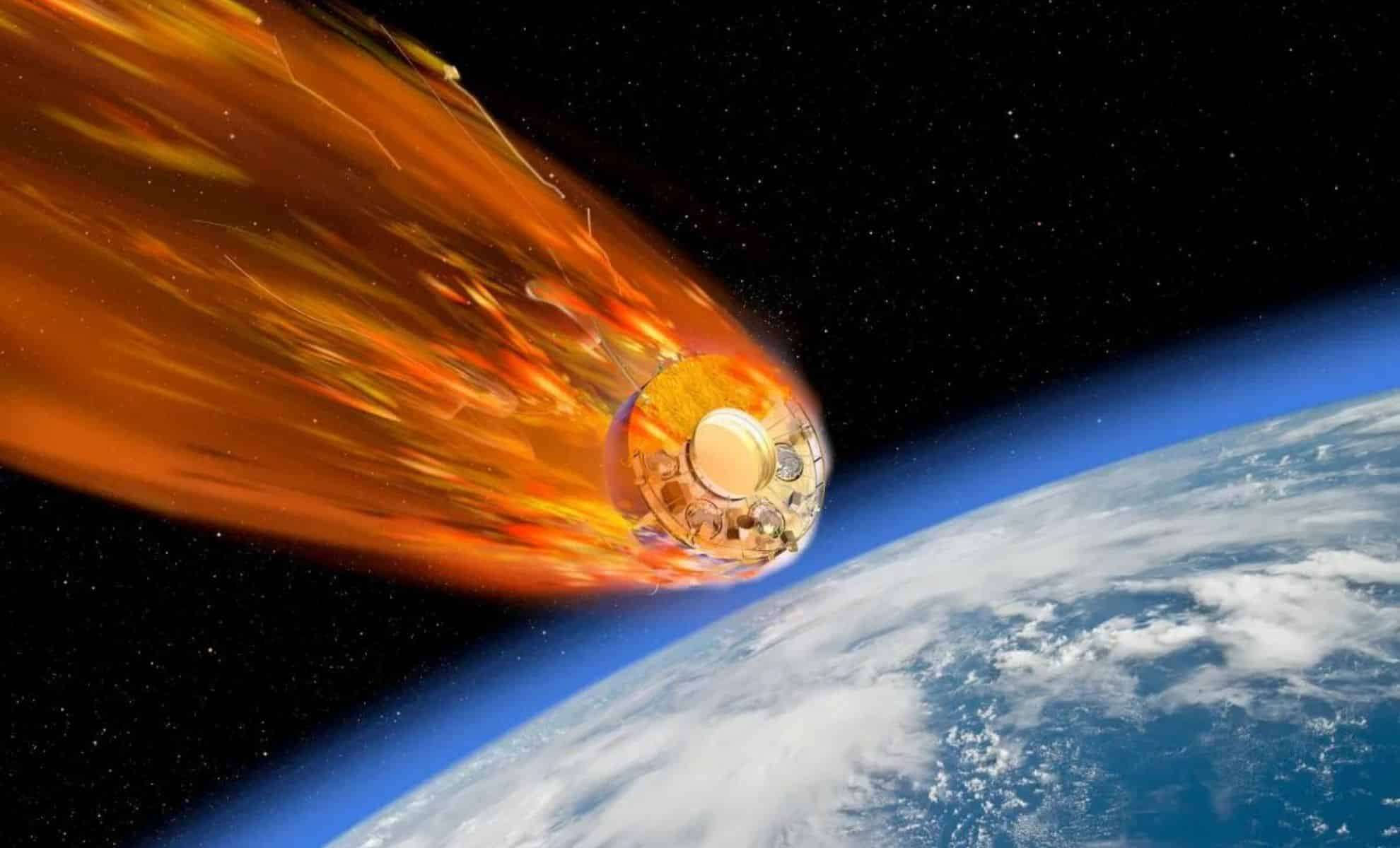
The European Space Agency (ESA) has made history by successfully performing its inaugural controlled descent of a satellite, expertly guiding the Salsa satellite back into Earth’s atmosphere on September 8, 2024.
This groundbreaking operation represents a crucial advancement in ESA’s ongoing mission to combat the escalating issue of space debris. It is a key component of the agency’s comprehensive Zero Debris initiative, which aims to ensure all ESA spacecraft are deliberately deorbited by 2030. Salsa was part of the Cluster mission, a fleet of four satellites that have delivered over two decades of essential insights into Earth’s magnetosphere and space weather phenomena.
Specifics on Salsa’s Descent: Timing, Location, and Monitoring
The controlled reentry of Salsa occurred at 2:47 p.m. Eastern time above a remote stretch of the South Pacific Ocean, near Chile’s western coast. This area was carefully selected to minimize risks to populated regions. In contrast to uncontrolled reentries that lack precision in timing and location, ESA’s targeted approach ensured complete control over the satellite’s atmospheric reentry. This precision reflects the agency’s expanding capabilities in secure spacecraft disposal. To keep the public informed, ESA posted updates on X (formerly Twitter), which included:

Last night, the first satellite in our Cluster quartet safely came back down to Earth in a world-first ‘targeted reentry’.
The spacecraft, known as ‘Salsa’, reentered Earth’s atmosphere at 19:27 BST/20:47 CEST over a remote area of the South Pacific Ocean.
Not only has Cluster… pic.twitter.com/joLYtNpFnr
— European Space Agency (@esa) September 9, 2024
In addition, ESA dispatched an observation plane from Easter Island to document the reentry. Outfitted with 16 specialized instruments, the aircraft recorded detailed measurements of the satellite’s disintegration during descent. Among the images captured, Salsa appeared as a luminous point breaking apart against the sky.
Scientific Insights from the Satellite’s Controlled Descent
This precise reentry not only demonstrated technical prowess but also offered valuable scientific data. Benjamin Bastida-Virgili, a space debris systems engineer at ESA, highlighted the significance of the observations: “These data will deepen our understanding of the sequence and altitude at which different parts of the satellite burn up during reentry.” This information is essential for refining satellite breakup models, which predict behavior during atmospheric reentry.
The insights gained from Salsa’s controlled descent will guide upcoming reentries of the remaining Cluster satellites—Rumba, Samba, and Tango—scheduled between October 2025 and August 2026. Each event will further validate and improve ESA’s models, boosting the agency’s ability to dispose of spacecraft safely and precisely.
Leading the Way in Space Debris Mitigation
The successful reentry of Salsa underscores a vital progress in ESA’s Zero Debris strategy addressing the increasing accumulation of orbital debris. With satellite launches rising globally, crafting responsible disposal practices is imperative. ESA’s efforts set a precedent for sustainable operations in space.
Since its 2000 launch, the Cluster mission has played a pivotal role in enhancing knowledge of the magnetosphere’s function in shielding Earth from solar activity. Philippe Escoubet, manager of the Cluster mission, commented, “For more than twenty years, Cluster has repeatedly demonstrated the magnetosphere’s critical role in protecting us from solar wind.” The conclusion of Salsa’s mission and orderly deorbit exemplify ESA’s commitment to pioneering science and lifecycle stewardship of satellites.
As humanity’s presence in space grows, the lessons learned from Salsa’s controlled reentry will be instrumental in developing safer and more efficient satellite disposal methods, helping to preserve the space environment for future explorers.








0 comments
Sign in to Comment