
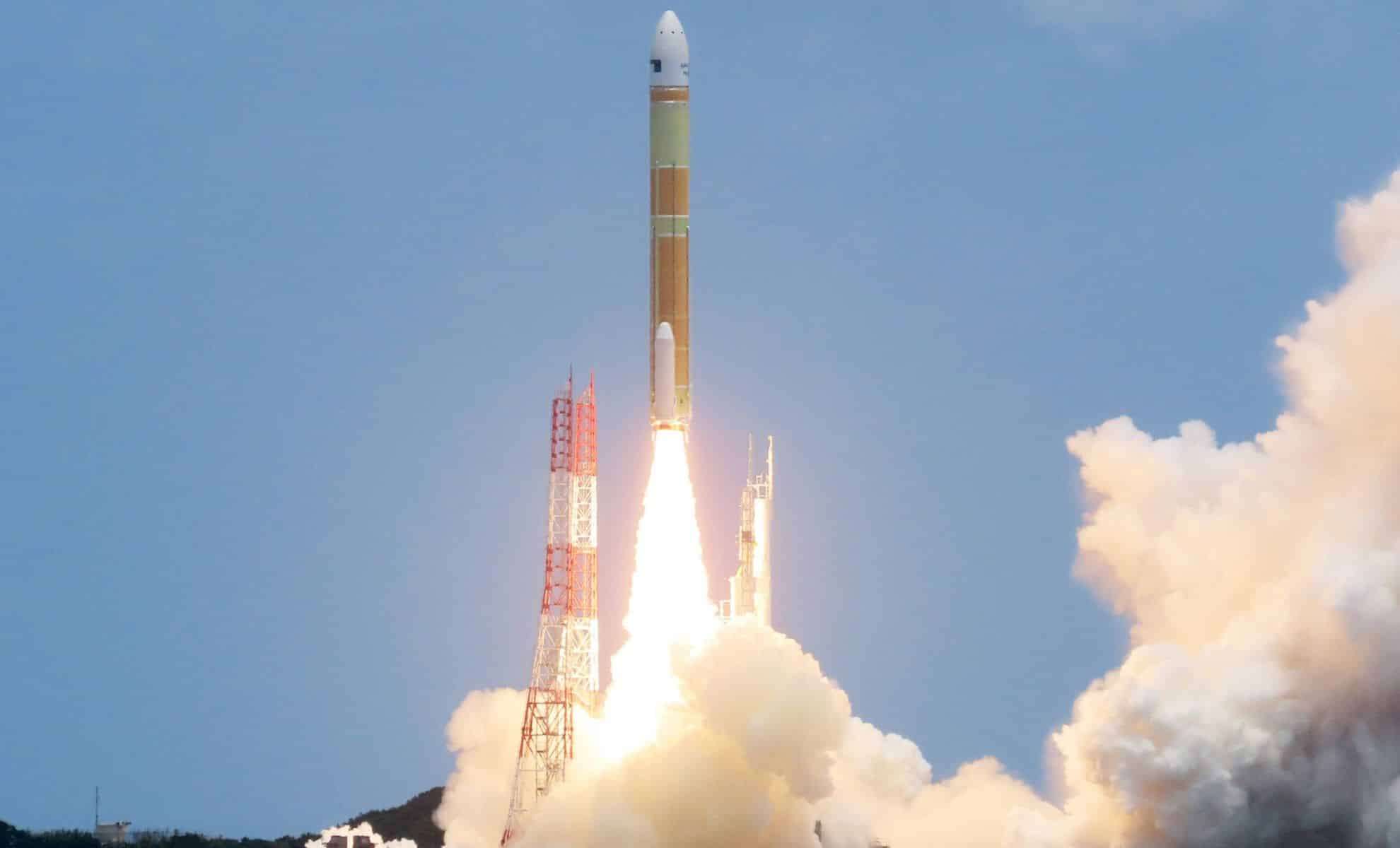
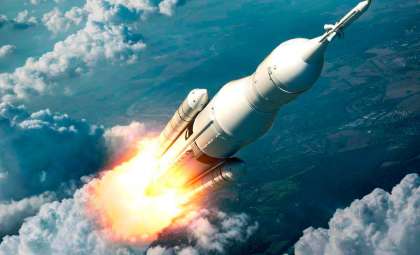
Japan has successfully deployed its Advanced Land Observing Satellite-4 (ALOS-4), also known as Daichi-4, atop the newly developed H3 rocket.
This accomplishment signifies a major milestone for the Japan Aerospace Exploration Agency (JAXA) and showcases the H3 rocket’s capability as a dependable and competitive vehicle for space transportation.
Celebrations erupted at the Tanegashima Space Center launch command as JAXA officials congratulated one another upon the successful third flight of the H3 rocket.

Launch Overview and Context
The H3 rocket lifted off from Japan’s Tanegashima Space Center at 11:06 p.m. Eastern Daylight Time on June 30 (12:06 p.m. Japan Standard Time on July 1). About 16 minutes post-launch, the ALOS-4 satellite was accurately inserted into low Earth orbit, following the planned timeline. This mission marks a significant recovery following prior hurdles, such as a failed launch and a mission setback during the previous year.
Makoto Arita, project manager for the JAXA H3 rocket, expressed his delight, describing the launch as "a perfect 100 percent success." Developed in collaboration with Mitsubishi Heavy Industries, the H3 rocket is set to become the successor to the H-2A rocket, which is slated for retirement this year after over two decades of service.
According to JAXA, the H3 rocket followed its predetermined flight path, detaching its two stages in sequence and successfully releasing the satellite, with the discarded stages falling into the Indian Ocean. Hiroshi Yamakawa, JAXA’s president, shared, “Today, Daichi-4 entered its operational orbit and initiated its mission.”
This achievement demonstrates steps forward in preserving Japan’s independent space access and enhancing its competitiveness on the global stage. Yamakawa noted, “I view this day as a pivotal advancement toward our strategic goals.” Prime Minister Fumio Kishida also lauded the collective efforts, expressing optimism for Japan’s space technology progress.
Capabilities of the ALOS-4 Satellite
The ALOS-4 satellite, with a development cost nearing ¥32 billion, utilizes synthetic aperture radar technology for Earth observations. Unlike optical sensors, radar allows for imaging during nighttime and through adverse weather.
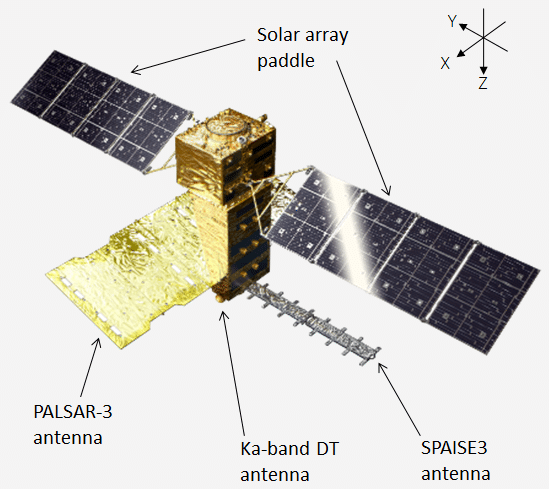
This makes ALOS-4 crucial for monitoring natural catastrophe impacts such as intense rainfall, seismic tremors, and volcanic activity. As JAXA representatives highlighted, “ALOS-4 capitalizes on these radar capabilities to observe disaster-affected zones, forest areas, and sea ice.” The satellite can detect land shifts, including landslides and related geological changes.
Moreover, ALOS-4 incorporates an Automatic Identification System (AIS) that tracks maritime vessel movements, contributing to safer shipping operations and improved communication. AIS transmits and receives key ship data like identification, location, heading, speed, and destination.
The satellite’s extensive observation capacity allows persistent surveillance even under low visibility or darkness. ALOS-4 marks a major technology upgrade, expanding observation scope to about four times that of its predecessor, Daichi-2.
The H3 Rocket’s Development Path and Next Steps
The H3 rocket has overcome several setbacks on its road to operational status. Originally planned to debut in 2020, delays arose from engine-related development challenges. Its inaugural launch in March 2023 failed when the upper-stage engine malfunctioned, resulting in the loss of the ALOS-3 satellite. Nonetheless, the H3 rocket rebounded with a successful second flight in February 2024, utilizing a mass simulator and launching two small Earth observation cubesats.
This recent accomplishment further confirms the H3’s reliability, positioning it as Japan’s upcoming primary medium-lift launcher. JAXA envisions six H3 missions yearly, as the H-2A rocket is gradually phased out. Yamakawa conveyed a mix of relief and caution, saying, “While this marks a great accomplishment, continued diligence is essential.” He added, “Consecutive successful flights will build domestic and international trust in the H3 system, but thorough analysis remains a priority.”
Prime Minister Fumio Kishida celebrated the milestone on social media, honoring everyone involved and hoping it propels the nation’s space program further. The launch plays a critical role in Japan’s pursuit of dependable, commercially viable space access vital for both civilian and defense objectives.
Broader Impact on Japan’s Space Endeavors
The deployment of ALOS-4 along with the proven H3 rocket performance marks a transformative point in Japan’s space initiatives. It consolidates Japan’s self-reliance in space launch capabilities and enhances its competitive position globally.
Reliable launch technology paired with sophisticated satellites like Daichi-4 strengthens Japan’s capacity for Earth monitoring, disaster response, and security operations. The satellite’s rapid assessment potential is critical for evaluating damage and tracking environmental shifts after emergencies.
As JAXA refines the H3 rocket and scales its launch operations, it is poised to be a vital participant in the global space market. The progress demonstrated by both the H3 platform and the ALOS-4 satellite highlights Japan’s growing influence and technological advancement within the space sector.
- Categories:
- Astronomy ,
- News ,
- Space ,
- Aircraft






0 comments
Sign in to Comment