

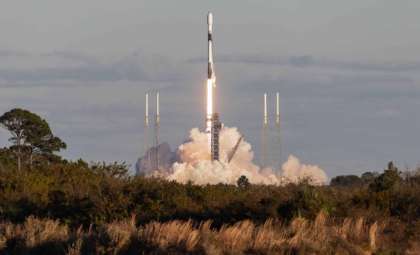
SpaceX prepares to deploy a fresh set of Starlink satellites from Cape Canaveral Space Force Station today, Wednesday, though inclement weather may pose launch delays.
This mission contributes to SpaceX’s ongoing initiative to broaden its Starlink internet system, designed to deliver high-speed connectivity worldwide.
Launch Information from SpaceX
The Falcon 9 rocket is slated to lift off at 5:20 p.m. on June 12 from Space Launch Complex 40. This operation continues SpaceX’s rapid cadence of launches this year.

Targeting Wednesday, June 12 for a Falcon 9 launch of 22 @Starlink satellites to low-Earth orbit from Florida → https://t.co/bJFjLCiTbK
— SpaceX (@SpaceX) June 11, 2024
The launch window remains available until 9 p.m., allowing some flexibility despite the challenging weather conditions.
If the launch doesn’t occur during this timeframe, SpaceX has backup opportunities beginning at 4:46 p.m. on Thursday. This contingency ensures the company remains on track despite unpredictable weather.
Weather Forecast and Impacts
Today's atmosphere is forecasted to be unfavorable, with the 45th Weather Squadron estimating only a 5% chance for clear conditions at launch time. A strong tropical moisture system sweeping across Florida is expected to bring widespread rain and unstable weather throughout the week.
A 24-hour delay would increase the probability of favorable conditions to around 15%, though persistent thunderstorms and showers could still disrupt the schedule. SpaceX continues to evaluate safety conditions carefully before proceeding.
“The weather is not in our favor today, with only a 5% chance of a go for launch,” a SpaceX spokesperson said. “We are closely monitoring the conditions and have backup windows ready.”
The National Weather Service has issued warnings for East-Central Florida, highlighting the possibility of storms producing strong winds, intense lightning, and heavy rain. The outlook also warns that repeated bouts of heavy precipitation may cause localized flooding later this week.

Proven Falcon 9 Booster
The Falcon 9 for this mission is set to fly for the 16th time, showcasing a notable history of successful operations. It has been utilized in missions like Bandwagon-1, CRS-27, Amazonas-6, and ten previous Starlink deployments. This reuse model exemplifies SpaceX’s commitment to reducing space launch costs.
Today’s Falcon 9 will follow a northeast-bound path from its launch pad, positioning its payload of Starlink satellites into the designated low-Earth orbit. This route is standard for deploying the Starlink constellation efficiently.
Significance of This Launch
This deployment supports SpaceX’s larger vision to grow the Starlink satellite network, which includes thousands of currently operational satellites. The goal is to extend high-speed internet access globally, focusing especially on isolated regions that lack reliable connectivity infrastructure.
Expanding Starlink will also have far-reaching economic benefits by enhancing access to education, healthcare, and commerce in underserved areas. Additionally, it may disrupt traditional internet providers, fostering greater innovation and improved service quality in telecommunications.
This launch closely follows another milestone for SpaceX: the successful 300th landing of a first-stage booster, underscoring the firm’s achievements in rocket reusability, a key factor in lowering operational costs and increasing launch frequency.
The Space Coast has already hosted 44 orbital launches this year, highlighting its critical role in supporting commercial space advancements. With each successful flight, SpaceX strengthens its lead in rocket technology, reusable hardware, and rapid satellite deployment.
“Another day, another #Starlink launch! We’re excited to keep expanding our constellation and bring better internet to everyone, everywhere,” SpaceX posted on Twitter earlier today.








0 comments
Sign in to Comment