
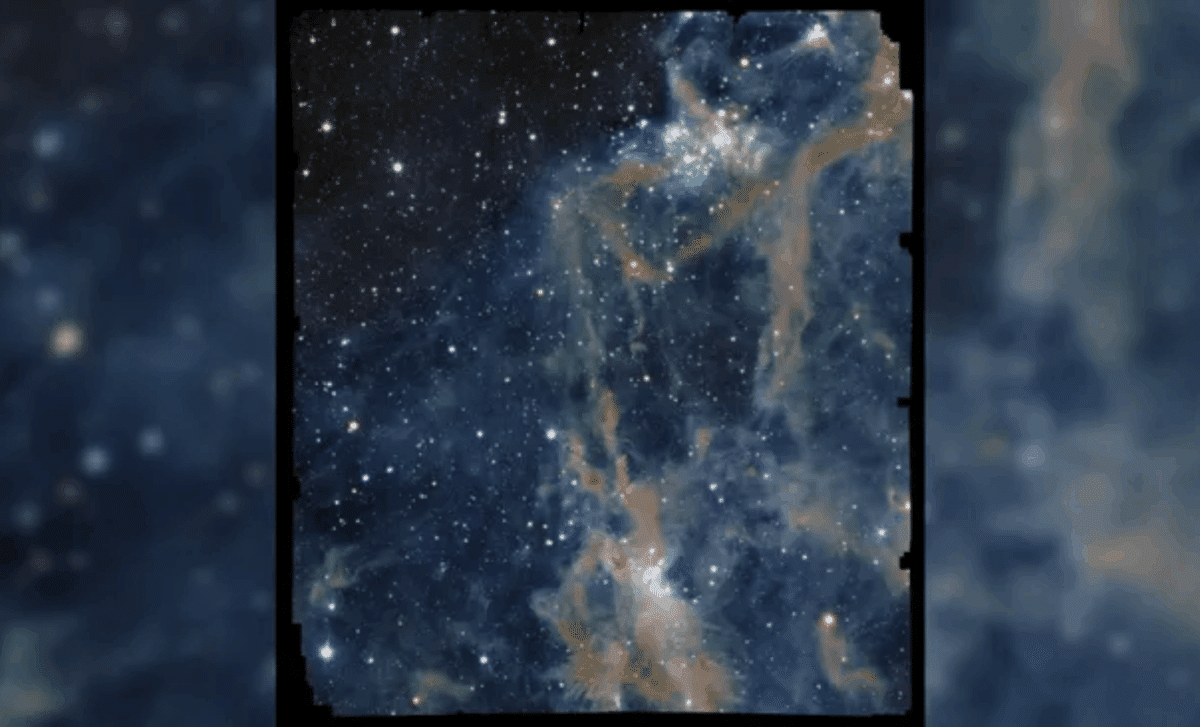
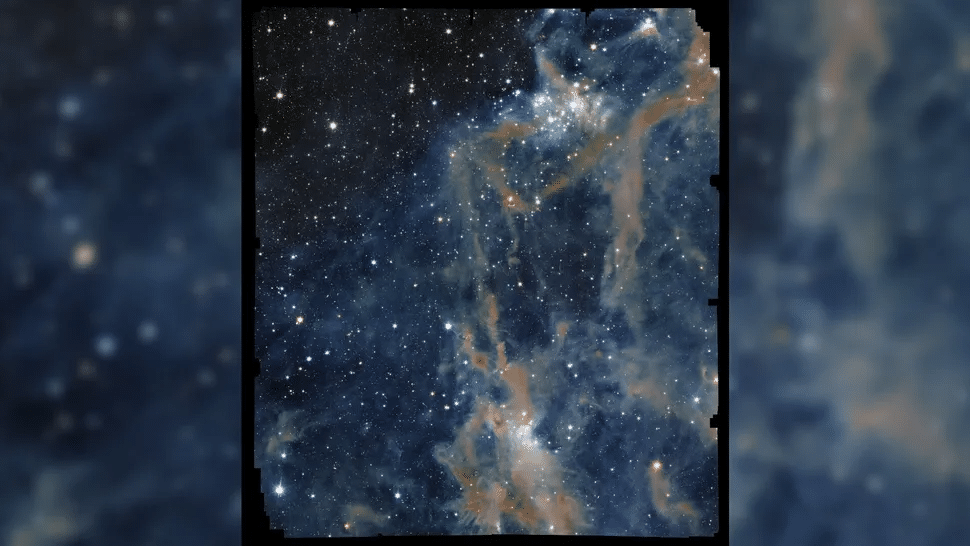
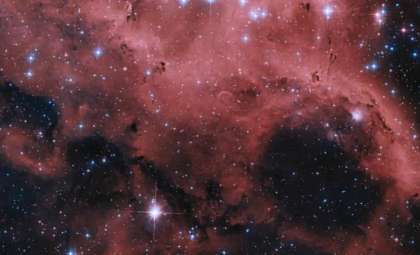
The Euclid Space Telescope has recently produced a captivating image of the dark nebula LDN 1641, nestled within the Orion constellation. This vast cosmic cloud, a cradle for emerging stars, was imaged with remarkable clarity, highlighting the telescope’s exceptional capabilities. According to Space.com, this observation represents a major achievement in the mission’s quest to uncover the universe’s hidden marvels. Let’s explore the importance of this discovery and what it reveals.
LDN 1641: The Stellar Nursery Revealed
Within the Orion constellation lies LDN 1641, a dark nebula enveloped in dense dust and gas. This region serves as a stellar nursery where newborn stars are forming, though the thick cosmic material obscures them from view. Situated about 1,300 light-years from Earth, LDN 1641 is a captivating object for scientists investigating the early stages of star formation.
The recent detailed image taken by the Euclid Space Telescope unveils this dynamic environment like never before. Despite the obscuring dust, the telescope identified dense pockets of gas actively collapsing to birth new stars. The Euclid team achieved high-resolution imaging of this area, a vital advance for comprehending how stars, including ones like our Sun, develop over time.

The Technique Behind Capturing LDN 1641
Obtaining such a finely detailed image of LDN 1641 required more than a simple telescope pointing. The Euclid team, led by mission engineers, utilized this particular dark nebula during the telescope’s calibration phase. Since Euclid was still in its early operational stage, the team needed a celestial area lacking bright stars visible in optical light. LDN 1641’s nature as a star-poor region made it ideal for refining the telescope’s alignment system.
In less than five hours, Euclid captured an image spanning an area three times larger than the full moon. This achievement demonstrated not only the telescope’s capacity to image broad swaths of space but also the precision needed to focus on distant, faint structures. As detailed by Space.com, this calibration exercise was crucial for ensuring Euclid’s future observations would achieve outstanding accuracy, laying the groundwork for its comprehensive cosmic survey.
Milestone Achievement for the Euclid Mission
This observation marked a pivotal point for the Euclid Space Telescope, representing its first precise targeting of a remote celestial region. The exceptional quality of the imagery proved Euclid’s system was ready to advance to the next stage of its mission: an extensive survey of the cosmos. Such a survey aims to tackle fundamental questions in cosmology, including the mysteries of dark energy and galaxy formation.
By utilizing LDN 1641 to perfect its pointing mechanism, Euclid is set to deliver invaluable insights into the universe’s large-scale structure and evolution. Capturing images with this level of detail is critical for the mission’s goal to explore both nearby and far-reaching cosmic phenomena.
- Categories:
- Astronomy






0 comments
Sign in to Comment