

Scott Tilley, an avid satellite tracker from British Columbia, stumbled upon a strong and constant radio signal from space after mistakenly scanning an unintended frequency band—a surprise where silence was anticipated.
This accidental find has brought global focus to Starshield, SpaceX's secret satellite system commissioned by the U.S. government. Unlike the widely known Starlink network, which offers public internet coverage, Starshield operates covertly. This disclosure sheds light on previously unknown military space activities and fuels curiosity about emerging space governance.
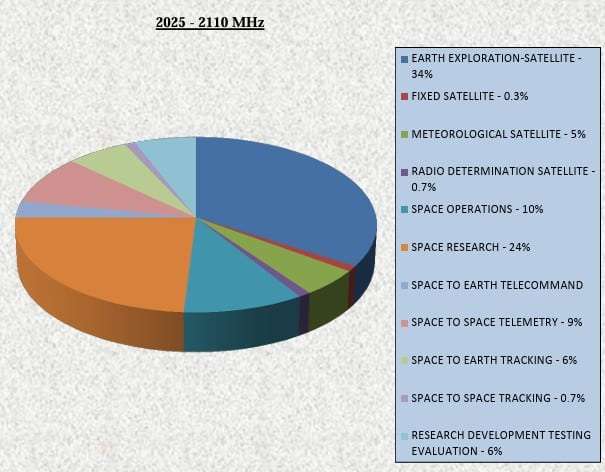
Captured within the 2025–2110 MHz frequency range, a segment traditionally reserved for sending signals from Earth to satellites, Tilley’s analysis, shared on Zenodo, reveals that Starshield satellites are transmitting downlink data in this restricted zone. Such use may contravene International Telecommunication Union rules and could jeopardize other space missions by causing signal interference.

No official statements have been issued by SpaceX or the National Reconnaissance Office (NRO), which manages the classified Starshield launches, yet the discovery has ignited concern among researchers and regulators.
Reserved Frequencies and Spectrum Integrity
The 2025–2110 MHz band is internationally designated for uplink transmissions, in which ground stations send commands to satellites. It supports vital operations such as Earth observation satellites, space science probes, and defense communication links. Per ITU-R Recommendation SA.1154, this frequency is unsuitable for satellite downlinks to avoid potential radio-frequency interference in congested orbital space.
Nonetheless, Tilley’s observations reveal precisely that: steady, Doppler-shift consistent transmissions from more than 170 distinct satellites. These signals are broad in bandwidth, persistently strong, and can be detected even without direct satellite tracking.
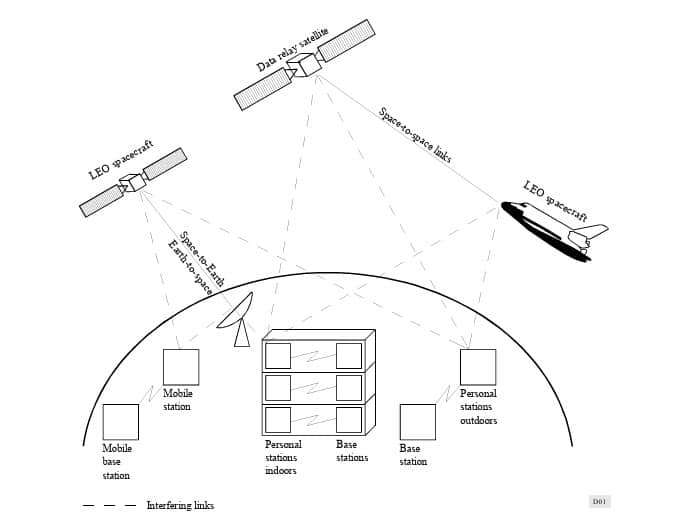
Although no public reports of service interruptions have surfaced, transmitting in this off-limits band could create a worrisome precedent for spectrum governance. “Interference could cause adjacent satellites to fail responding correctly—or completely disregard signals—from Earth,” Tilley explained to NPR in a recent interview.
The Covert Satellite Fleet Orbiting Near Earth
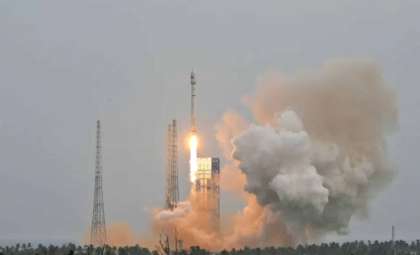
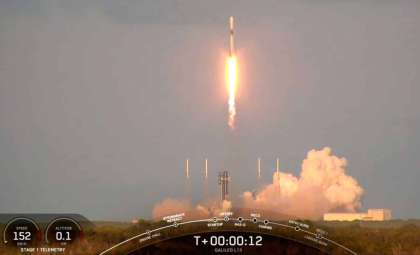
Beginning in May 2024, the NRO has launched 11 batches of Starshield satellites aboard SpaceX Falcon 9 rockets, aiming to establish a distributed satellite network optimized for fast Earth observation and secure military communications, according to U.S. budget disclosures.
Currently, an estimated 200+ Starshield satellites circle in low Earth orbit at about 70° inclination. Their specific functions remain classified, but official statements emphasize priorities of rapid data transmission, robustness, and encrypted communication channels.

In contrast to Starlink's use of Ka and Ku-bands for high-speed internet, Starshield operates in a considerably lower frequency range, akin to early mobile network speeds. As Tilley notes in his detailed report, this limits broadband capacity but suits sending brief, encrypted mission updates.
Intentional Strategy or Regulatory Gap?
The rationale behind Starshield’s unusual exploitation of an uplink-only band remains uncertain. University of Colorado expert Kevin Gifford speculates this might be a deliberate tactic. “These frequencies are often inactive, making them appealing for covert transmissions,” he commented.
Another possibility suggests downlinking in lesser-monitored frequencies helps the satellite network maintain operational stealth, minimizing the chance of interception or detection by adversary monitoring.
Alternatively, SpaceX and the NRO might be employing a measure of “operate now, coordinate later,” a precedent in U.S. military space spectrum use. According to a 2014 NTIA spectrum reference, while this range is federally allocated primarily for uplinks, non-federal space transmissions require strict federal coordination, especially for downlink operations.
Beyond regulatory and technical aspects, Starshield’s uncovered transmissions highlight broader challenges about space's evolving use and control, and ultimately, which entities have the privilege—or temptation—to sidestep established rules.
- Categories:
- News










0 comments
Sign in to Comment