
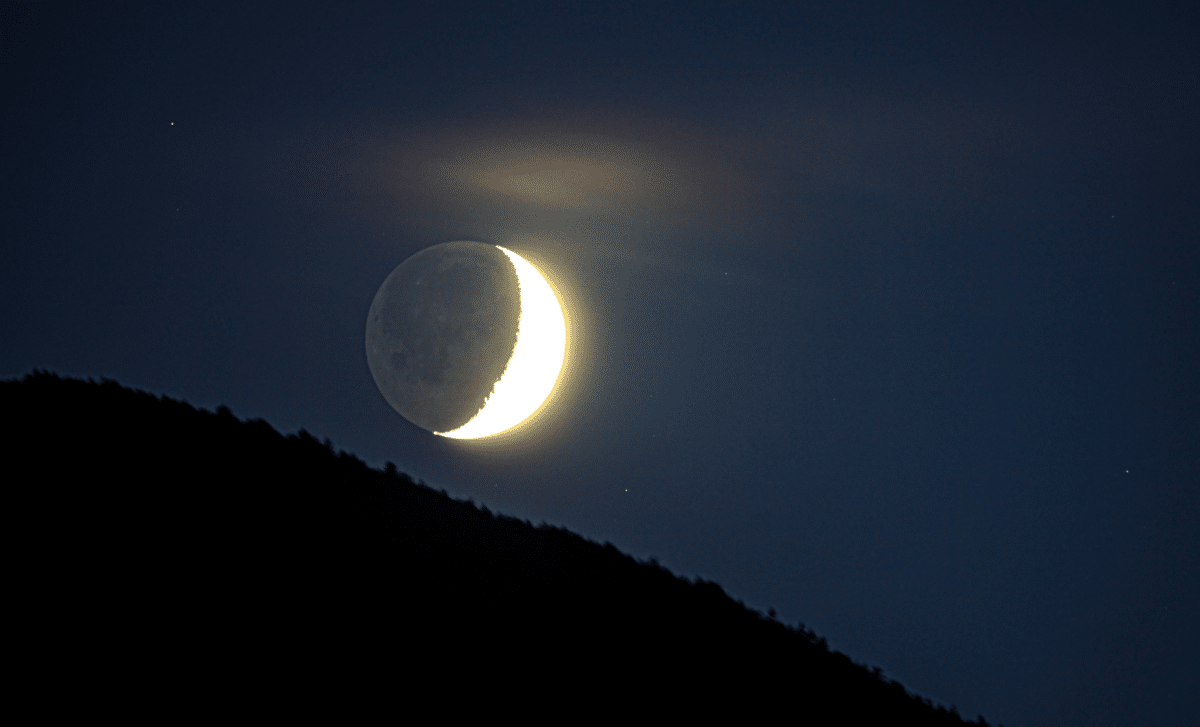
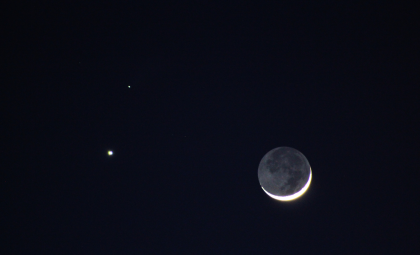
Sky enthusiasts have a special opportunity this week to witness the moon softly glowing with Earthshine, revealing its shadowed side in an extraordinary way.
Understanding Earthshine
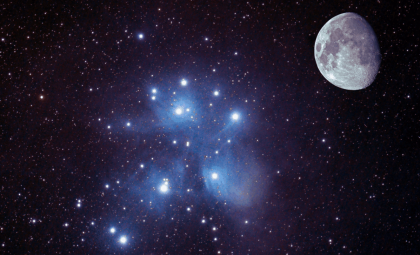
Earthshine is a captivating optical effect caused by sunlight reflecting off Earth's surface, casting a faint, ghostly illumination onto the moon’s darker regions. Known sometimes as the Da Vinci glow or the “old moon in the new moon’s embrace,” this phenomenon uncovers the moon’s hidden terrain, including its ancient lunar seas. As noted by Space.com, Earthshine is visible exclusively during the waxing crescent phase, shortly after the new moon when most of the lunar surface remains in shadow.
Though not newly discovered, Earthshine remains an unusual and mesmerizing sight. Skywatchers have a unique chance this week, especially on the evenings of March 19 and March 20, to observe the faint lunar surface lit by sunlight reflecting off Earth's clouds.

Optimal Viewing Times for Earthshine
To catch this beautiful effect, head outside just after sunset. On March 19, the moon will appear low towards the western horizon, its slim crescent silhouetted softly against the darkening sky. Positioned a bit lower right of Venus and roughly 10 degrees up from the horizon, the moon can be roughly measured as the equivalent width of a clenched fist held at arm’s length.
If you miss the chance on March 19, the succeeding night, March 20, offers an even clearer view. The moon will be higher in the sky, showing a slim crescent with only about 2% illumination, perched just above Venus. Earthshine will be stronger, revealing subtle details like craters and lunar maria, the expansive ancient volcanic plains.
An Astronomical Event Worth Observing
Earthshine’s delicate illumination opens a window onto the moon’s seldom-seen face, giving both amateur astronomers and casual viewers a rare look into the moon’s geological past. Sunlight bouncing from Earth gently lays illumination across the lunar surface, enabling visibility of its craters and seas in a unique way.
Beyond its scientific appeal, Earthshine carries a poetic connection, symbolizing the enduring relationship between Earth and its satellite. This quiet lunar glow has fascinated humans for centuries, leaving an indelible impression on those fortunate enough to witness it.
Tips for Spotting Earthshine
Clear skies are essential for viewing Earthshine, as even low light pollution can diminish the delicate glow. Find a dark spot away from city lights, and use binoculars or a telescope for enhanced detail, though the crescent can be seen without aid under favorable conditions.
Just after sunset on March 19 and 20, scan the western horizon for the crescent moon. Look near the southern sky, above Venus, and you’ll start to notice the faint glow illuminating craters and old lava-filled basins dating back billions of years.
The Mechanisms Behind Earthshine
Earthshine is more than just a captivating visual; it offers important scientific insights into Earth's atmosphere and the moon. The light reflecting off Earth’s oceans and clouds carries information about our planet’s surface conditions and cloud patterns, which can influence lunar observations.
For lunar researchers, Earthshine reveals details of the moon’s geological features by softly lighting up areas typically hidden by the sun’s brightness. This makes Earthshine a valuable natural tool for studying the moon’s surface in greater detail without relying on spacecraft imaging.
Peering Into the Moon’s Ancient Past
While stunning to observe, Earthshine also invites reflection on the moon’s intricate history. The subtle glowing crescent provides a glimpse of the lunar surface where ancient volcanic activity filled basins, forming the seas visible today. These features, shaped by meteoric strikes and eruptions billions of years ago, usually remain concealed under direct sunlight during other phases.
This phenomenon reminds us that the moon is a dynamic world with a rich past, offering us hidden marvels beyond its familiar nighttime glow.
- Categories:
- News



0 comments
Sign in to Comment