
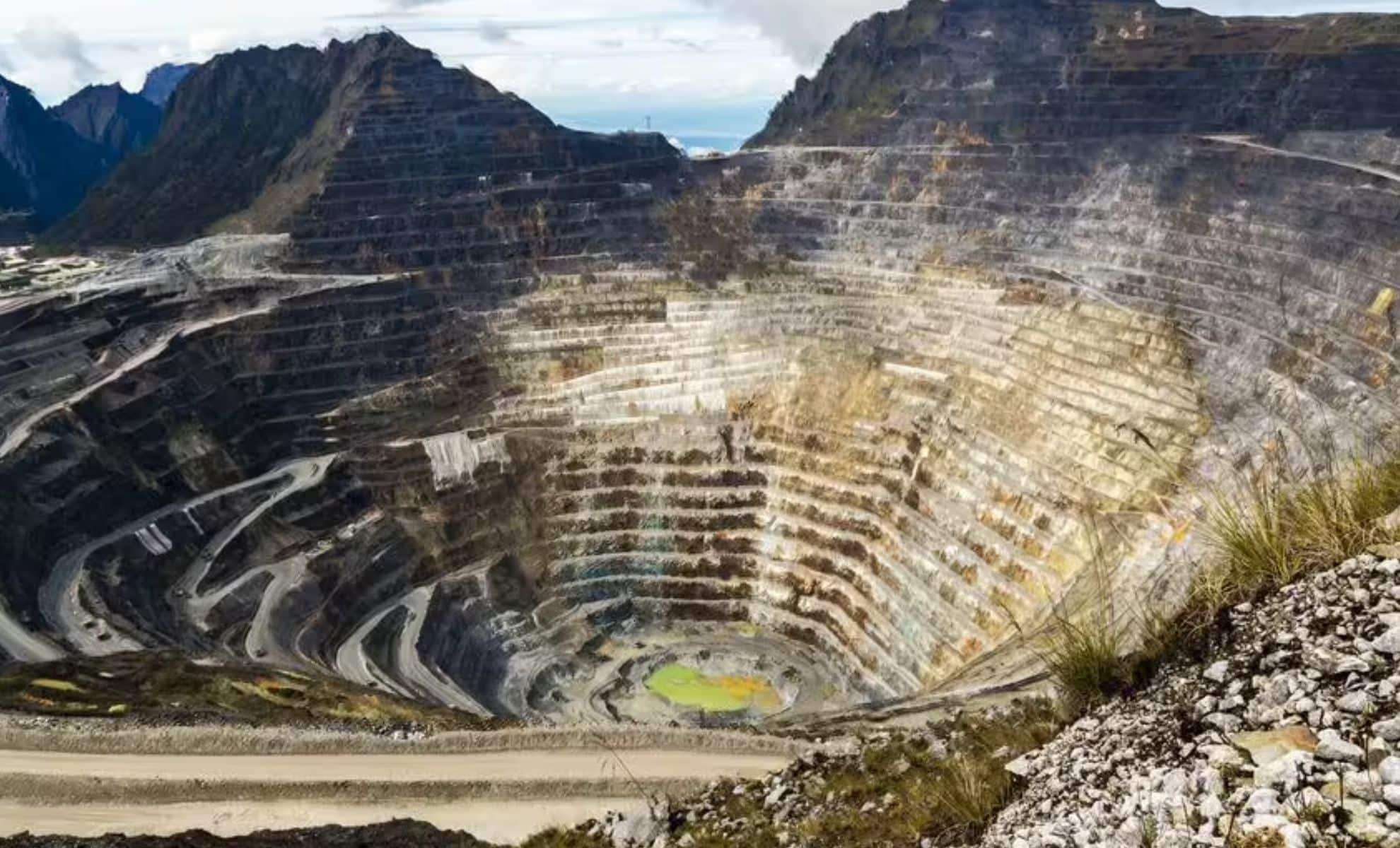
Hidden within the mountainous terrain of Papua, Indonesia, lies one of the globe’s most remarkable mining ventures. The Grasberg Mine is renowned as the largest and most bountiful gold mine in existence, delivering millions of ounces of gold and copper annually to the global market.
Grasberg transcends the concept of a mere mine—it functions like a sprawling township, complete with its own airport, seaport, transportation infrastructure, residential areas, educational institutions, and healthcare facilities. This mining giant is operated by PT Freeport Indonesia, a collaboration between the Indonesian government and Freeport-McMoRan, and has played a pivotal role in worldwide gold and copper production for many years.
A study published in Scientific Reports highlights that the area housing Grasberg contains some of the richest mineral reserves on the planet, shaped by intricate geological processes spanning millions of years.

An Enduring Era of Gold Mining
Gold extraction in Papua dates back to the early 1900s, but the development of the modern Grasberg complex began in the 1960s when Freeport-McMoRan secured mining rights. Since then, Grasberg has transformed from an open-pit mine into one of the most sophisticated subterranean mining systems worldwide.
Initially distinguished by its extensive open pit—measuring over a mile wide—Grasberg extracted surface gold at a staggering pace. As those deposits have diminished, mining operations have shifted underground, where an extensive network of tunnels now delves deep beneath the mountain range. The current underground system comprises three principal mining areas:
- Grasberg Block Cave
- Deep Mill Level Zone
- Big Gossan
Each mining zone utilizes state-of-the-art extraction methods to maintain high output levels of gold, copper, and silver. In 2023 alone, Grasberg produced 52.9 metric tonnes of gold (approximately 1.7 million ounces), 680,000 tonnes of copper, and 190 tonnes of silver.
Despite decades of operation, Grasberg remains one of the globe’s richest gold deposits with vast reserves valued in the tens of billions, securing its continued influence in the international metals market.
A Remote Industrial Hub Built from the Ground Up
The extraordinary scale of Grasberg includes the vast infrastructure necessary to sustain its operations. Situated in the remote highlands of Papua, the mine demanded extensive logistical development, forging an entire urban center to support the workforce and mining activities.
A dedicated airport facilitates the transfer of personnel and equipment, while mined ore is transported via a 103-mile pipeline to the Amamapare port, where processing and global shipment occur.
To accommodate its approximately 20,000 employees, the site offers:
- Residential facilities tailored for workers
- Educational institutions for worker families
- Healthcare services addressing regional isolation
The operational complexity rivals that of a fully functioning city, making Grasberg one of the most technologically advanced and logistically challenging mining enterprises worldwide.
Environmental Challenges and Political Struggles
While economically significant, Grasberg has been embroiled in environmental and political controversies. Environmental advocates have voiced concerns regarding pollution, waste management, and damage to local ecosystems. The mine discharges sediment and heavy metals into nearby waterways, impacting water quality and communities.
The mine is also situated in an area marked by political instability and ongoing separatist conflict. Armed groups opposing Indonesian governance in Papua have targeted the mine through:
- Attacks on transport convoys
- Sabotage efforts against mining infrastructure
- Labor strikes and violent incidents
Indonesian military presence at the site aims to maintain security, intensifying tensions with indigenous communities.
- Categories:
- News









0 comments
Sign in to Comment