

France is progressing toward developing laser weaponry in space that can disable or impair satellites either from the ground or directly from orbit. Hidden within the 2026 national budget documents, these initiatives demonstrate growing recognition that space is transitioning from a realm of observation to one of active defense systems.
Unlike conventional anti-satellite (ASAT) weapons—which rely on kinetic strikes or explosives that generate dangerous orbital debris—energy-based solutions like lasers provide a less destructive alternative. These systems aim to blind optical sensors, overheat vital components, or interrupt communications without leaving debris that could threaten other satellites. For a country with a spacefaring legacy like France, this approach is both strategically necessary and practical.
Although France has not fully disclosed the extent of its laser weapon research, official documents in the 2026 budget annexes indicate that feasibility studies are underway. These projects include examining weapons capable of targeting orbiting satellites from terrestrial sites, as well as early-stage concepts for deploying lasers among satellites in space—a highly sophisticated technical and diplomatic venture.

This move follows France’s prior steps toward military space operations. In 2019, the nation established a space command under its Ministry of Armed Forces, recognizing future conflicts may extend beyond traditional domains. The development of laser weapons fits into a defense posture adapting to activities by rival powers such as Russia and China, who have been suspected of operating satellites designed for close-proximity offensive actions and other aggressive maneuvers.
The escalating competition and mistrust extend further. Last year, U.S. intelligence agencies suggested that Russia deployed a prototype nuclear-capable satellite into low Earth orbit, sparking renewed concerns about an orbital arms race reminiscent of Cold War tensions. Countries are now racing to safeguard their space assets while building credible deterrence capabilities.
Why Lasers Make Strategic Sense
Defense strategists are attracted to lasers for their precision, plausible deniability, and cost efficiency. A laser pulse costs far less than a missile launch, and unlike cyber offensives or signal jamming—which can be reversible or traceable—laser strikes can cause immediate and permanent impairments to satellite functions.
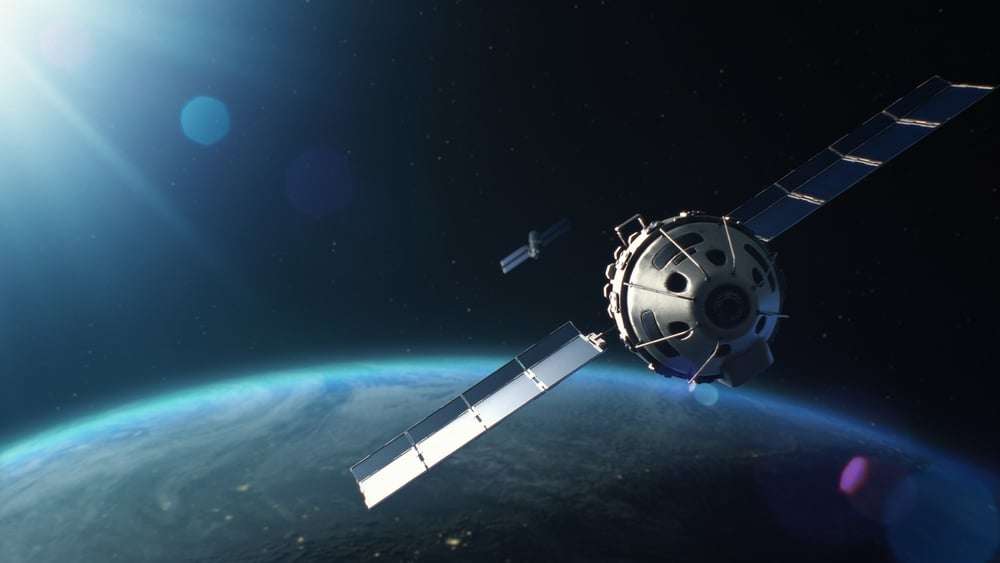
These tests have moved beyond theory. The ONERA, France’s premier aerospace research agency, has conducted live laser experiments targeting retired Spot satellites. These trials successfully temporarily blinded optical equipment without physical damage. Coordinated with the Direction Générale de l’Armement (DGA), these trials have confirmed both the physics and operational potential of laser systems.
Among the most notable programs is TOUTATIS (Test en Orbite d’Utilisation de Techniques d’Action contre les Tentatives d’Ingérences Spatiales), involving two small satellites that maneuver near each other. In one test, a low-power laser was used to momentarily dazzle a rival satellite’s camera, simulating real counter-surveillance operations. According to officials, the initiative aims to counter threats such as espionage and satellite sabotage.
Other major powers follow similar trajectories. The U.S. Department of Defense and Israeli Defense Forces have advanced laser systems targeting drones and missiles. China is reportedly developing ground lasers to disable or degrade reconnaissance satellites, though details remain confidential.
Potential Consequences and Concerns
The move toward laser weapons—and a broader embrace of active defenses in space—raises serious strategic and ethical questions. Unlike land, sea, or air warfare, space is regulated by delicate international treaties and norms, notably the Outer Space Treaty of 1967, which forbids placing weapons of mass destruction in orbit but does not address systems like lasers.
Even weapons that don’t cause permanent damage can spark diplomatic tensions. A laser used to blind a satellite may be considered an aggressive act by the satellite’s operator, especially if the satellite serves dual civilian and military roles such as Earth observation or reconnaissance. Escalation could occur rapidly, and determining responsibility might be challenging.
Some analysts argue that the ambiguous effects of laser weapons—their stealthy, precise, and sometimes reversible nature—could actually increase instability rather than reduce it. “The environment becomes one where conflicts are easier to initiate, harder to detect, and difficult to control,” cautioned Brian Weeden, Director of Program Planning at the Secure World Foundation, specializing in space policy.
The Emerging Space Arms Race
France’s laser weapons program, modest at this stage, fits into a broader global move to consider space as an active warfighting domain. The European Union advocates more collaboration on space security, and NATO now officially treats space as a fifth domain of operations alongside land, sea, air, and cyber.
Currently, France is cautious in publicly discussing its ambitions. The 2026 budget refrains from large-scale funding announcements or bold statements, instead mentioning “technological assessments,” “capability development,” and “future defense prospects.” However, the underlying message is clear: France is preparing for a future where military influence extends continuously from Earth into orbit.
- Categories:
- News











0 comments
Sign in to Comment