
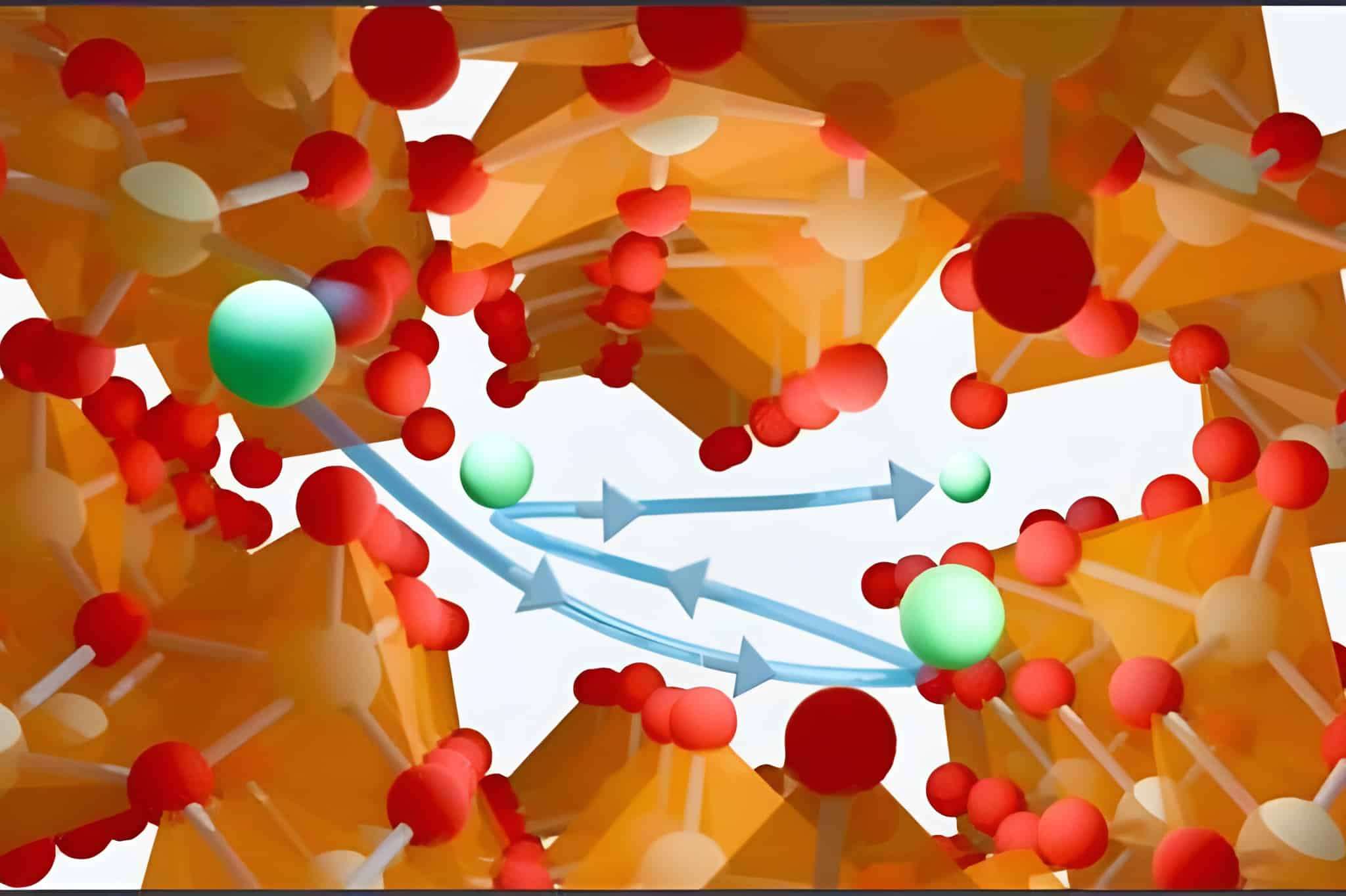
Researchers focusing on cleaning wastewater made a surprising advancement in isolating lithium-6, an essential isotope for nuclear fusion fuel. This new approach could replace the harmful and obsolete COLEX method, making fusion power a more attainable and eco-friendly energy option.
How a Water Filtration Project Sparked a Nuclear Fusion Innovation
While investigating ways to filter "produced water"—a byproduct of oil and gas extraction—scientists discovered their membranes were capturing unexpectedly high concentrations of lithium, even though salts dominated the water's composition. This unusual finding prompted further investigation.
The team identified that the synthetic compound in their filtration system, called zeta-vanadium oxide, wasn’t just collecting lithium ions generally but was selectively isolating lithium-6 ions.

“We realized we could extract lithium-6 with remarkable specificity despite the water containing much higher levels of other salts,” stated Sarbajit Banerjee, lead author of the research paper from ETH Zürich and Texas A&M University.
The Environmental Costs of Conventional Lithium-6 Extraction
Though fusion holds the promise of limitless clean energy, its expansion depends on access to fusion-grade lithium-6. Historically, this isotope is separated via the COLEX process, which involves liquid mercury and has been banned in the US since 1963 due to hazardous impacts on health and the environment.
Following this ban, the U.S. has depended on existing reserves stored at facilities such as Oak Ridge National Laboratory. Creating a safer, scalable method to manufacture lithium-6 remains a pressing challenge in the fusion field.
The Mechanism Behind Zeta-vanadium Oxide’s Isotope Selectivity
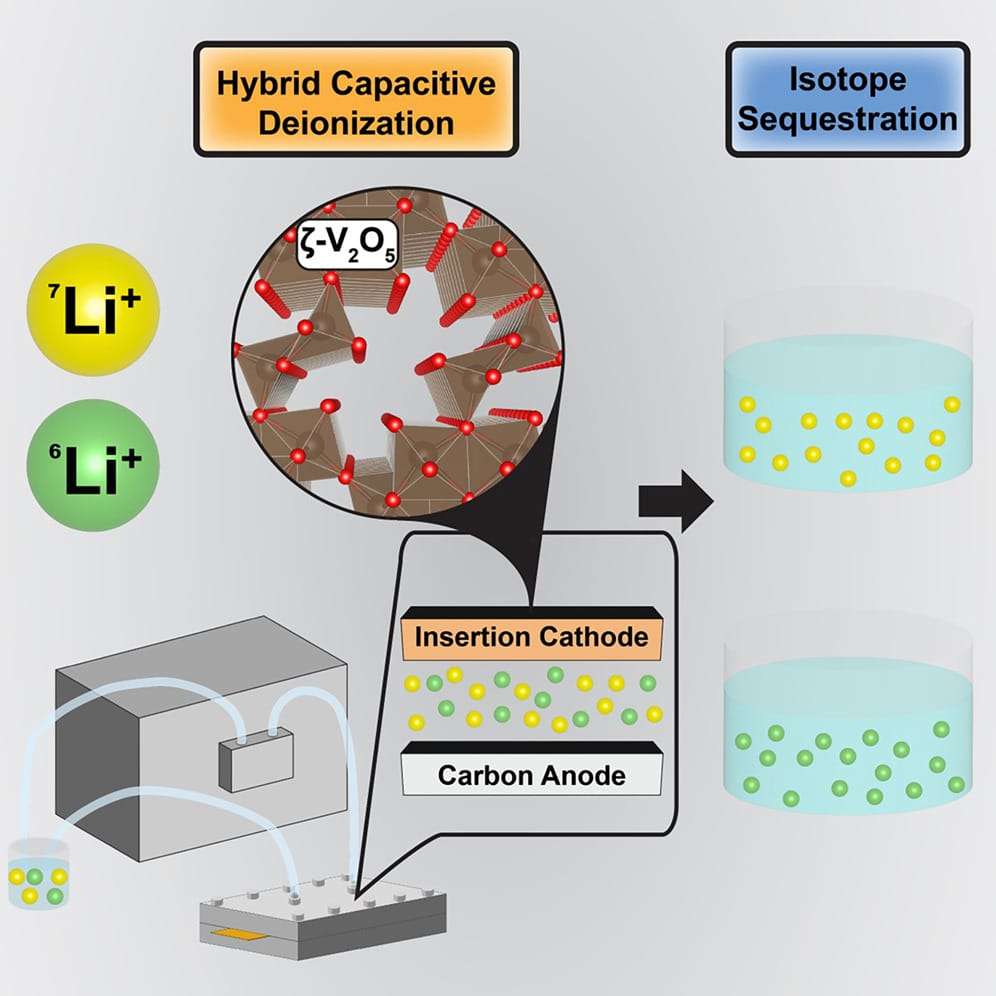
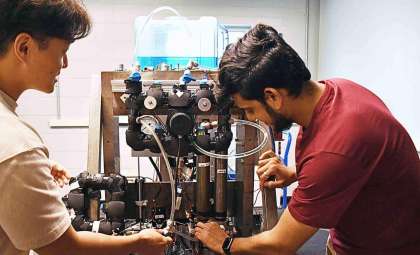
The compound ζ-V2O5 features nanoscale tunnels ideal for capturing lithium ions. To gauge its isotope separation performance, scientists configured an electrochemical cell with ζ-V2O5 as the cathode. Applying voltage drew lithium ions toward these tunnels, where subtle mass differences made lithium-6 ions stick more effectively than lithium-7.
“Imagine the bond between V2O5 and lithium as a spring; heavier lithium-7 breaks this bond more easily,” explained co-author Andrew Ezazi from Texas A&M. This allowed them to isolate lithium-6 efficiently without any mercury use.
Advancing Towards Practical Fusion-Grade Lithium Production
Early experiments enriched lithium-6 concentration by 5.7% in one cycle. Reaching the 30% purity standard for fusion fuel would take around 25 cycles, while 90% purity is achievable in 45 cycles, offering a competitive and non-toxic alternative to COLEX.
Though the process is still experimental, the researchers are exploring ways to scale it up. “Industrial production isn’t here yet, and there are engineering hurdles related to flow design, but with repeated cycles, fusion-grade lithium can be produced affordably,” Banerjee noted.
Expanding the Reach: Applications Beyond Lithium
The technology’s potential extends past fusion to other isotope separation needs, including medical and environmental uses. The research team views zeta-vanadium oxide as a flexible platform capable of separating various isotopes efficiently.
This project is a result of collaboration among institutions across the United States, Canada, Qatar, and Switzerland, with financial support from organizations like the National Science Foundation and the Qatar Research, Development and Innovation Council.
A Greener Future for Fusion Energy Supply Chains
Fusion energy promises a sustainable power future, but sourcing fusion-grade lithium-6 has been a bottleneck. This breakthrough, unexpectedly emerging from wastewater research, offers an environmentally safer, practical path forward that could accelerate nuclear fusion’s development.
- Categories:
- Science










0 comments
Sign in to Comment