
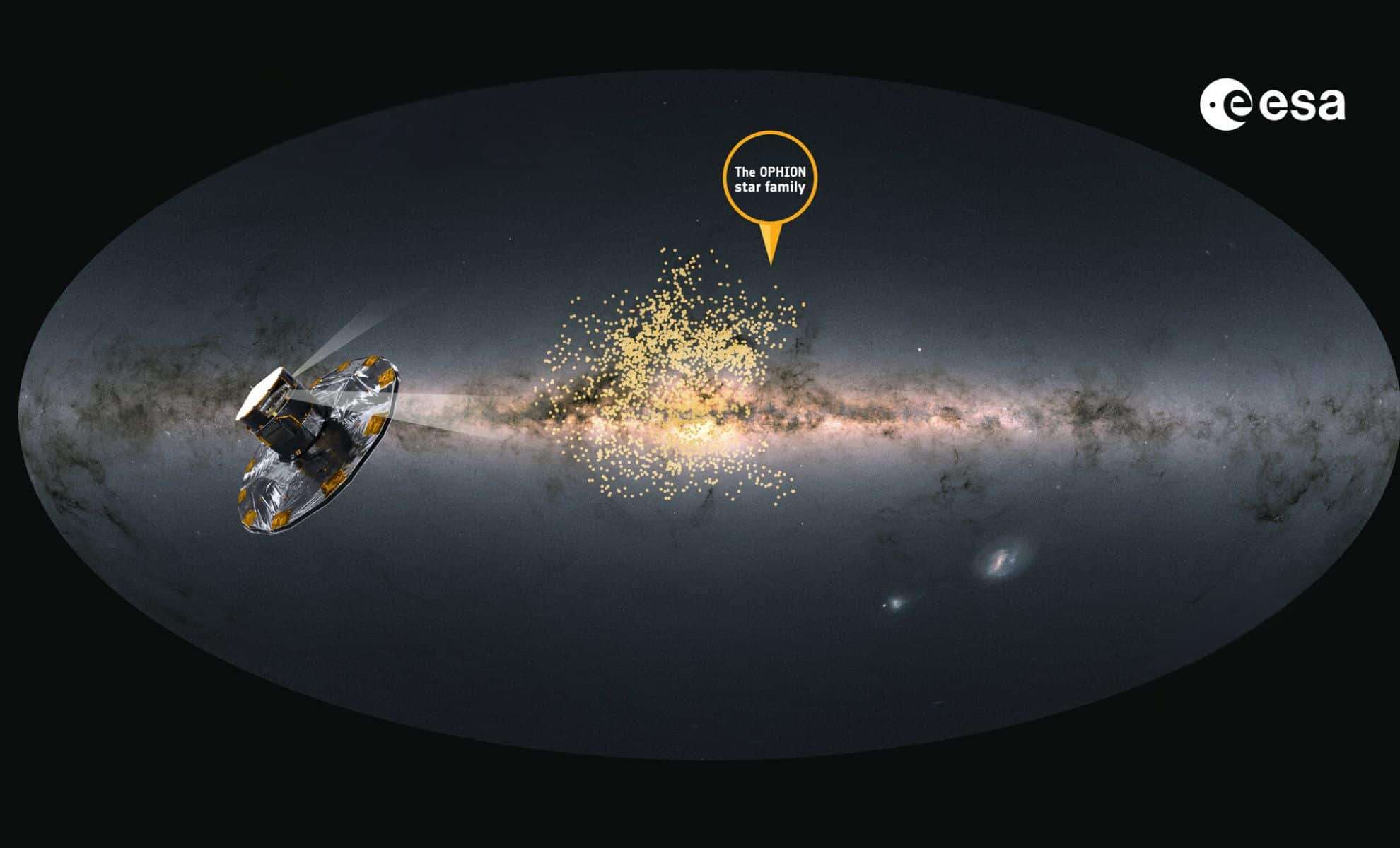
A recent investigation featured in The Astrophysical Journal, uncovers Ophion, an extraordinary star cluster that defies conventional theories about stellar group development. Situated roughly 650 light-years away, Ophion is unraveling at a surprisingly rapid pace, exhibiting erratic stellar movements unlike those typically seen in clusters. This research, spearheaded by Dylan Huson of Western Washington University and utilizing data from the ESA's Gaia mission, highlights a youthful cluster under 20 million years old that displays unexpected instability. These results deepen our understanding of star formation and cluster dynamics.
Ophion’s Rapid and Disorderly Breakdown
Typically, star clusters remain stable over long durations, with their stars moving in predictable paths. Yet, Ophion challenges this tradition. Huson’s group found that rather than holding together, Ophion’s stars are dispersing at an uncommonly high speed for a cluster of its age, spreading chaotically across the galaxy. Huson explains, “The stars in Ophion are being cast out into the galaxy in a completely disorganized fashion, and this will happen much quicker than what’s usually expected for a large star cluster.”
The cluster’s swift dispersal confounds astronomers because it contradicts established observations of similarly aged clusters. Generally, star groups either dissolve slowly over millions of years or remain bound as coherent systems. Ophion’s unusual dynamics prompt a search for new theories explaining its incoherent behavior.

Origins of the Disarray Remain Elusive
While the cause behind Ophion's accelerated fragmentation remains unclear, a few hypotheses have been proposed. One leading idea suggests that forces external to the cluster, such as nearby supernova detonations, might have disturbed its formation by ejecting gas and accelerating stellar motions. Gravitational interactions with adjacent clusters might also have played a role in disrupting Ophion's equilibrium.
However, the precise catalyst remains a mystery. Marina Kounkel, a co-author, notes, “We’re still investigating what event caused this star family to disperse so chaotically.” This uncertainty underscores the need for ongoing research into how star clusters influence one another and what triggers such rapid dispersal.
Advancing the Measurement of Young Stars
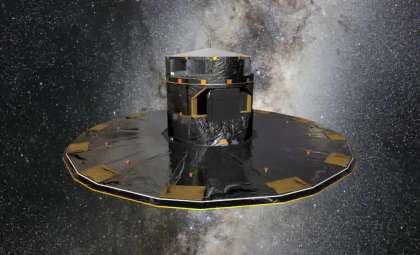
Having mapped the cosmos for over ten years, the Gaia mission equips astronomers with unprecedented capabilities to analyze star clusters with remarkable precision. Thanks to Gaia’s advanced instrumentation and analytical techniques, scientists can now examine vast numbers of stars simultaneously, overcoming limitations of earlier studies. ESA’s Gaia Project Scientist Johannes Sahlmann remarks, “Reliable simultaneous measurements of numerous young stars are still a relatively recent achievement.” These innovations have uncovered previously hidden characteristics of young stars.
Gaia's data was instrumental in identifying Ophion's distinctive traits and the cluster’s rapid unraveling. Without Gaia’s sophisticated suite of tools, the swift dispersal of Ophion’s stars might have gone undetected. This milestone paves the way for future studies into other young clusters that could reveal similar phenomena, enriching our comprehension of stellar evolution.
Implications of Ophion for Galactic Evolution
Examining Ophion not only sheds light on this unique cluster but also offers broader perspectives on Milky Way evolution. Clusters like Ophion are essential for star formation and contribute to the structure of the galaxy’s spiral arms. By analyzing how Ophion is breaking apart so quickly, astronomers gain insights into the processes governing star birth and cluster contribution to galactic architecture.
Although Ophion’s disordered dispersal contrasts with typical clusters’ predictable evolution, the findings provide valuable clues about young cluster dynamics. This unusual behavior suggests that significant stellar events, such as supernovae and powerful cosmic eruptions, may critically influence early cluster development. Continued investigation promises to clarify how these forces sculpt star systems.
- Categories:
- News





0 comments
Sign in to Comment