
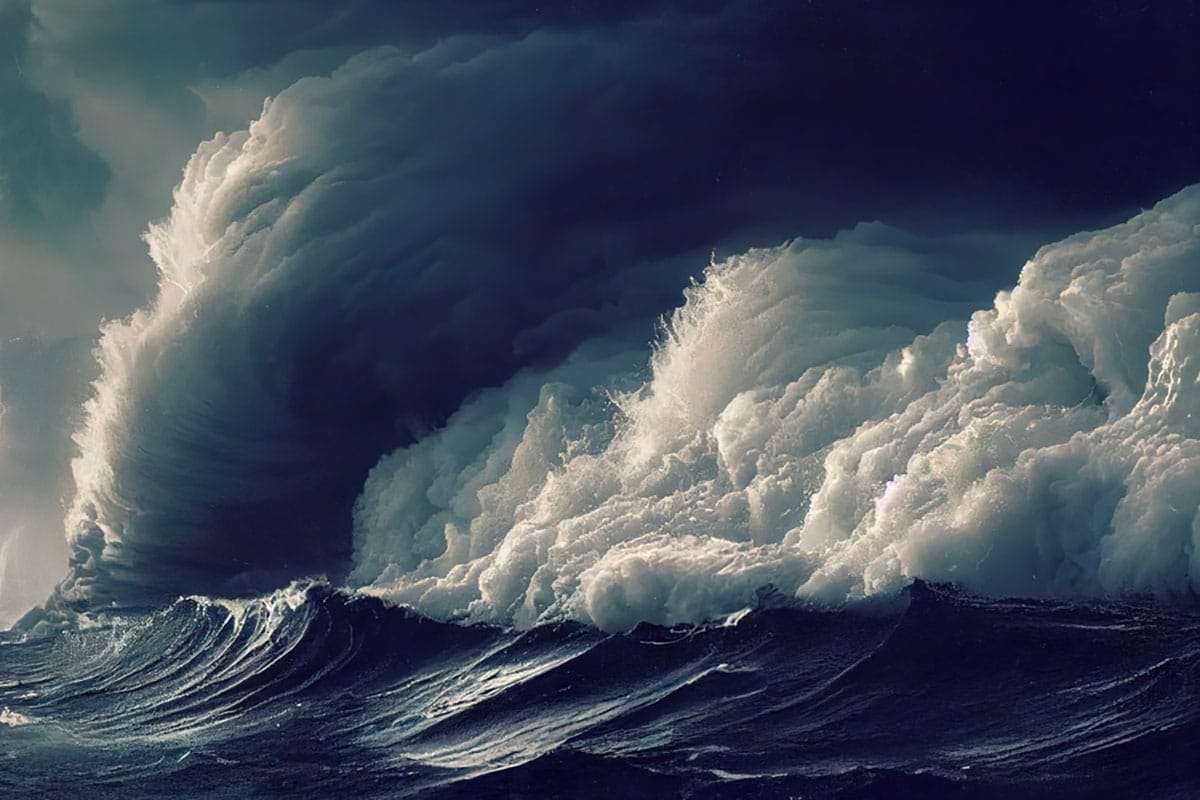
Scientists recently documented a staggering wave, dubbed the Ucluelet wave, detected by a solitary buoy situated close to Vancouver Island. Towering to the equivalent height of a four-story structure, this wave was almost triple the size of the neighboring waves, a phenomenon that distinguishes it markedly from past rogue waves.
Johannes Gemmrich, a physicist at the University of Victoria, highlighted the wave’s exceptional nature: “In terms of proportional size, the Ucluelet wave is probably the most extreme rogue wave ever recorded.” He noted that such gigantic rogue waves in rough sea conditions are extraordinarily rare to observe.
The identification of the Ucluelet wave underscores the vital role played by sophisticated ocean monitoring technologies. MarineLabs, the organization that deployed the buoy responsible for detecting this wave, is dedicated to improving marine safety by expanding coastal surveillance efforts.

Rogue Waves: From Legend to Verified Phenomena
For generations, stories of massive, sudden waves were largely viewed as myths from sailors. This perception changed dramatically on January 1, 1995, when a towering 26-meter (85-foot) wave hit an oil platform off Norway’s coast, defying all previous wave predictions.
This incident, known as the Draupner wave, transformed scientific understanding of rogue waves. Since then, other enormous rogue waves have been recorded, including some in lake environments. Scientists characterize rogue waves as waves exceeding twice the height of the surrounding ones.
Highlighted below are key rogue wave measurements:
Wave Name Height Location Year Ucluelet Wave 17.6 meters British Columbia, Canada 2020 Draupner Wave 25.6 meters North Sea, Norway 1995
Consequences and Prospects of Rogue Waves
Although neither the Ucluelet nor the Draupner wave caused major damage, these rogue waves pose real threats to ships, offshore platforms, and coastal zones. Some believe these powerful waves might explain some unexplained maritime disasters and vessel vanishings.
The risks linked with rogue waves are likely to grow in tandem with the impacts of climate change on marine environments. Research from 2020 indicates that wave heights in the North Pacific could rise due to warming oceans, suggesting that the Ucluelet wave's record might soon be surpassed.
This worrying development aligns with other significant environmental shifts across the globe, such as:
- The expansion of the ozone hole to unprecedented proportions
- Increasing methane emissions that intensify global warming
- Extreme heatwaves affecting numerous regions worldwide
Enhancing Marine Safety Through Continued Investigation
The revelation of the Ucluelet wave reinforces the necessity for persistent research into oceanic phenomena. Efforts are underway to decode the mechanics behind rogue wave occurrences, aiming to create more precise forecasting tools.
Current scientific priorities include:
- Monitoring rogue waves in real time
- Assessing how wind conditions influence wave creation
- Examining climate change effects on ocean dynamics
Scott Beatty, CEO of MarineLabs, stressed the importance of their findings: “Capturing this one-in-a-millennium event locally showcases the transformative power of advanced coastal monitoring for marine safety.” Increased knowledge of these extreme ocean events will better equip us to safeguard maritime ventures and shore communities from their potential hazards.
The Ucluelet wave is a powerful illustration of nature’s might and the critical role science plays in understanding it. As the climate continues to change, predicting and responding to such oceanic extremes becomes essential for protecting people and ecosystems worldwide.
- Categories:
- Climate change









0 comments
Sign in to Comment