

Recent research highlights alarming evidence that human cognitive capabilities are diminishing across various age groups. Notably, attention spans are shrinking, problem-solving prowess is weakening, and reasoning skills are declining. This prompts an essential inquiry: is society truly losing intellectual capacity, or are we witnessing a fundamental transformation in cognitive processing?
A Stark Reality for Cognitive Abilities
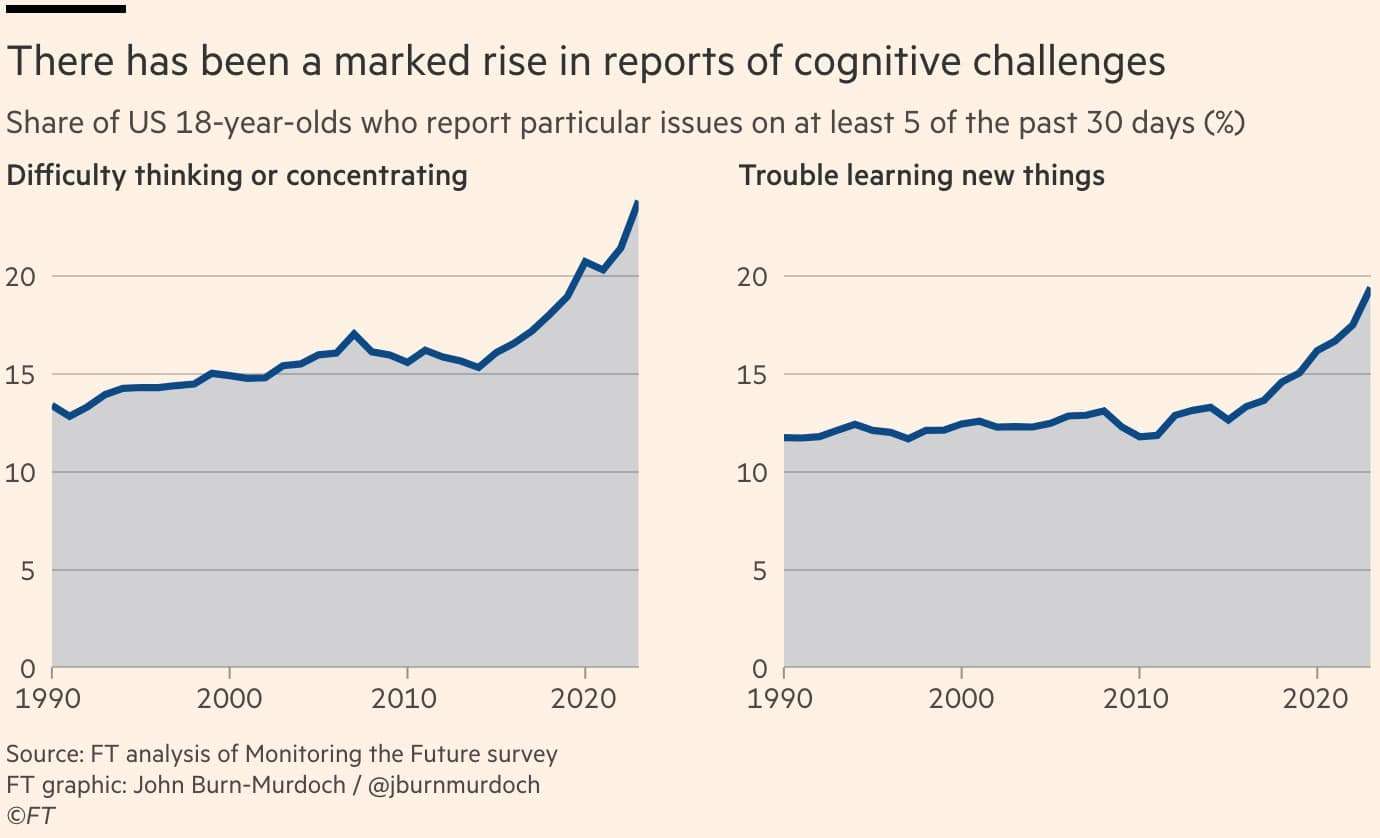
Data gathered from numerous studies during the last decade paints a troubling scenario. From the University of Michigan’s Monitoring the Future survey to assessments like the Programme for International Student Assessment (PISA), findings indicate a marked decrease in cognitive function, especially among younger populations. Adolescents and young adults increasingly face challenges with focus and information processing acumen.
As noted in the Financial Times report, one major contributor appears to be the diminished time spent reading traditional texts, replaced by extensive interaction with digital screens. Experts suggest this shift in how media is consumed plays a crucial role in driving down cognitive performance.

A 2022 report from the National Endowment for the Arts revealed that only 37.6 percent of Americans read a novel or short story in the previous year, a decline from 41.5 percent in 2017 and 45.2 percent in 2012.
The Impact of Technology: A Complex Influence
The integration of advanced technology into daily life is revealing mixed effects on our mental faculties. While technological advancements have revolutionized many areas, they may also contribute to a decline in cognitive capabilities.
Research highlights that extensive screen exposure, particularly involving social media, can detrimentally affect verbal and cognitive functioning. Extended screen time hampers concentration and memory retention, which may explain increasing difficulties with cognitive tasks among young adults.
Moreover, the relationship between technology use and cognitive decline extends beyond reduced attention spans. Studies suggest that living in the digital era might be reshaping neural pathways, making it more challenging to engage in prolonged, focused thought.
This raises significant concerns, especially for younger individuals immersed in screen-based environments, as they might experience long-term cognitive limitations that could impede their intellectual growth.
Cognitive Decline on a Worldwide Scale
The pattern of declining cognitive skills is not isolated to the U.S. Globally, the Organization for Economic Co-operation and Development (OECD) reports that adults are also demonstrating weaknesses in basic literacy and numeracy.
According to a 2023 analysis, 34 percent of American adults ranked at the lowest proficiency levels in numeracy, up from 29 percent the year before. Similar difficulties with fundamental mathematical and reasoning tasks have appeared in other countries, indicating a pervasive international trend.
These developments reflect more than just changes in reading or screen usage habits. They signal a broader transformation in how the human brain assimilates and processes information. With widespread reliance on digital devices, the necessity for deep intellectual engagement might be diminishing, encouraging a preference for quick, shallow insight over thoughtful analysis.
- Categories:
- Science













0 comments
Sign in to Comment