
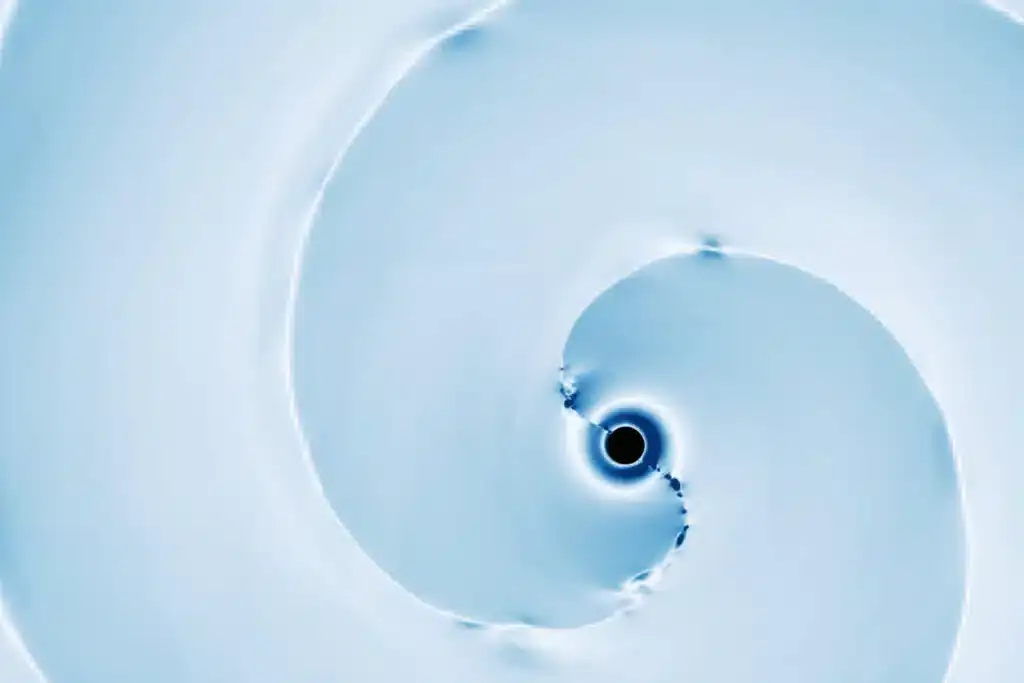
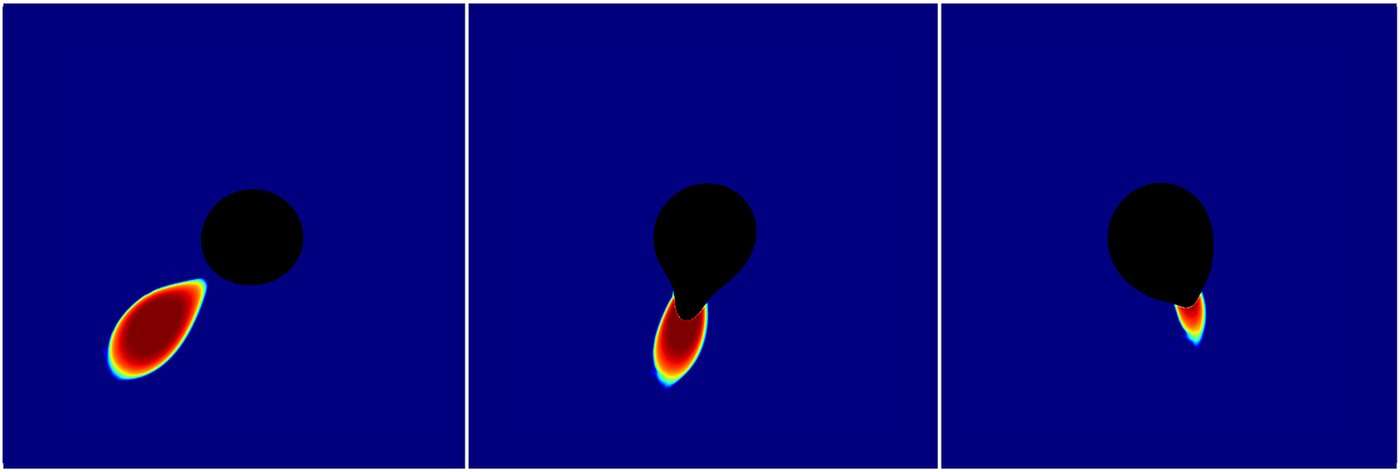
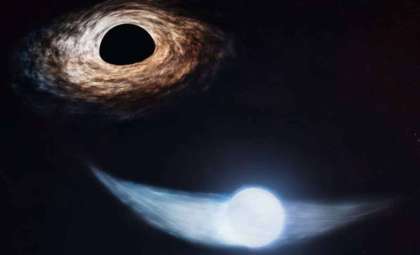
Cutting-edge simulations have unveiled a detailed glimpse into the intense encounter between a black hole and a neutron star, shedding light on the energetic processes that unfold just before the neutron star is swallowed. A team at Caltech utilized powerful supercomputers to recreate the violent merger dynamics. Their two reports, published in The Astrophysical Journal Letters, explore how the overwhelming gravitational pull of the black hole rips apart the neutron star, triggering shockwaves, magnetic disturbances, and the emergence of exotic cosmic structures.
Triggering Stellar Disruptions: Starquakes and Magnetic Turbulence
As the black hole draws near the neutron star, its immense gravity shatters the star’s superdense surface layer. The simulations led by Caltech astrophysicist Elias Most reveal that the black hole’s tidal forces effectively shear the neutron star’s outer shell, sparking enormous quakes in its crust akin to cosmic earthquakes. These fractures produce Alfvén waves, magnetic oscillations sweeping through the star like a ripping cord.
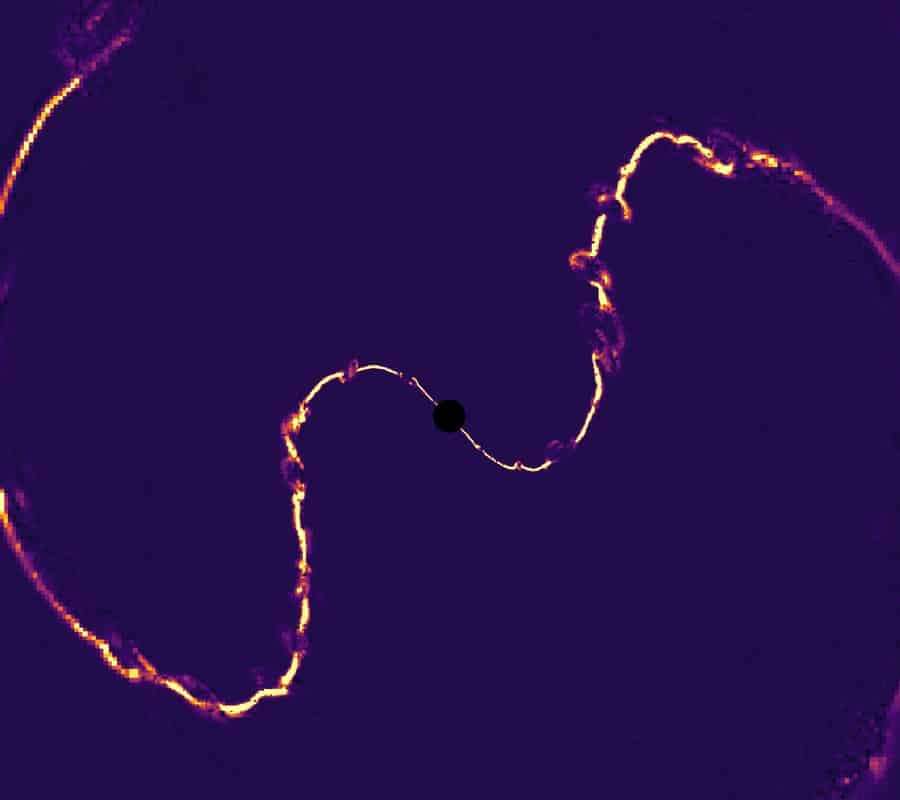
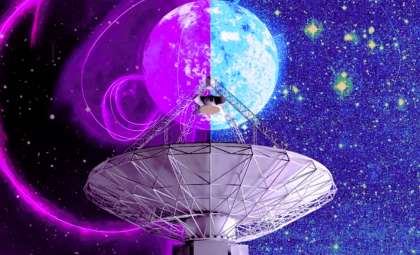
A remarkable discovery from these studies is the generation of intense shockwaves that may explain the origin of fast radio bursts—brief, enigmatic flashes detectable across the universe. This is the first time simulations have linked colossal starquakes with such rapid radio signals, offering fresh perspectives on their enigmatic roots.

Introducing Black Hole Pulsars: An Unseen Cosmic Entity
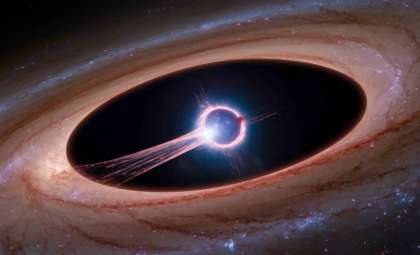
A standout outcome of the simulation is the formation of a black hole pulsar. Traditionally, a pulsar is a spinning neutron star that emits sweeping beams of radiation. In this novel case, the black hole replaces the neutron star, temporarily encased by strong magnetic winds that mimic the pulsating light beams of classic pulsars.
Though previously only hypothesized, this simulated phenomenon brings the black hole pulsar concept into clearer focus. Scientists anticipate this discovery may direct future observational efforts to identify such unique cosmic sources, enriching our knowledge of black hole and neutron star interactions.
Pioneering Astrophysics Through Advanced Computational Modeling
The team employed the Perlmutter supercomputer at the Lawrence Berkeley National Laboratory to tackle the extraordinary complexity of these cosmic events. Their work combines the principles of general relativity to simulate gravitational wave emissions with detailed nuclear physics modeling of the neutron star and the behavior of plasma in its vicinity.
“Während man bei der Simulation von zwei Schwarzen Löchern allein die Gleichungen der Allgemeinen Relativitätstheorie benötigt, um Gravitationswellen zu beschreiben, erfordert ein Neutronenstern wesentlich mehr physikalische Aspekte, darunter die komplexe Kernphysik des Sterns und die Plasmadynamik um ihn herum,” erklärte Most.
These detailed models not only represent a leap forward in astrophysical simulations but also provide invaluable reference points for interpreting observational data from collaborations such as LIGO-Virgo-KAGRA, enhancing our comprehension of the violent conditions during neutron star-black hole mergers.
- Categories:
- Space


0 comments
Sign in to Comment