
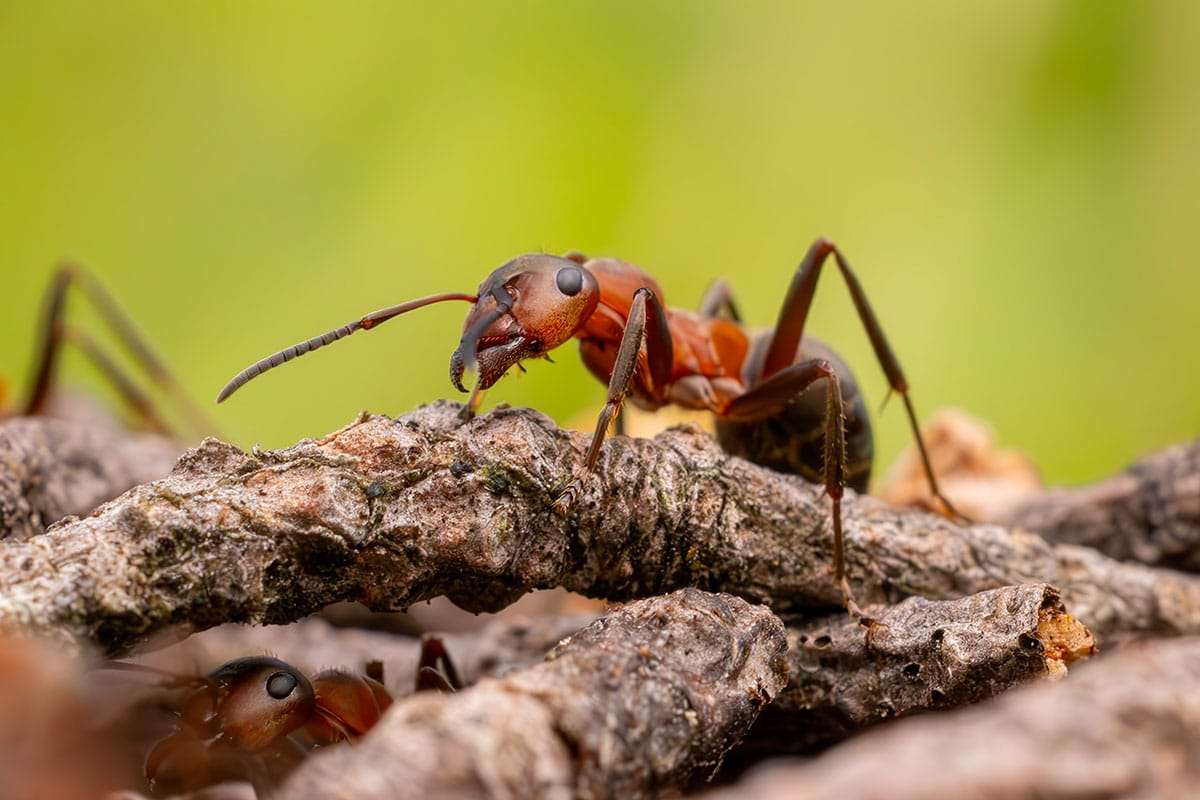
Insect enthusiasts and scientists alike have a new reason to marvel at one of nature’s most widespread creatures: ants. A fresh research effort by experts at the University of Wurzburg, Germany, has produced compelling data that substantially revises previous global ant population estimates. Let’s explore the fascinating discoveries and consider what they mean for biodiversity science.
Revealing the immense scale of ant populations
Researchers have historically been fascinated by the global number of ants, yet earlier estimates greatly underestimated their actual totals. The newly published work in the renowned Proceedings of the National Academy of Sciences estimates there are around 20 quadrillion ants alive worldwide at any moment, which translates to an astounding 20,000 trillion individuals.
This count exceeds prior projections by a factor of 20, underscoring the necessity of solid empirical evidence in scientific inquiry. Co-author and entomology expert Sabine S. Nooten commented, "We entered this study with almost no preconceived expectations because previous figures were mostly hypothetical guesses."

The team’s technique involved integrating data from a wide array of empirical studies to produce a more precise global ant tally. This contrasts sharply with earlier figures such as those from Bert Hölldobler and Edward O. Wilson, who approximated the global ant population at 1 quintillion individuals.
Tropical zones: hubs of ant density
Findings indicate that ants thrive particularly in tropical and subtropical climates. Special attention was given to estimating populations of terrestrial ants in these regions, with South America identified as a hotspot supporting roughly 3 quadrillion ants.
The concentration of ants in tropical rainforests highlights these ecosystems’ vital role in biodiversity support. However, rising concerns emerge about human impacts—Patrick Schultheiss, also a study co-author, warns that deforestation and agricultural expansion could dramatically reduce ant populations.
Here’s an overview of ant population estimates across different geographic zones:
Region Approximate Ant Population Tropical and Subtropical 3 quadrillion Temperate 2 quadrillion Arid and Semi-arid 1 quadrillion Other areas 14 quadrillion
Essential roles ants play in ecosystems
Though pinpointing an exact tally for Earth's ants remains difficult, this report provides the most comprehensive estimate so far. Adam Hart, professor and science communicator at the University of Gloucestershire, England, praised the effort, noting, "This new research synthesizes nearly 500 global studies and offers the most reliable estimate we have."
Knowing the scale of ant populations is crucial for several reasons:
- Ants contribute significantly to soil aeration and nutrient distribution
- They form a key part of the diet for many animal species
- Ants aid in the dispersal of seeds within various habitats
- They serve as effective natural pest management agents
The immense number of ants underscores their importance for ecological stability. As environmental threats like climate change and habitat destruction grow, safeguarding these tiny yet vital insects becomes ever more crucial.
Looking ahead: research and conservation priorities
This pioneering study lays the groundwork for future scientific and conservation efforts. Establishing a robust baseline for the global ant population allows for refined monitoring of trends and the influence of human activity on these indispensable insects.
Upcoming research directions may include:
- Examining how climate change affects ant populations
- Exploring ants’ contributions to carbon storage
- Assessing the consequences of urban development on ant diversity
- Creating strategies to conserve critical habitats for ants
In the unfolding story of Earth's biodiversity, ants exemplify resilience and ecological intricacy. Their vast numbers and pivotal roles remind us of the delicate and complex networks that sustain life on our planet.
- Categories:
- Science








0 comments
Sign in to Comment