
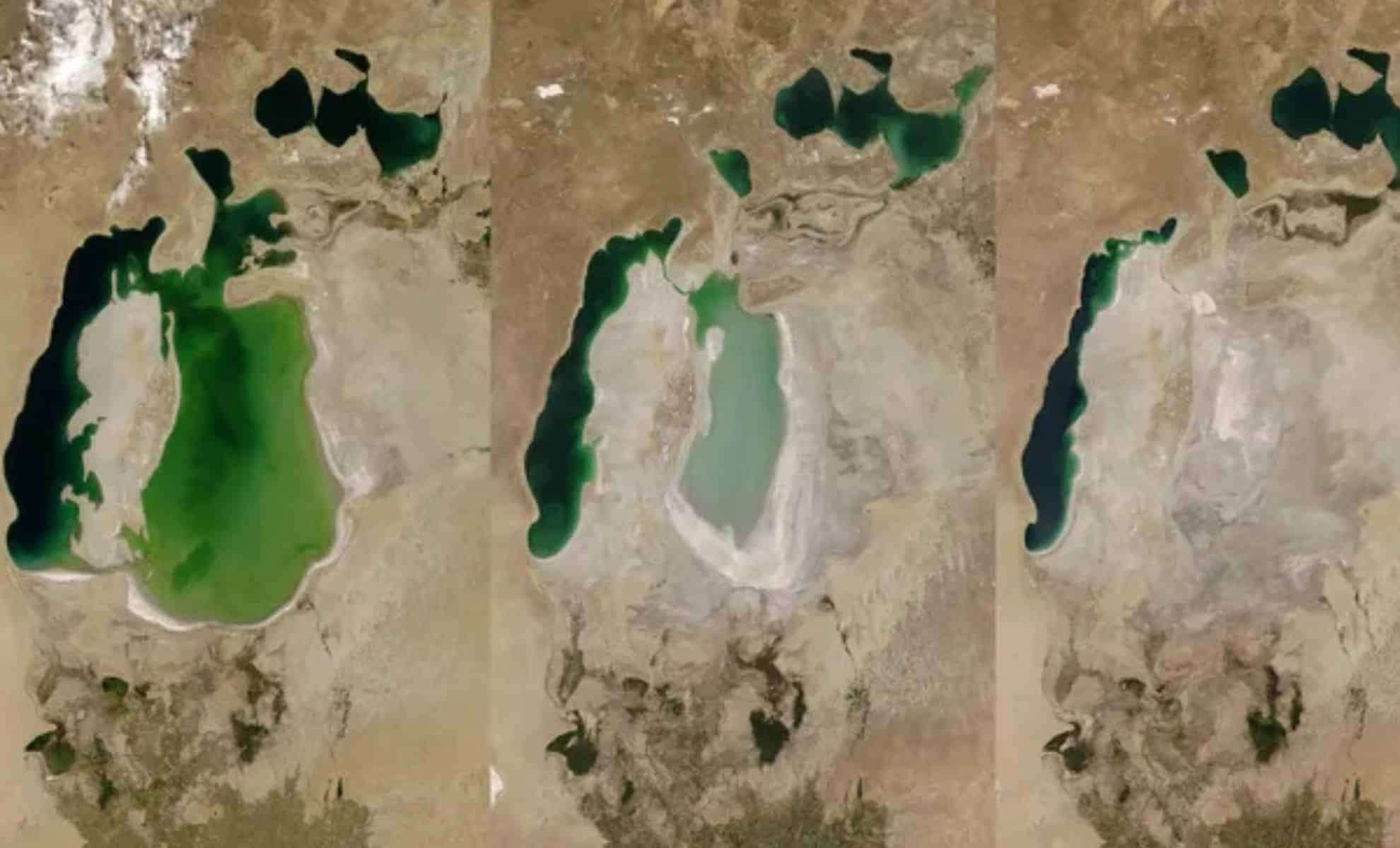
Decades after the environmental catastrophe that began in the 1960s, the Earth’s interior still bears the consequences. Recent research Nature Geoscience reveals that the Aral Sea—once ranked the world's fourth-largest lake—was altered so profoundly by human activity that the Earth's mantle is still adjusting nearly 80 years later.
Often referred to as the “quiet Chernobyl” due to its prolonged ecological destruction, the Aral Sea crisis originated when Soviet authorities redirected rivers to support widespread farming, causing massive water depletion. Experts now understand that the loss of weight from the retreating water has triggered a slow rebound of Earth’s crust and mantle—a process that remains active and will persist for many years ahead.
Geological Impact Beyond the Surface
While the Aral Sea’s shrinkage was initially regarded solely as an environmental crisis, it now serves as a compelling geological case. Over eight decades, it lost a staggering more than 1.1 billion tons of water, roughly matching the weight of 150 Great Pyramids of Giza. This loss, though localized, has significant geological ramifications.

As the solid Earth reacts to this sudden decrease in load, the crust is gradually rebounding upward. Geologist Simon Lamb, not involved in the study, noted that such a rebound was predicted: “Since the lake's water had depressed the rock beneath it, the expectation was for the rock to gradually rise, reclaiming part of the space once occupied by the water mass.”
What astonished the researchers, however, was the depth and duration of this uplift. This phenomenon extends beyond surface changes, illustrating how the Earth's mantle—the ductile layer beneath the crust—is reacting to human-induced shifts on the planet’s surface.
Satellite Radar Confirms Ongoing Uplift
By employing satellite radar interferometry (InSAR) from 2016 to 2020, scientists identified subtle yet consistent surface elevations emanating from the old Aral Sea basin. They documented a rise spreading within a radius of about 310 miles from the lake’s center. This bulge isn’t simply residual uplift; it indicates an active geodynamic response deep below.
The surface is climbing at roughly 0.3 inches (7 millimeters) annually, with a total ascension of 1.6 inches (40 millimeters) measured during the study span. Researchers attribute this to mantle material slowly shifting back to refill the void left by the water's disappearance.
Lamb elaborated: “Although the Aral Sea was shallow, its broad expanse imposed enough pressure on the Earth to cause material at tens to hundreds of kilometers deep to compress. The rigid outer layer couldn’t fully support the weight, causing the underlying, softer rock to deform.”
From a Regional Collapse to a Planetary Lesson
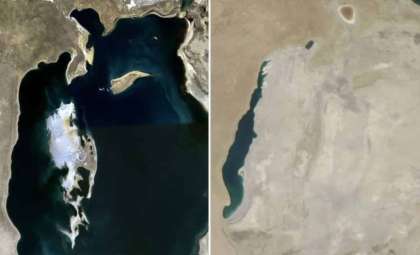
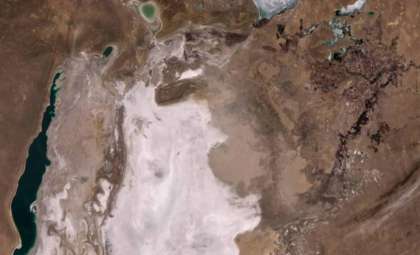
Today, the dry Aral Sea bed is a barren desert littered with abandoned ships and harmful dust storms. However, its legacy runs deeper than visible devastation. What began as a localized environmental blowout now stands as a global geological event, highlighting how human interference can influence Earth’s deep interior.
The researchers emphasize that this situation exemplifies how other large-scale environmental alterations—like ice sheet melting and extensive groundwater extraction—could similarly provoke long-term mantle shifts in coming decades. The Aral Sea saga, once a seemingly regional water crisis in Central Asia, has transformed into a cautionary narrative with worldwide geological implications.
This ongoing uplift underscores the urgent need to realize that significant surface disturbances can affect the Earth’s internal processes, influencing the fundamental dynamics of our planet.
- Categories:
- News








0 comments
Sign in to Comment