
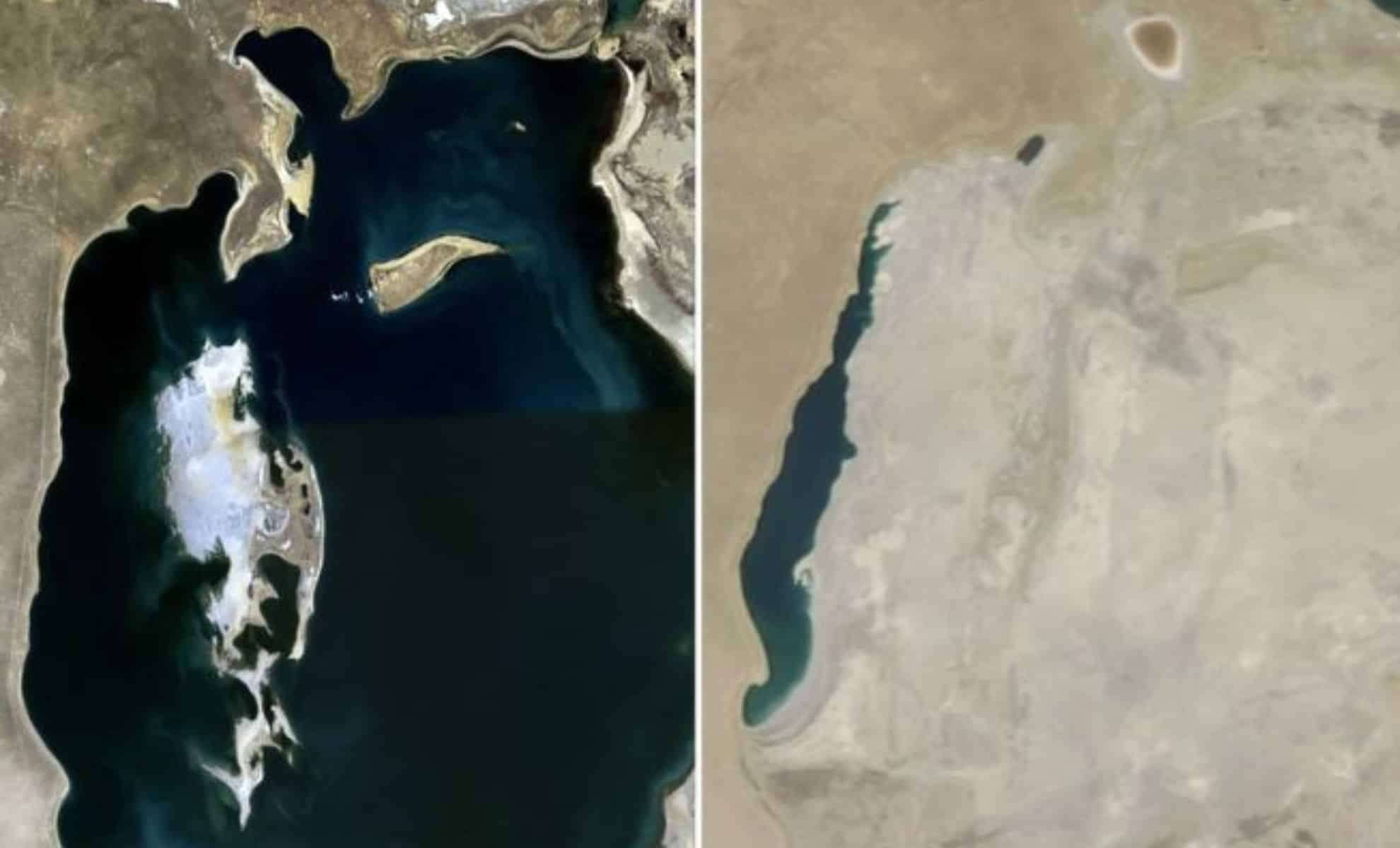
Spanning the borders of Uzbekistan and Kazakhstan, the Aral Sea once covered an impressive 68,000 square kilometers (26,000 square miles), ranking among the planet’s biggest lakes. It supported vibrant fisheries, rich ecosystems, and thriving local communities for generations. However, over the last 60 years, this vast water body has shrunk dramatically, giving way to the Aralkum Desert, a harsh landscape of parched lakebeds, toxic dust, and abandoned rusting ships.
This environmental collapse stems from extensive irrigation schemes that diverted the lake’s crucial freshwater inflows, causing its rapid decline and ecological devastation. By 2015, more than 90% of the Aral Sea had vanished, unleashing dire repercussions for millions of residents, wildlife, and regional climate stability.
Recognized as a catastrophic ecological event on a global scale, the Aral Sea’s disappearance warns of the grave risks linked to reckless water exploitation. “It is certainly one of the biggest environmental disasters in the world,” remarked Ibrahim Thiaw, Executive Secretary of the United Nations Convention to Combat Desertification, highlighting the unmatched magnitude of the crisis.

Tracing the Aral Sea’s Decline
The Aral Sea’s reduction began in the 1960s when the Soviet Union launched massive irrigation initiatives aimed at establishing Central Asia as a key cotton producer. To sustain these agricultural enterprises, the primary freshwater sources of the lake—the Amu Darya and Syr Darya rivers—were diverted to irrigate 7 million hectares (1.7 million acres) of cotton farmland.
This intense extraction of water caused the lake to shrink swiftly. By the 1990s, the Aral Sea had fragmented into two isolated bodies of water whose salt concentration soared beyond that of the oceans, eradicating native fish species and robbing the ecosystem of its vitality.
The consequences included:
- The collapse of a once-thriving fishing industry, which employed tens of thousands.
- Desertification transforming the dry lakebed into an extensive arid wasteland.
- Hazardous dust storms dispersing toxic chemicals from the exposed sediment.
Satellite imagery has captured the lake’s stark transformation over time, revealing its near-total disappearance. Presently, only about 8,000 square kilometers (3,000 square miles) of water remain.
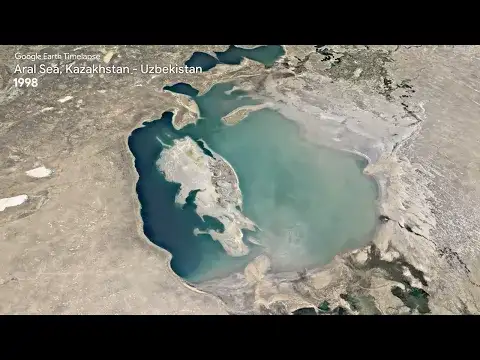
The Devastating Aftereffects of the Lost Aral Sea
The Aral Sea’s drying has triggered widespread ecological and public health emergencies. As the water receded, it exposed vast expanses of dust laced with toxic substances, contaminating air and water across hundreds of kilometers.
The emergence of the Aralkum Desert has sparked a destructive cycle of degraded air quality, agricultural failure, and health problems. Salt and chemical-laden dust storms now travel far, causing:
- Crop destruction in distant areas.
- Pollution of drinking water supplies leading to severe health conditions in surrounding populations.
- Accelerated melt of glaciers due to dark dust deposits increasing heat absorption by ice.
Adding to the peril, the dust contains residues from fertilizers, pesticides, and Soviet-era chemical weapon tests, making it far more toxic than ordinary desert sand. Airborne pollutants have surged from 14 to 27 million metric tons annually since the lake vanished.
For locals, the fallout has been dire. Respiratory illnesses, congenital defects, and chronic health issues have soared, with children disproportionately impacted.
The Lost Fishing Economy
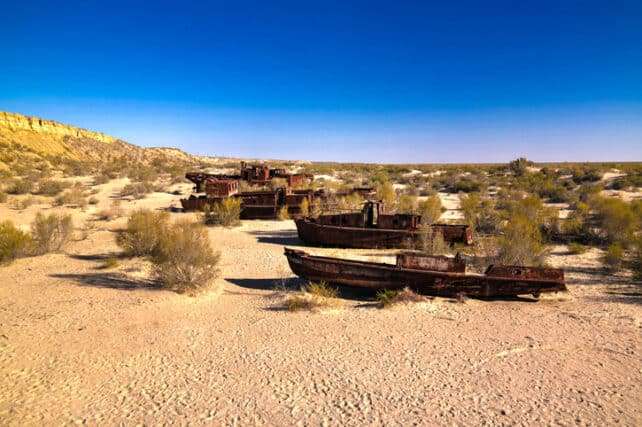
The Aral Sea once supported a flourishing fishing industry that yielded tens of thousands of tons of fish annually. The port town of Moynaq in Uzbekistan thrived until the water’s retreat left it stranded miles from the shoreline, littered with rusted vessels abandoned in desert sands.
With the ecosystem decimated, entire communities lost their livelihoods. Former fishermen were forced to seek employment elsewhere.
Extremely high salt levels in the residual water have made commercial fishing untenable, leaving behind a desolate landscape where a vital source of income and nourishment has disappeared.
Prospects for Revival
Despite the overwhelming damage, efforts to restore portions of the Aral Sea have produced some encouraging outcomes. The northern segment in Kazakhstan has partially rebounded, largely aided by the Kok-Aral Dam, completed in 2005 to conserve water within this smaller basin.
The dam’s impact has been to:
- Raise water levels, improving conditions for surviving fish populations.
- Lower salinity, enabling some aquatic life to return.
- Reinstate limited fishing, supporting local economies once more.
Nonetheless, significant obstacles remain. Expansive irrigation still consumes nearly all river inflows, while ongoing climate change fuels drought and raises temperatures, jeopardizing restoration prospects.
Vegetation initiatives are underway to stabilize soil and curb dust storms. International support from the European Union and USAID contributes to these efforts, but the long-term outlook is uncertain.
A Global Lesson in Water Stewardship
The Aral Sea crisis underscores the dangers inherent in reckless water management. Comparable crises are unfolding worldwide:
- African Lake Chad has shrunk by 90% due to climate shifts and irrigation.
- North America’s Colorado River Basin faces historic droughts threatening millions’ water security.
- China’s Lop Nur Lake has dried up entirely following water diversion projects.
Without immediate, coordinated global responses, more freshwater reserves could suffer similar fates, with devastating impacts on ecosystems, food security, and human livelihoods.
Today, the rusted ships resting in the Aralkum Desert stand as a solemn testament to one of the greatest environmental tragedies—an urgent call for sustainable water management everywhere.
- Categories:
- News










0 comments
Sign in to Comment