
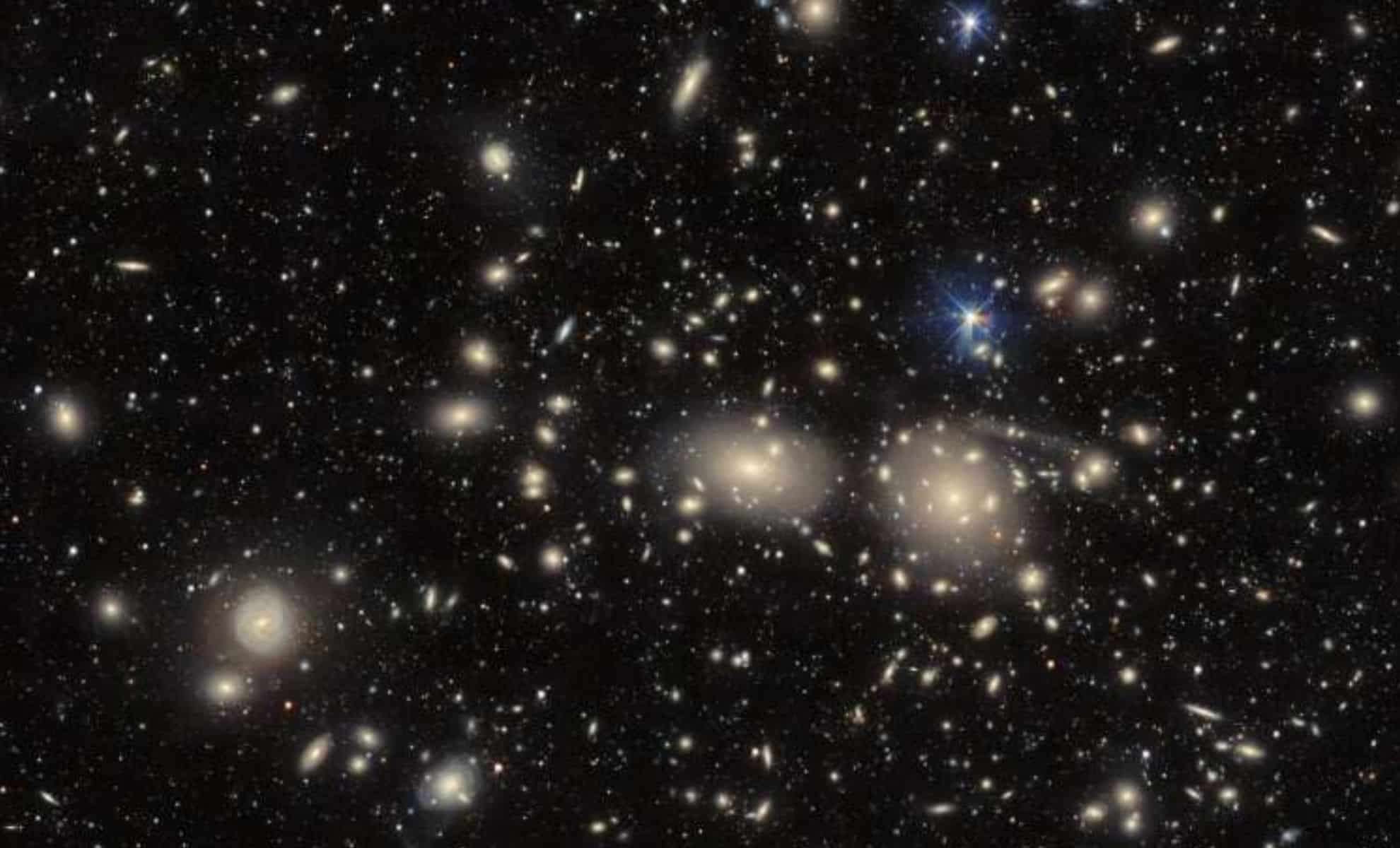
New studies have revealed a perplexing challenge in cosmology: the universe's expansion rate appears higher than theoretical models predict. This inconsistency, known as the Hubble tension, highlights a stark difference between local measurements of cosmic expansion and values derived from early-universe observations. The debate has intensified scientific scrutiny of whether the widely accepted cosmological framework remains valid.
As measurement techniques improve, the mismatch grows increasingly significant. This suggests that our grasp of phenomena like dark energy, dark matter, or possibly unknown forces may be incomplete. Addressing this gap could fundamentally alter our comprehension of cosmic history and its driving forces.
Origins of the Hubble Discrepancy
The idea of an expanding universe emerged from Edwin Hubble’s landmark 1929 discovery that galaxies are receding from us. Scientists have since sought to quantify this expansion using the Hubble constant, employing two main approaches: surveying nearby cosmic distances and analyzing the early universe's conditions.

Yet, these methodologies consistently yield conflicting results. Local measurements point to a swifter expansion than values derived from the cosmic microwave background (CMB)—the universe’s primordial snapshot. “This is saying, to some respect, that our model of cosmology might be broken,” said Dan Scolnic, associate professor of physics at Duke University and lead author on a recent paper.
Refining the Cosmic Distance Scale
Scientists addressing the Hubble tension utilize the cosmic distance ladder, a sequence of calibrated steps measuring astronomical distances from nearby stars to distant galaxies. Scolnic’s team partnered with the Dark Energy Spectroscopic Instrument (DESI) to improve this ladder by focusing on its crucial first step.
“The DESI collaboration did the really hard part, their ladder was missing the first rung,” said Scolnic. “I knew how to get it, and I knew that that would give us one of the most precise measurements of the Hubble constant we could get, so when their paper came out, I dropped absolutely everything and worked on this non-stop.”
They concentrated on the Coma Cluster, a vast grouping of galaxies roughly 320 million light-years away. Leveraging Type Ia supernovae as dependable cosmic reference points due to their uniform brightness, the researchers gauged the cluster’s distance precisely. “This measurement isn’t influenced by our theories about how the Hubble tension will be resolved,” Scolnic noted. “This cluster is pretty close to us, and we’ve been measuring it long before we knew how important it would become.”
Reaffirming the Expansion Rate
With their enhanced distance ladder, the group calculated a Hubble constant of 76.5 kilometers per second per megaparsec, indicating that galaxies separate at this velocity per every 3.26 million light-years apart. This figure closely matches other local estimates but contradicts the slower expansion inferred from early-universe data.
“Over the last decade or so, there’s been a lot of re-analysis from the community to see if my team’s original results were correct,” Scolnic observed. “Ultimately, even though we’re swapping out so many of the pieces, we all still get a very similar number. So, for me, this is as good of a confirmation as it’s ever gotten.”
The repeated consistency highlights the strength of localized measurements and implies discrepancies stem from the underlying theory rather than observational errors.
Consequences of an Accelerating Cosmos
The Hubble tension challenges our understanding of the universe's makeup and expansion drivers. It opens possibilities that factors like dark energy or undiscovered physics could be accelerating expansion, or that early-universe models need substantial revision.
“We’re at a point where we’re pressing really hard against the models we’ve been using for two and a half decades, and we’re seeing that things aren’t matching up,” Scolnic explained. “This may be reshaping how we think about the Universe, and it’s exciting! There are still surprises left in cosmology, and who knows what discoveries will come next?”
To resolve these inconsistencies, upcoming data from instruments such as the James Webb Space Telescope (JWST) and the Nancy Grace Roman Space Telescope will offer greater precision, clarifying whether measurement errors or cosmic physics are at fault.
The Dawn of a New Cosmological Understanding
The ongoing Hubble tension debate exemplifies how scientific progress often unveils deeper questions. By perfecting observational tools and challenging existing theories, scientists inch closer to decoding the universe’s secrets.
Whether minor model tweaks or revolutionary ideas are required remains uncertain, but the accelerating universe continues to captivate researchers, pushing the boundaries of cosmic knowledge. “There are still surprises left in cosmology,” Scolnic said, “and who knows what discoveries will come next?”
This transformative period promises insights that may redefine our comprehension of the cosmos, its inception, and destiny. For now, the enigma of the universe’s faster-than-expected growth persists, compelling scientists to explore further.
- Categories:
- News







0 comments
Sign in to Comment