
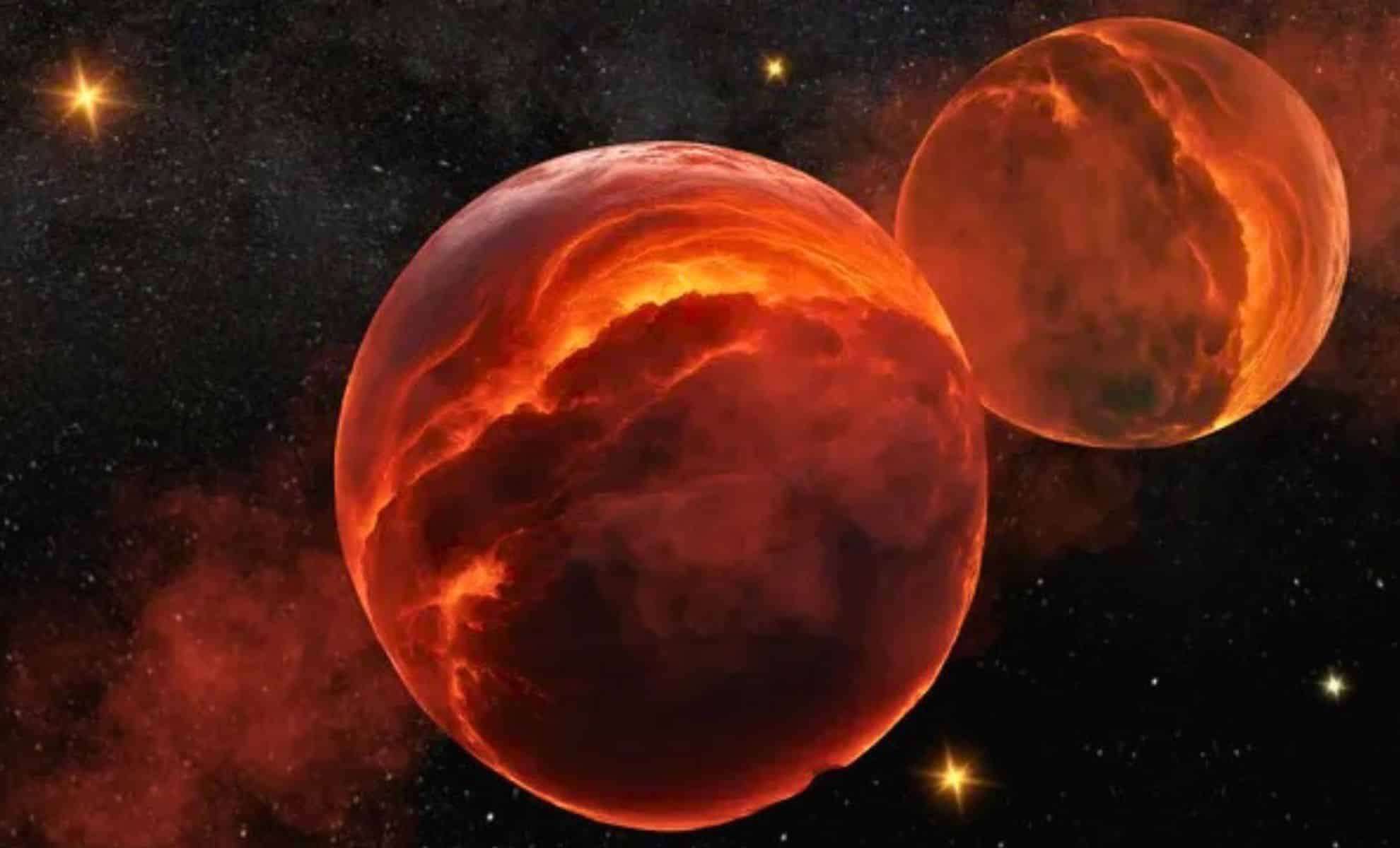
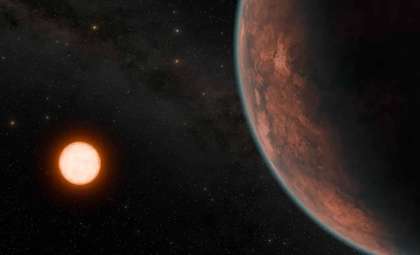
After nearly three decades of scientific curiosity, researchers have finally unraveled the enigma behind the unusually faint brightness of Gliese 229 B, a brown dwarf that has confounded astronomers since its discovery in 1995. Contrary to initial beliefs, this object emits far less light than expected for its size.
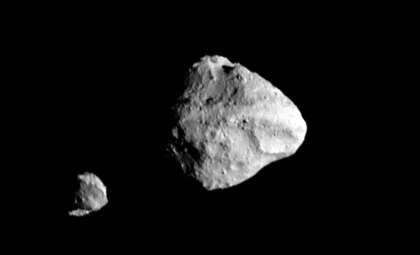
Recent studies demonstrate that Gliese 229 B is not a lone brown dwarf but a closely paired system of two brown dwarfs orbiting one another. This finding marks a major breakthrough in our grasp of these mysterious cosmic entities.
Decoding the Dimness of Gliese 229 B
Brown dwarfs sit in the fascinating gap between stars and planets. They emerge from collapsing clouds of gas like stars but lack enough mass to trigger hydrogen fusion, the process that powers stellar luminosity. Instead, they radiate primarily in the infrared spectrum, glowing dimly compared to stars. More massive brown dwarfs often shine a bit brighter, thanks to gravitational contraction and short periods of deuterium fusion.

Still, Gliese 229 B, located around 19 light-years from Earth and possessing a mass much greater than Jupiter, consistently puzzled scientists with its unexpectedly weak infrared emission. This oddity remained an astrophysical riddle for nearly 30 years.
Detecting the Dual Brown Dwarfs
In 2023, astronomer Jerry W. Xuan and his colleagues at the California Institute of Technology cracked the case. Using the cutting-edge GRAVITY interferometer at the Very Large Telescope (VLT) in Chile, the team discovered that Gliese 229 B actually consists of two brown dwarfs locked in a tight orbit around each other.
Essential details about Gliese 229 Ba and Bb:
- Separation: About sixteen times the distance between Earth and the Moon (roughly 6.1 million kilometers).
- Orbital cycle: 12 days.
- Masses: Approximately 38 and 34 times Jupiter’s mass, respectively.
The GRAVITY instrument, part of the European Southern Observatory’s VLT Interferometer, merges light from several telescopes to achieve an effective resolution comparable to a much larger telescope. This technique allowed Xuan’s team to penetrate atmospheric disturbances and distinguish the two brown dwarfs, a feat previously unattainable.
Mass, Atmosphere, and Formation
With their masses defined at 38 and 34 times that of Jupiter, Gliese 229 Ba and Bb together produce the faint light initially thought to come from just one object, explaining the earlier brightness discrepancy. These two likely formed from the same contracting cloud of gas and dust, akin to binary stars. Their closely matched masses suggest a strong gravitational bond that prevented either from igniting as a true star.
Spectroscopic studies revealed these atmospheric components:
Impact on Brown Dwarf and Binary Star Research
This discovery reshapes prevailing ideas about the origins and dynamics of brown dwarf binaries. While binary star systems are prevalent, systems like Gliese 229 B are rare and challenging to detect. The closeness and stability of Ba and Bb, despite their faint combined glow, prompts new inquiries into how such sub-stellar objects evolve over time.
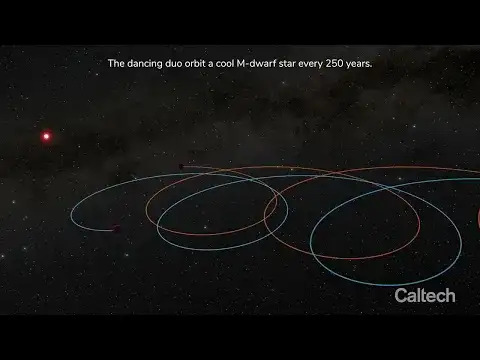
Going forward, scientists plan to utilize refined interferometric techniques to locate other potential binary brown dwarf systems. Exploring the orbital mechanics of Gliese 229 Ba and Bb may also reveal further insights into the gravitational forces and long-term behavior of these elusive objects.






0 comments
Sign in to Comment